We remain fully operational. Our teams are working around the clock to ensure your deliveries continue safely.

DOWNLOAD THE APP


Customer Services
Copyright © 2025 Desertcart Holdings Limited
DOWNLOAD THE APP
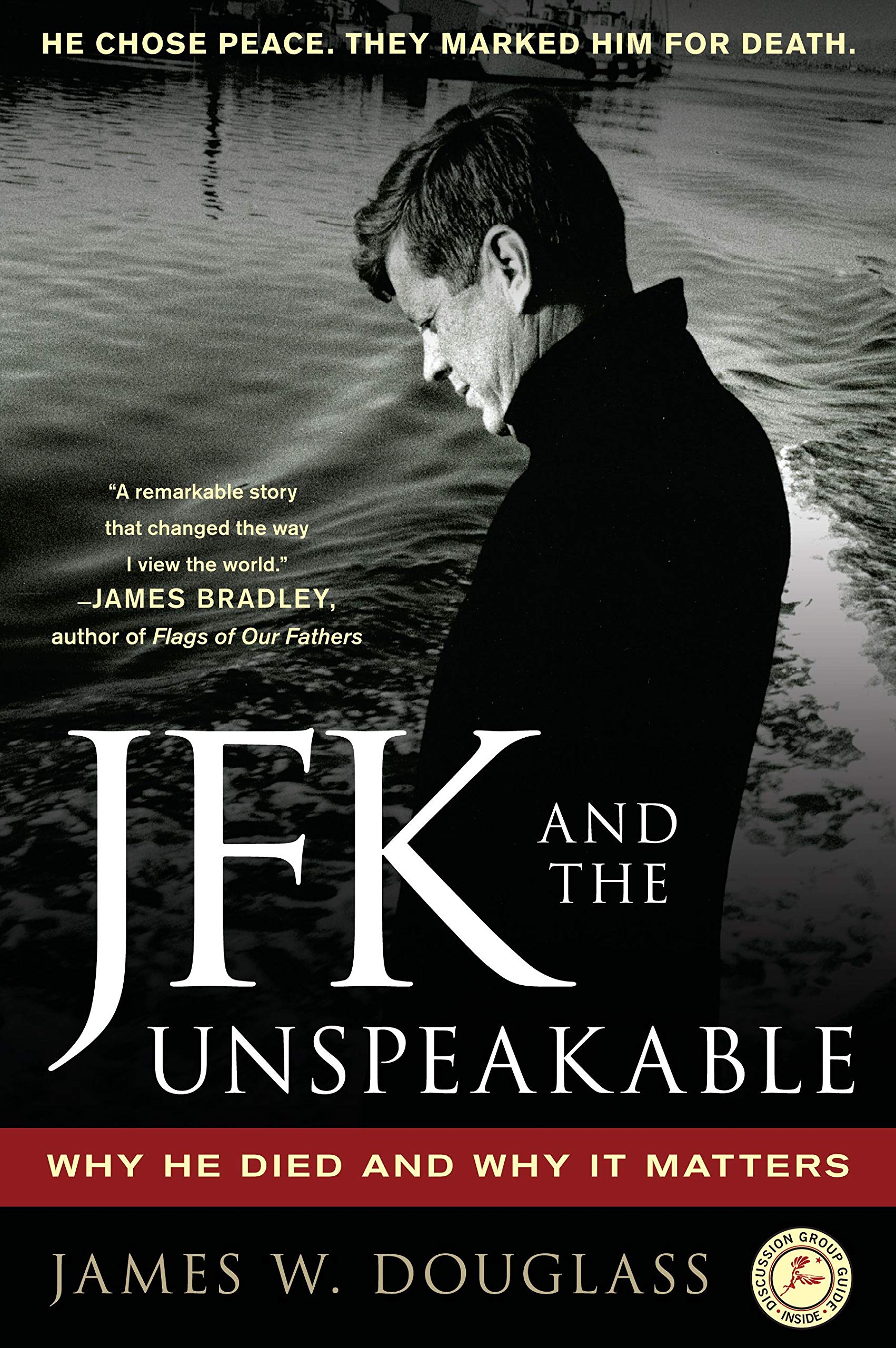
Touchstone JFK and the Unspeakable: Why He Died and Why It Matters : Douglass, James W.: desertcart.ae: Books Review: Douglas explains that JFK had to die because his foreign policy stood in the way of powerful commercial interests. Kennedy was trying to make peace with Kruschev and Castro behind the scenes. But both Kennedy and Kruschev were opposed by their military leaders who were hell bent on war. The secret correspondence and dialog between these three is revealed by Douglas to paint a fascinating portrait of how possible world peace was in the 1960's. Kruschev, Castro and Kennedy reveal themselves to be intelligent, empathic leaders all capable of considering the needs of the other sides and willing to negotiate a de-escalation of the cold war in ways the lead to better outcomes for all countries. But that was anathema to the business interests who wanted to exploit Cuba, South America, Asia, and Africa, and which didn't want to compete against Russia or China in international markets or for resources. And so world peace didn't happen. How didn't it happen? James W Douglass takes us through it. Review: Es para información y conocimiento del contenido del libro, muchas gracias
| Best Sellers Rank | #149,980 in Books ( See Top 100 in Books ) #277 in Biographies of Political Leaders #335 in Government #411 in True Crime Accounts |
| Customer reviews | 4.8 4.8 out of 5 stars (1,458) |
| Dimensions | 15.24 x 3.05 x 22.86 cm |
| Edition | First Touchstone Edition |
| ISBN-10 | 1439193886 |
| ISBN-13 | 978-1439193884 |
| Item weight | 590 g |
| Language | English |
| Print length | 560 pages |
| Publication date | 19 October 2010 |
| Publisher | Touchstone |
O**R
Douglas explains that JFK had to die because his foreign policy stood in the way of powerful commercial interests. Kennedy was trying to make peace with Kruschev and Castro behind the scenes. But both Kennedy and Kruschev were opposed by their military leaders who were hell bent on war. The secret correspondence and dialog between these three is revealed by Douglas to paint a fascinating portrait of how possible world peace was in the 1960's. Kruschev, Castro and Kennedy reveal themselves to be intelligent, empathic leaders all capable of considering the needs of the other sides and willing to negotiate a de-escalation of the cold war in ways the lead to better outcomes for all countries. But that was anathema to the business interests who wanted to exploit Cuba, South America, Asia, and Africa, and which didn't want to compete against Russia or China in international markets or for resources. And so world peace didn't happen. How didn't it happen? James W Douglass takes us through it.
M**I
Es para información y conocimiento del contenido del libro, muchas gracias
J**E
Nem sempre os grandes ficam para sempre nas nossas memórias
L**A
In the past I read a Kennedy assassination book by Anthony Summers which I was very disappointed by: it left me more confused about the incident than I was before reading, and with a long list of names and innumerable conspiracy scenarios that all seemed equally plausible. This book is different - it has never been clearer to me what happened on Nov 22 1963. When I bought this book on someone's suggestion, I was afraid I'd be let down again and I would never truly understand what happened to JFK. James Douglas does an exceptional job with confronting his audience with the TRUTH, the undeniable truth. Everything will suddenly make sense, including a series of International incidents that may not seem related to JFK but are (like the assassination of Italian party leader Aldo Moro by the "Red Brigades" (but really, the CIA and Italian Secret Service) in 1978). However, this book is painfully boring. It's repetitive, it dedicates pages and pages to minute details about Kennedy's policy and his personal life that really only serve to portray the author's admiration for Jack Kennedy. It's difficult to imagine a book about rogue CIA high-ranking circles, conspiracies to kill the President, patsies, cover-ups with witnesses turning up dead etc. could be written with such a flat, tedious narrative - I am talking pulling teeth boring. I can gobble up a 300-400 page book in a few days, this one took me almost two weeks to finish - and that's considering I skipped entire chapters because they were either sheer repetition or completely useless to the storyline. Don't expect a book dealing with the nitty-gritty: Expect a book that will tell you what happened, REALLY tell you what happened, providing you're prepared to read about exactly how many troops were in Vietnam on this or that particular date, JFK's praying sessions, every letter Castro and Khrushchev ever exchanged with the White House, and as long as you don't mind reading the same facts over and over and over again. Definitely worth giving it a try, but it does read, fundamentally, like a text book.
P**J
Superb.
Trustpilot
1 day ago
1 month ago