
DOWNLOAD THE APP


Customer Support

Desert Online General Trading LLC
Warehouse # 7, 4th Street, Umm Ramool, Dubai, 30183, Dubai
DOWNLOAD THE APP
Customer Support
Desert Online General Trading LLC
Warehouse # 7, 4th Street, Umm Ramool, Dubai, 30183, Dubai
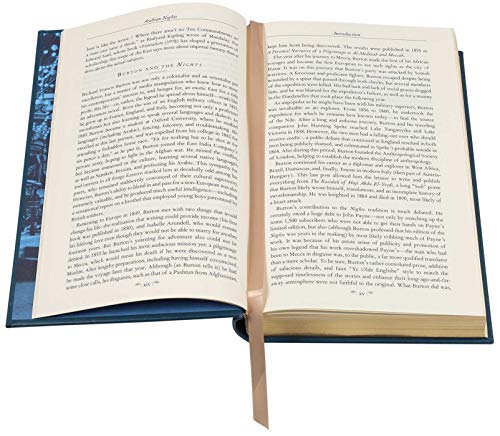
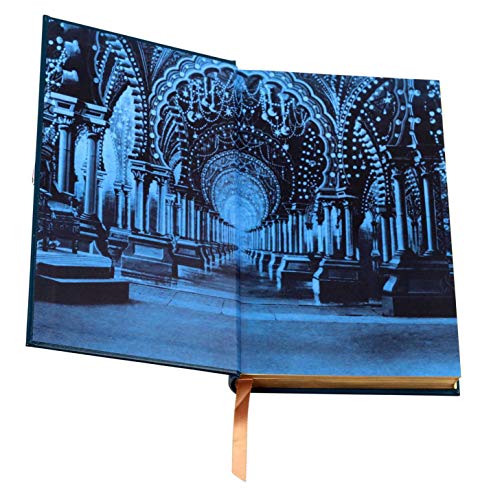
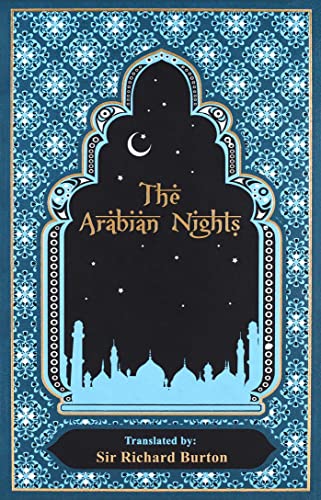
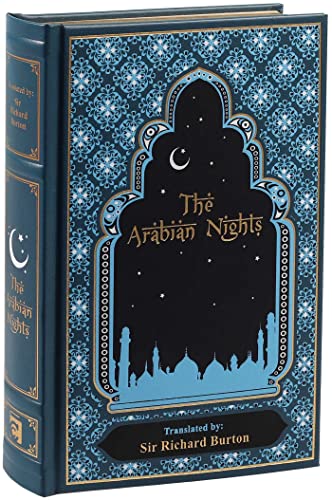
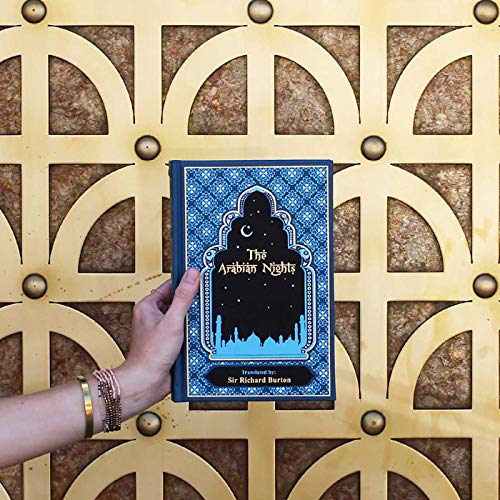


desertcart.com: The Arabian Nights: 9781607103097: Burton, Sir Richard, Burton, Sir Richard, Mondschein, Ken: Books Review: Great for collectors - I’ve been collecting the Canterbury collection and this was a great addiction. Looks just like the pictures. Review: magnificent panoply of richly detailed stories - Burton weaves an entire world, dazzling in its splendor and detail if arguably ethnocentric, e.g., in its depiction of working-class Arabs as thieves, liars, schemers, and plotters--who, in some cases, beat their own mothers until gently "corrected" by the sultan's bastinado. I agree with many of my fellow reviewers that Burton's English can present difficulties--in some cases, exceptional difficulties--though those who can read the King James Bible of 1611 should have no difficulty with Burton's Victorian vocabulary and sentence structures. (To be quite honest, the lack of a single paragraph break is more troubling--foreboding, even, at first sight--than the choice of vocabulary. Just be warned that words that you think you know you really don't know, unless you consider the underlying Greek or Latin roots. For example, "prevent" means "come before," which--while counterintuitive to the modern reader--makes perfect sense insofar as 'pre-' is Latin for 'before' and 'venire' is Latin for 'come'.) Prepare to be seduced, astonished, and bewildered by the fantastic magic of the world that Burton offers us--noting, albeit, that his world is a melange of cultural elements culled from the Arabian peninsula, Iran, India, Turkey, even Morocco--and be admonished that there is plenty of detailed erotic content (sometimes bowdlerized as "they fell to a-dallying with one another" or some such) that is best kept from younger children. Admittedly, the collection of footnotes at the end--and the continual restarting of numbering from tale to tale--can present a hindrance, but this should not present a problem, as the footnotes seldom deal with the actual flow of the story, instead offering obscure (even pedantic) historical or linguistic minutiae. Lastly, as a cultural backdrop against which to evaluate and ponder these stories, consider that the Middle East of Burton's collection represented the erstwhile summit of man's achievements: while illiterate Europeans were slaving away as landed noblemen's serfs, living in rude wooden huts, and fleeing like frightened rats from hordes of invading Mongols or bands of merciless Viking raiders, ninth-century Middle Easterners lived in splendid cities; enjoyed written fluency in their native languages; exercised religious freedom; and engaged in bold, productive research in medicine, astronomy, mathematics, and pharmacy at the sultan's behest and sponsorship.







| Best Sellers Rank | #41,305 in Books ( See Top 100 in Books ) #607 in Short Stories (Books) #885 in Classic Literature & Fiction #2,995 in Literary Fiction (Books) |
| Customer Reviews | 4.7 4.7 out of 5 stars (2,722) |
| Dimensions | 6.25 x 1.6 x 9.25 inches |
| Edition | Reprint |
| ISBN-10 | 1607103095 |
| ISBN-13 | 978-1607103097 |
| Item Weight | 2.31 pounds |
| Language | English |
| Print length | 676 pages |
| Publication date | November 1, 2011 |
| Publisher | Canterbury Classics |
M**Z
Great for collectors
I’ve been collecting the Canterbury collection and this was a great addiction. Looks just like the pictures.
B**R
magnificent panoply of richly detailed stories
Burton weaves an entire world, dazzling in its splendor and detail if arguably ethnocentric, e.g., in its depiction of working-class Arabs as thieves, liars, schemers, and plotters--who, in some cases, beat their own mothers until gently "corrected" by the sultan's bastinado. I agree with many of my fellow reviewers that Burton's English can present difficulties--in some cases, exceptional difficulties--though those who can read the King James Bible of 1611 should have no difficulty with Burton's Victorian vocabulary and sentence structures. (To be quite honest, the lack of a single paragraph break is more troubling--foreboding, even, at first sight--than the choice of vocabulary. Just be warned that words that you think you know you really don't know, unless you consider the underlying Greek or Latin roots. For example, "prevent" means "come before," which--while counterintuitive to the modern reader--makes perfect sense insofar as 'pre-' is Latin for 'before' and 'venire' is Latin for 'come'.) Prepare to be seduced, astonished, and bewildered by the fantastic magic of the world that Burton offers us--noting, albeit, that his world is a melange of cultural elements culled from the Arabian peninsula, Iran, India, Turkey, even Morocco--and be admonished that there is plenty of detailed erotic content (sometimes bowdlerized as "they fell to a-dallying with one another" or some such) that is best kept from younger children. Admittedly, the collection of footnotes at the end--and the continual restarting of numbering from tale to tale--can present a hindrance, but this should not present a problem, as the footnotes seldom deal with the actual flow of the story, instead offering obscure (even pedantic) historical or linguistic minutiae. Lastly, as a cultural backdrop against which to evaluate and ponder these stories, consider that the Middle East of Burton's collection represented the erstwhile summit of man's achievements: while illiterate Europeans were slaving away as landed noblemen's serfs, living in rude wooden huts, and fleeing like frightened rats from hordes of invading Mongols or bands of merciless Viking raiders, ninth-century Middle Easterners lived in splendid cities; enjoyed written fluency in their native languages; exercised religious freedom; and engaged in bold, productive research in medicine, astronomy, mathematics, and pharmacy at the sultan's behest and sponsorship.
J**Y
Mobi Burton Arabian Nights Best Available
I've looked at the two most recent translations of THE ARABIAN NIGHTS and googled about ten professional reviews of each of them. They are pretty universally reckoned accurate but a little bit lifeless. What is more, neither is complete. The three-volume Penguin edition "streamlines" the stories, that is, abridges each one by cutting repetitions, as the introduction admits; the Hadawy translation translates an early (arguably the original) short version of the NIGHTS, about 120 nights long. By contrast the Burton translation is complete and full of life, as well as wild sex-crazed footnotes from a great scholar. People will tell you Burton uses strange words, but he does so at the rate of about one every four pages, and those words can either be looked up or skipped. He's much easier than Shakespeare, and his ornate sentences are much easier than Henry James's. He even reproduces the Arabic rhymed prose, and that's a heck of a lot of fun in itself. Try a sample: if you like one page, you'll like the whole thing. If you don't like it, go for the modern Penguin version, faster and duller. NOT particularly more accurate, though of course a century after Burton, people have found mistakes in his translation here and there. They're not big, important mistakes; these are fairy tales, after all, and most earlier translators downright changed the stories around to suit themselves: as far as that sort of thing goes, Burton is very accurate indeed. Mobi does way the best job on keying the footnotes to the text so they're easy to get to. There's its usual good indexing, and my goodness the price! I had this version on my bookcase in 16 volumes; the Kindle version costs much less and is more fun to read.
M**R
Beautiful bound book.
Loved this book as a kid, I can't wait to read it again.
F**B
Edizione da collezione, arrivata incellophanata. Ottime condizioni.
I**N
Barnes & Noble, really nailed it. This book is seriously worth buying. The intricate embossed designs on the hardcover and inside amongst the pages, are simply mind-blowing. It definitely brings book-reading and book-appreciation to a whole new level. Especially, if the book is on those classics and legends.
S**A
Bardzo ładnie wydana książka, ładny papier, czcionka przyjemna w czytaniu, średniej wielkości. Nie ma ilustracji, język jest archaiczny. Książka to oryginalny tekst (pełnej długości zawartych w niej opowiadań), wydany w postaci "streszczonej" po polsku jako "Księga tysiąca jednej nocy - Wybór" W. Kubiaka. Jeżeli ktoś woli papierowe "pełne" wydanie niż tekst elektroniczny (public domain) zdecydowanie polecam.
K**H
Fantastic book, nice vintage design.
C**É
Nice work
Trustpilot
3 days ago
1 week ago