We remain fully operational. Our teams are working around the clock to ensure your deliveries continue safely.

DOWNLOAD THE APP


Customer Services
Copyright © 2025 Desertcart Holdings Limited
DOWNLOAD THE APP
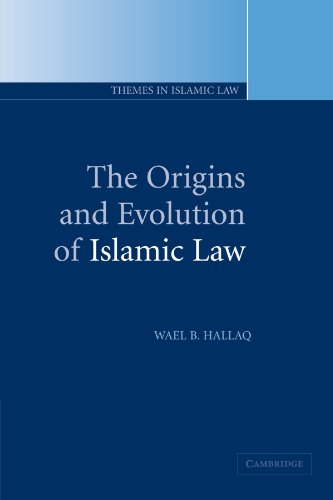
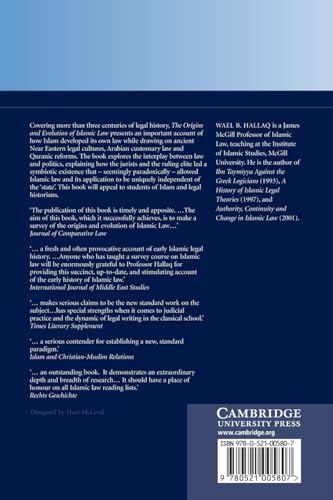
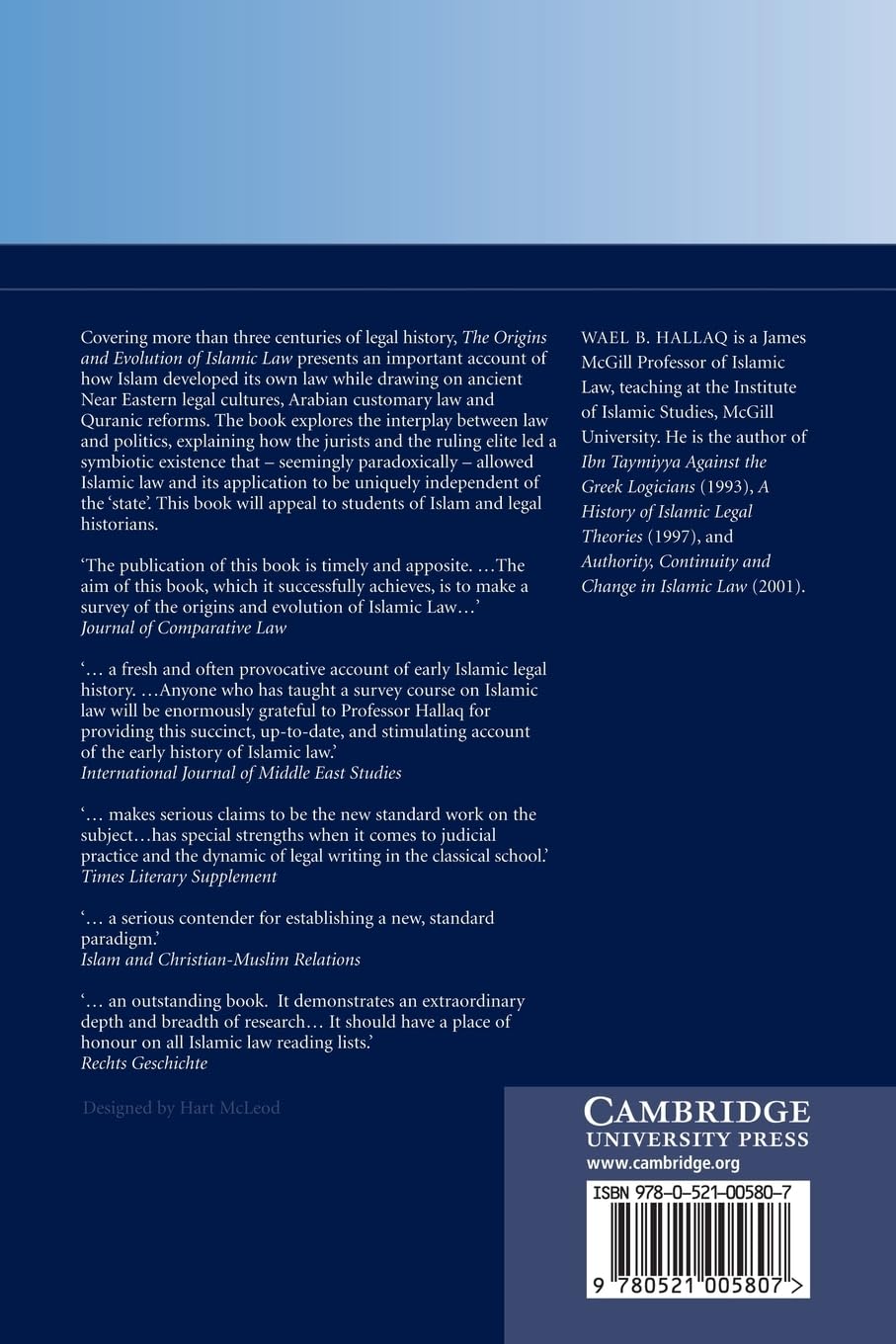
desertcart.in - Buy The Origins And Evolution Of Islamic Law book online at best prices in India on desertcart.in. Read The Origins And Evolution Of Islamic Law book reviews & author details and more at desertcart.in. Free delivery on qualified orders. Review: Current events but also pure curiosity motivate many to seek out a better understanding of Islamic culture, especially as regards to its legal structure. This book is a good start, especially to those who have studied the religious aspects of Islamic culture, but need a more in-depth understanding of how the Islamic religion has influenced legal reasoning. It is of course difficult to assess the accuracy of the book if one is not an expert on Islamic law. This reviewer is not such an expert, but found the book very readable and gained much insight into the intricacies behind Islamic legal thought. Islamic culture had a great influence on Western scientific progress, and so an interesting question is to the degree that its legal structure encouraged this influence. This book does not address this question, but its contents could be helpful in studying this influence. The book could also assist in answering the question of whether Islamic law requires stricter adherence to its precepts than American or British law. Does Islamic law require dogmatic adherence to legal precepts or can its interpretation be flexible or allow rapid changes? The author concentrates on what he calls the "formative" period of Islamic law, which he defines as the historical period where the legal system began to the point in time where the features of this system can be clearly identified. The "shape" of Islamic law, i.e. those attributes deemed essential to its identification, are determined according to the author by the presence of a complete judiciary, complete elaboration of positive legal doctrine and methodology, and the full emergence of doctrinal legal schools. Interestingly, he holds that the religious character of the law is also an essential attribute, but it must be derived from these four attributes. This implies that the Islamic religion, whether Quranic or otherwise, is not viewed as the underlying foundation of Islamic legal reasoning. There is no doubt though that the author believes that the new Islamic religion of the seventh century "generated" the legal system of today. The author's thesis is an interesting one but also difficult to justify since one must be able to disentangle the influence of other religious systems from the Islamic one. There are many surprises in the book for those just beginning their study of Islamic culture, law, and science: 1. A time period called `Haram', which was established by the Quraysh, a tribal confederation in pre-Islamic Mecca, wherein no violence was permitted. 2. Shedding light on the historical influences on Muhammad, he apparently followed to a large extent the teachings of Zayd b. `Amr, and was thus a "Hanif", i.e. a follower of the (monotheistic) religion of Hanifiyya. 3. The Quran holds that all property acquired by women during marriage are theirs exclusively. This is at odds with the common Western view of the Islamic religion that women are subjugated (but on the other hand one may argue that Quranic passages such as this one may be completed ignored by current practitioners of Islam). 4. The meaning of the word `sunan' and its ancient (pre-Islamic origins). 5. Contradictions in Quranic texts were resolved by a `theory of abrogation'. A natural question to ask here is whether this theory was in any way influenced by Greek logic. 6. The Islamic concept of "rationalism" and its antipathy to the "hadith". 7. The assertion that sunnaic practice is infallible, this infallibility arising from a consensus of jurists and not from the opinion (or "ra'y") of an individual jurist. This is to be contrasted to the practice in Western legal reasoning, wherein fallibility is considered normal and legal reasoning is considered to a large extent "defeasible." The author though discusses the `three categories of argument' that are present in Islamic legal reasoning: expert judgment, systematic reasoning on the basis of revealed texts (with a form of analogical reasoning called `qiyas') and the `istihan' which might be described rather loosely as a "commonsense" form of logical inference that yields "reasonable" results. In the same context as this discussion, Islamic law apparently had its own conflict between the "rationalists" (ahl al-ra'y) and the traditionalists (ahl al-hadith). 8. The real meaning behind the term `fatwah', this word having definitely been distorted by the Western press. 9. The concept of the `madhbab', illustrating the importance of doctrinal conformity in Islamic legal reasoning. The author argues, interestingly, that the madhbab were unique to Islamic civilization, not being influenced by any outside ideas. The author's discussion on the madhbab leads into one concerning the `imam', who in Islamic law was the only one permitted to interpret revealed texts. The imam, the author explains, arose from a process of "authority construction." All of this discussion sheds considerable light on the degree to which absolute legal authority is placed in one individual in Islamic law. 10. Most surprising of all, is that legal authority in Islamic law is considered to be solely epistemic, never residing in the state, a view which is certainly at odds with what is reported in the Western press. Review: Very fine
| Best Sellers Rank | #997,282 in Books ( See Top 100 in Books ) #7,983 in Indian History (Books) #8,086 in Islam (Books) #9,678 in Asian History (Books) |
| Country of Origin | India |
| Customer Reviews | 4.6 4.6 out of 5 stars (7) |
| Dimensions | 15.21 x 1.45 x 22.91 cm |
| Generic Name | 1 |
| ISBN-10 | 0521005809 |
| ISBN-13 | 978-0521005807 |
| Item Weight | 386 g |
| Language | English |
| Packer | Cambridge University Press |
| Print length | 234 pages |
| Publication date | 21 February 2005 |
| Publisher | Cambridge Univ Pr |
| Reading age | 5 years and up |
D**N
Current events but also pure curiosity motivate many to seek out a better understanding of Islamic culture, especially as regards to its legal structure. This book is a good start, especially to those who have studied the religious aspects of Islamic culture, but need a more in-depth understanding of how the Islamic religion has influenced legal reasoning. It is of course difficult to assess the accuracy of the book if one is not an expert on Islamic law. This reviewer is not such an expert, but found the book very readable and gained much insight into the intricacies behind Islamic legal thought. Islamic culture had a great influence on Western scientific progress, and so an interesting question is to the degree that its legal structure encouraged this influence. This book does not address this question, but its contents could be helpful in studying this influence. The book could also assist in answering the question of whether Islamic law requires stricter adherence to its precepts than American or British law. Does Islamic law require dogmatic adherence to legal precepts or can its interpretation be flexible or allow rapid changes? The author concentrates on what he calls the "formative" period of Islamic law, which he defines as the historical period where the legal system began to the point in time where the features of this system can be clearly identified. The "shape" of Islamic law, i.e. those attributes deemed essential to its identification, are determined according to the author by the presence of a complete judiciary, complete elaboration of positive legal doctrine and methodology, and the full emergence of doctrinal legal schools. Interestingly, he holds that the religious character of the law is also an essential attribute, but it must be derived from these four attributes. This implies that the Islamic religion, whether Quranic or otherwise, is not viewed as the underlying foundation of Islamic legal reasoning. There is no doubt though that the author believes that the new Islamic religion of the seventh century "generated" the legal system of today. The author's thesis is an interesting one but also difficult to justify since one must be able to disentangle the influence of other religious systems from the Islamic one. There are many surprises in the book for those just beginning their study of Islamic culture, law, and science: 1. A time period called `Haram', which was established by the Quraysh, a tribal confederation in pre-Islamic Mecca, wherein no violence was permitted. 2. Shedding light on the historical influences on Muhammad, he apparently followed to a large extent the teachings of Zayd b. `Amr, and was thus a "Hanif", i.e. a follower of the (monotheistic) religion of Hanifiyya. 3. The Quran holds that all property acquired by women during marriage are theirs exclusively. This is at odds with the common Western view of the Islamic religion that women are subjugated (but on the other hand one may argue that Quranic passages such as this one may be completed ignored by current practitioners of Islam). 4. The meaning of the word `sunan' and its ancient (pre-Islamic origins). 5. Contradictions in Quranic texts were resolved by a `theory of abrogation'. A natural question to ask here is whether this theory was in any way influenced by Greek logic. 6. The Islamic concept of "rationalism" and its antipathy to the "hadith". 7. The assertion that sunnaic practice is infallible, this infallibility arising from a consensus of jurists and not from the opinion (or "ra'y") of an individual jurist. This is to be contrasted to the practice in Western legal reasoning, wherein fallibility is considered normal and legal reasoning is considered to a large extent "defeasible." The author though discusses the `three categories of argument' that are present in Islamic legal reasoning: expert judgment, systematic reasoning on the basis of revealed texts (with a form of analogical reasoning called `qiyas') and the `istihan' which might be described rather loosely as a "commonsense" form of logical inference that yields "reasonable" results. In the same context as this discussion, Islamic law apparently had its own conflict between the "rationalists" (ahl al-ra'y) and the traditionalists (ahl al-hadith). 8. The real meaning behind the term `fatwah', this word having definitely been distorted by the Western press. 9. The concept of the `madhbab', illustrating the importance of doctrinal conformity in Islamic legal reasoning. The author argues, interestingly, that the madhbab were unique to Islamic civilization, not being influenced by any outside ideas. The author's discussion on the madhbab leads into one concerning the `imam', who in Islamic law was the only one permitted to interpret revealed texts. The imam, the author explains, arose from a process of "authority construction." All of this discussion sheds considerable light on the degree to which absolute legal authority is placed in one individual in Islamic law. 10. Most surprising of all, is that legal authority in Islamic law is considered to be solely epistemic, never residing in the state, a view which is certainly at odds with what is reported in the Western press.
O**G
Very fine
Trustpilot
2 weeks ago
2 months ago