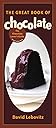
The Great Book of Chocolate
Product ID: 4358142
Desertcart purchases this item on your behalf and handles shipping, customs, and support to Kenya.
A compact connoisseur's guide, with recipes, to today's cutting-edge array of chocolates and chocolate makers from former Chez Panisse pastry chef David Lebovitz. In this compact volume, David Lebovitz gives a succinct cacao botany lesson, explains the process of chocolate making, runs through chocolate terminology and types, presents information on health benefits, offers an evaluating and buying primer, profiles the world's top chocolate makers and chocolatiers (with a whole chapter dedicated to Paris alone!), and shares dozens of little-known factoids in sidebars throughout the book. The Great Book of Chocolate includes more than 50 location and food photographs, and features more than 30 of Lebovitz's favorite chocolate recipes‚ from Black-Bottom Cupcakes to Homemade Rocky Road Candy, Orange and Rum Chocolate Mousse Cake to Double Chocolate Chip Espresso Cookies. His extensive resource section (with websites for international ordering) can bring the world's best chocolate to every door. A self-avowed chocoholic, Lebovitz nibbles chocolate every day‚ and with The Great Book of Chocolate in hand, he figures the rest of us will too. Review: Truly a great book for chocolate lovers. Highly Recommended - `The Great Book of Chocolate', David Lebovitz' third book, is much, much more than a book of chocolate recipes. It is a great resource, including recipes, lore, history, sources, anecdotes, manufacture, producers, and botany of cacao and chocolate. Even if you have any other book on chocolate, you will find things in this book which do not appear in any others, as it has information I have not seen in about a half dozen books on chocolate and about 20 hours of Food Network shows on chocolate done by everyone from Alton Brown to Tyler Florence to Gordon Elliot. One of the most interesting new facts I found in this book is that like coffee, there are two different naturally occurring varieties of the cacao plant, plus a manmade hybrid. One of the varieties is much more delicate and much less common than the other, accounting for about 5% of the world's chocolate, but it is a much richer product. Very few chocolate processors deal with this criollo variety. Most use the much more common forestero variety or the hybrid trinitario. Like tea and coffee and olive oil, cacao is a highly complex product, much of whose more desirable and subtle properties are destroyed by too much heat during processing. Heat is also the enemy of chocolate when melting and tempering chocolate to be used for cooking. This brings up one of my very few complaints about this book in that it explains a very primitive method for heating and tempering chocolate. I would have devoted at least one page to explaining how professional chocolate tempering pots work, and in what way one could be improvised. The author gives some very brief suggestions using a heating pad, but a paragraph plus an illustration would have been dandy. Other explanations in the book would have been well served by an illustration or a caption to a picture, but these are small matters in light of the overall quality of the book. While Lebovitz was already a highly talented and accomplished pastry chef when he started writing this book, he has gone to the extra effort of investigating first hand the workings of premium chocolatiers in San Francisco, Paris and Brussels. He has also recently completed a course in chocolate at Callebaut College in Belgium. The chapters in this book, after the introduction which covers Lebovitz personal involvement with chocolate includes: Chocolate Explained gives the history, botany, and processing of the cacao plant, plus some stories of two important American chocolate producers, Hershey and Sharfen Berger. Sustainability of Cacao discusses the fragile place of cacao in jungle ecosystems and the production of organic chocolate. A Chocolate Primer discusses the forms of chocolate, from pure chocolate liqueur to cocoa power, plus an explanation of tempering. While he points out that there is no difference between `semisweet' and `bittersweet' chocolate, he does not discuss the availability of chocolates with sweetening graded by percent, as done by Vahlrona. It is also surprising that while so many other chocolate companies are mentioned in the book, this very important French company is not. It is not even listed in the very good list of resources in the back of the book. Chocolate and Wellness reveals that carefully processed chocolate has a lot more antioxidants in it than even health food stars prunes, raisins, and blueberries. Not only that, it has lots of other good stuff, including some compounds which work as an antidepressant. Buying Chocolate gives a brief consumers guide to sources for good chocolate, including a detailed chronicle of seven days spend working at the shop of the best chocolatier in Brussels. Chocolate of Paris continues the buying guide with a focus on sources in Paris that rivals Brussels as one of the leading chocolatier centers in the world. The 34 recipes certainly do not cover the whole world of chocolate baking and candy making, but they give you a pretty good sampling of both conventional products such as hot chocolate, truffles, fudge, and cakes; to the slightly unusual such as chocolate and cherry scones, mint and chocolate crème anglaise, and bourbon mud pie; to the really unusual such as chocolate sauerkraut cake and chocolate pizza dough. Lebovitz says many of the recipes are original and, as he is a much, much better baker than I will ever be, even in my dreams, I will accept these recipes for being the crème of the crop. As I said above, this book will not replace your books by Flo Braker, Nick Malgieri, or Alice Medrich or even Lebovitz' earlier books on desserts. It is much more of a supplement to resources for making the best use in recipes by all bakers and chocolatiers. As the book is much more valuable for its websites, addresses, and information than it is for its recipes, the awkward tall and skinny format does not annoy me as much as it may in other cookbooks. I just wish Ten Speed Press would come out with an explanation for why they are so in love with this tall, skinny format. Highly recommended enhancement to your enjoying chocolate. Review: everything about chocolate!! - This book is as much a text book as a cookbook!! It gives ALL the information anyone could possibly need to become a chocolate expert!! I haven't made any of the recipes yet, but most of them sound fairly simple, and they all sound out of this world!! Low-calorie it is not!! Rich luxurious treats is what this cookbook is all about!!
| Best Sellers Rank | #1,201,085 in Books ( See Top 100 in Books ) #351 in Chocolate Baking #413 in Confectionary Desserts #4,956 in Baking (Books) |
| Customer Reviews | 4.4 out of 5 stars 143 Reviews |
B**D
Truly a great book for chocolate lovers. Highly Recommended
`The Great Book of Chocolate', David Lebovitz' third book, is much, much more than a book of chocolate recipes. It is a great resource, including recipes, lore, history, sources, anecdotes, manufacture, producers, and botany of cacao and chocolate. Even if you have any other book on chocolate, you will find things in this book which do not appear in any others, as it has information I have not seen in about a half dozen books on chocolate and about 20 hours of Food Network shows on chocolate done by everyone from Alton Brown to Tyler Florence to Gordon Elliot. One of the most interesting new facts I found in this book is that like coffee, there are two different naturally occurring varieties of the cacao plant, plus a manmade hybrid. One of the varieties is much more delicate and much less common than the other, accounting for about 5% of the world's chocolate, but it is a much richer product. Very few chocolate processors deal with this criollo variety. Most use the much more common forestero variety or the hybrid trinitario. Like tea and coffee and olive oil, cacao is a highly complex product, much of whose more desirable and subtle properties are destroyed by too much heat during processing. Heat is also the enemy of chocolate when melting and tempering chocolate to be used for cooking. This brings up one of my very few complaints about this book in that it explains a very primitive method for heating and tempering chocolate. I would have devoted at least one page to explaining how professional chocolate tempering pots work, and in what way one could be improvised. The author gives some very brief suggestions using a heating pad, but a paragraph plus an illustration would have been dandy. Other explanations in the book would have been well served by an illustration or a caption to a picture, but these are small matters in light of the overall quality of the book. While Lebovitz was already a highly talented and accomplished pastry chef when he started writing this book, he has gone to the extra effort of investigating first hand the workings of premium chocolatiers in San Francisco, Paris and Brussels. He has also recently completed a course in chocolate at Callebaut College in Belgium. The chapters in this book, after the introduction which covers Lebovitz personal involvement with chocolate includes: Chocolate Explained gives the history, botany, and processing of the cacao plant, plus some stories of two important American chocolate producers, Hershey and Sharfen Berger. Sustainability of Cacao discusses the fragile place of cacao in jungle ecosystems and the production of organic chocolate. A Chocolate Primer discusses the forms of chocolate, from pure chocolate liqueur to cocoa power, plus an explanation of tempering. While he points out that there is no difference between `semisweet' and `bittersweet' chocolate, he does not discuss the availability of chocolates with sweetening graded by percent, as done by Vahlrona. It is also surprising that while so many other chocolate companies are mentioned in the book, this very important French company is not. It is not even listed in the very good list of resources in the back of the book. Chocolate and Wellness reveals that carefully processed chocolate has a lot more antioxidants in it than even health food stars prunes, raisins, and blueberries. Not only that, it has lots of other good stuff, including some compounds which work as an antidepressant. Buying Chocolate gives a brief consumers guide to sources for good chocolate, including a detailed chronicle of seven days spend working at the shop of the best chocolatier in Brussels. Chocolate of Paris continues the buying guide with a focus on sources in Paris that rivals Brussels as one of the leading chocolatier centers in the world. The 34 recipes certainly do not cover the whole world of chocolate baking and candy making, but they give you a pretty good sampling of both conventional products such as hot chocolate, truffles, fudge, and cakes; to the slightly unusual such as chocolate and cherry scones, mint and chocolate crème anglaise, and bourbon mud pie; to the really unusual such as chocolate sauerkraut cake and chocolate pizza dough. Lebovitz says many of the recipes are original and, as he is a much, much better baker than I will ever be, even in my dreams, I will accept these recipes for being the crème of the crop. As I said above, this book will not replace your books by Flo Braker, Nick Malgieri, or Alice Medrich or even Lebovitz' earlier books on desserts. It is much more of a supplement to resources for making the best use in recipes by all bakers and chocolatiers. As the book is much more valuable for its websites, addresses, and information than it is for its recipes, the awkward tall and skinny format does not annoy me as much as it may in other cookbooks. I just wish Ten Speed Press would come out with an explanation for why they are so in love with this tall, skinny format. Highly recommended enhancement to your enjoying chocolate.
V**R
everything about chocolate!!
This book is as much a text book as a cookbook!! It gives ALL the information anyone could possibly need to become a chocolate expert!! I haven't made any of the recipes yet, but most of them sound fairly simple, and they all sound out of this world!! Low-calorie it is not!! Rich luxurious treats is what this cookbook is all about!!
T**Y
Excellent intro to top-quality, tasteful chocolate.
Handy international travel/shopping guide and well-focused recipe collection. Very accurate and informative. Compact narrow book format is great for suitcases but a pain for comfortable armchair reading. Elegant, GORGEOUS photos are a big plus, but excessive wasteful "white space" and generous text-spacing (leading) should have been saved instead for a larger coffee-table book. Note that much of the shopping/address info in the 2004 edition reviewed here might need updating, so check if the publisher has done so.
V**.
The Chocolate Bible
This is THE authority on baking with chocolate. Half the book consists of well-written chapters on the history of chocolate, processing of the cacao bean, organic chocolate, the different kinds of chocolate, and where in the world to purchase the best chocolate. The recipes are simply fantastic. Imagine my surprised guests when they were informed that the deliciously moist chocolate cake they were devouring was a chocolate SAURKRAUT cake with chocolate glaze! Kudos to the ccoca-marzipan pound cake as well. This is one book every baker should have on the shelf.
R**N
No nonsense. Just chocolate!
David Lebovitz, how I love thee. Thank you for writing this book! If you want to know about chocolate, look no further. It gives the essentials of chocolate, from how it's grown to where to get it to cooking/baking, in his usual easy to read style. He also includes wonderful scrumptious recipes which pretty much cover the whole spectrum of chocolate goodies. Love, love, love.
A**.
Everything you ever wanted to know about chocolate and more!
David Lebovitz's book was easy to read, jam-packed with useful and unique information as well as great recipes and beautiful pictures. It is a great reference book which will be our family business' go-to source for chocolate information!
P**K
A difficult book to open
It is a very narrow book and is just about impossible to hold open, as it is bound so tightly. I follow David Lebovitz and have several of his books. I was really disappointed with this purchase. I probably has good recipes and information, but I haven't used it yet.
M**S
Such a talent!
Wonderful! Informative! And FUN! You feel like David is standing with you in the market, the bakery, the chocolatiers', and in your own kitchen while you pull together one of his marvelous creations. :)
S**N
A wonderful collector foodie book
The loving thought gone into this little informative book is so refreshing😍
D**A
Très bien!
Bei disegni ed ottime ricette. Non esclusivamente per esperti, ma fattibili anche per principianti. Tutta l'esperienza di questo chef americano!
M**A
WOW
Great book, explaining all about chocolate making proccess, different kinds of chocolate, what to choose for different recipes, where to find it, amazing recipes and pairing/serving suggestions. And of course, David Lebovitz's style in writing makes it sooo enjoyable to read :))
K**1
Un livre pour chaque chocoholique
Il est génial, ce livre! En racontant les procédés de la fabrication du chocolat, de différents types de chocolat, et quelques histoires perso de David, avec des recettes délicieuses et faciles à faire (brownies, cookies, madeleines). Je recommande.
R**M
Five Stars
lost in a house fire
Trustpilot
2 months ago
2 weeks ago