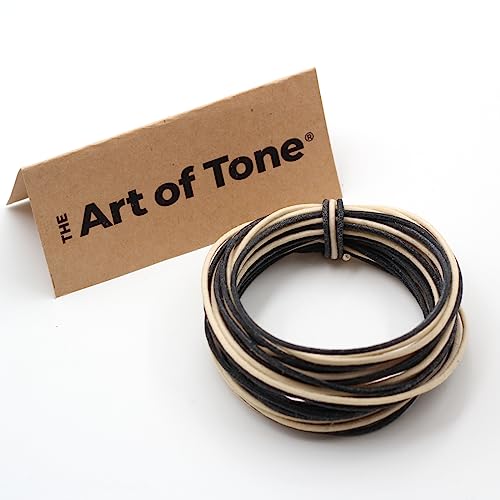

🎸 Wire your tone with heritage and ease — because your guitar deserves the golden era touch!
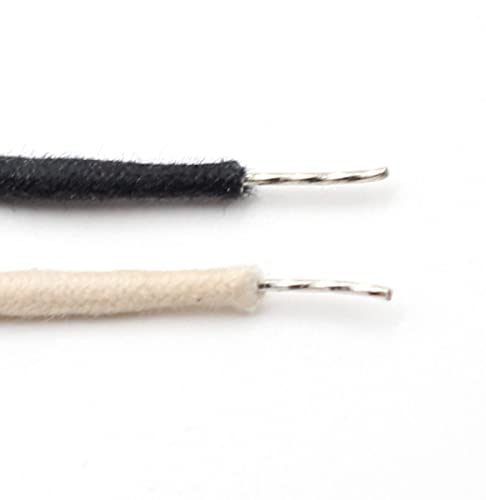
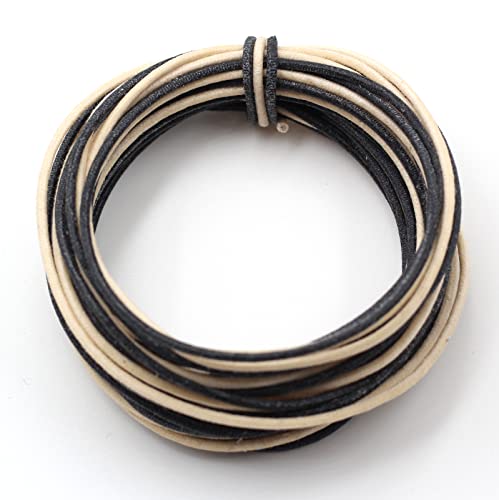
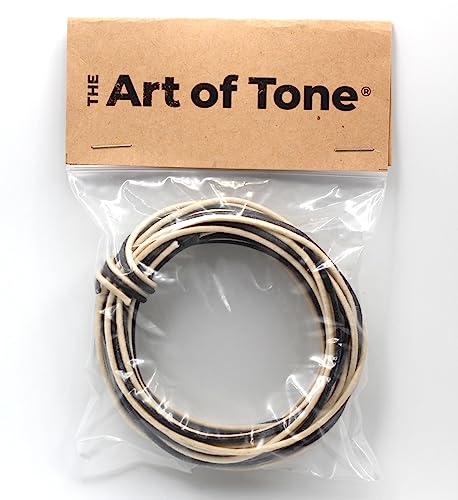
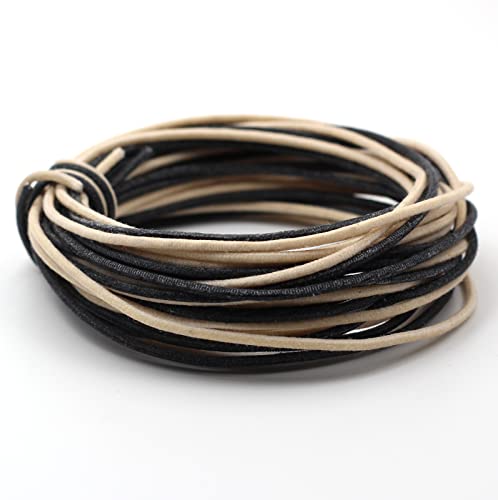
The Art Of Tone Gavitt Pushback Cloth Wire is a 22 AWG pre-tinned stranded copper wire with vintage cloth insulation, designed for electric guitar wiring. Featuring 10 feet each of black and white pushback wire, it simplifies soldering and wiring projects while delivering authentic 1950s American guitar tone and craftsmanship. Made in the USA by the original vintage wire manufacturer, it combines heritage aesthetics with modern workability for professional-grade guitar builds and repairs.
| ASIN | B00JYJFE72 |
| Brand | The Art Of Tone |
| Color | Black White |
| Date First Available | April 26, 2014 |
| Gauge | 22.0 |
| Is Discontinued By Manufacturer | No |
| Item Weight | 0.01 ounces |
| Item model number | 10767023 |
| Manufacturer | Gavitt Wire & Cable Co. |
| Material | Copper |
| No. of wires | 2 |
| Number of Cable Strands | 10 |
| Package Dimensions | 3.07 x 3.03 x 0.75 inches |
| UPC | 720189710100 |
| Voltage | 12 Volts (DC) |
A**6
Sweet tone, good price
Great stuff. Adds mojo, tone, and vibes to any setup. Easy to work with, solders easily, and they give you enough to wire multiple guitars. Worth every penny.
E**O
Perfect 👌🏻
Excellent product
D**.
great for wiring your guitar pickups and switches
great wire for guitar. takes solder easy,
J**S
Buy this
Not having to strip insulation makes repairs significantly faster and easier. Plus it just looks cool.
J**R
Good wire good wite
Worked great and completed my job
R**E
This wire does NOT break easily
Dunno what some people are talking about... about this wire breaking easily. Because of some of the reviews, before using it on a guitar restoration, I took a piece, bent it back and forth about 20 times, then removed the insulation. It was fine. Proceeded to bend the same piece about 20 more times to see if I could get it to break, since it could now be bent at a steeper angle. Got bored with trying to break the wire. The individual strands began to separate from the twisted, tinned bundle a little bit, but none of the strands snapped. (Perhaps some people were trying to strip the wire with wire strippers, stripped to hard at too small a gauge, cut half the wire strands, and then it breaks at that point?) You're just supposed to cut to length, then push back the insulation, and then solder. If you need more length (like maybe using the wire to continue as a jumper), cut the insulation carefully, but not as far back as you need...i used a proper size stripping tool, then used some fine point scissors or an x-acto to cut the loose threads...and then push the wire back from the cut a little bit more, look to see if you have cut into the wire, and plan to use the area where you made the cut as a soldering point so that any tiny amount of cut wire is then soldered up. Another interest for restoration was the wire size. The AWG is the same as the original wire in a 60s Fender pedal steel guitar, and the cloth insulation is the same nice, small diameter as well (ordered some "vintage cloth wire" years ago that was big and ugly). While the original has each strand tinned individually and then twisted, and this new wire is twisted and tinned as a bundle (the wire is definately stiffer), knowing that the wire won't break from repeated bending, maybe this wire actually is better because it can be placed out of the way (e.g., the moving parts of a switch) or wherever you want it to be. Although, when replacing the pickup wires that were cut way too short and then added on to with plastic wire, it would have been nice to have some original floppy wire to reduce the stress at the bend where the wire exits the pickups. But what are you gonna do? Probably every pickup maker uses this exact same wire.
M**E
Great wires for your DIY project!
I used these wires to completely wire two guitars and I still have enough to do another guitar! It gives the wiring job a nice clean look. The pre-tinned wires makes soldering easy and the cloth can be pulled back easily without any need to strip the wires. The only thing I found a bit of a pain was sometimes my pliers would manage to cut the wire but not the cloth, so I would have to finish the cut with a pair of scissors. Overall though I find it much easier to wire a guitar with these than with standard plastic coated wires. Shipping wasn't exactly the fastest, even with Prime, so I would order these wires first thing when you get the hunkering to do a guitar project.
D**J
Thick hard to manipulate wire may help the sound a little.
This wire is similar to the wire that was used in fifties vintage electric guitars. It works and looks cool. Whether it plays a big role in the sound can be debated.
M**Y
Excellent product and easy to work with.
F**I
Buon cavo per wiring dell'elettronica per liutaio. Consigliatissimi
M**I
Il cavo è arrivato con spedizione DHL prima del previsto. Mentre il prodotto alla vista si presenta bene, in fase di utilizzo (cablatura di un circuito per chitarra) il filo di metallo risulta troppo rigido con la conseguenza di spezzarsi facilmente nella zona di saldatura con il potenziometro. Un vero dispiacere.
Trustpilot
1 week ago
2 weeks ago