
DOWNLOAD THE APP


Customer Services
Copyright © 2025 Desertcart Holdings Limited
DOWNLOAD THE APP


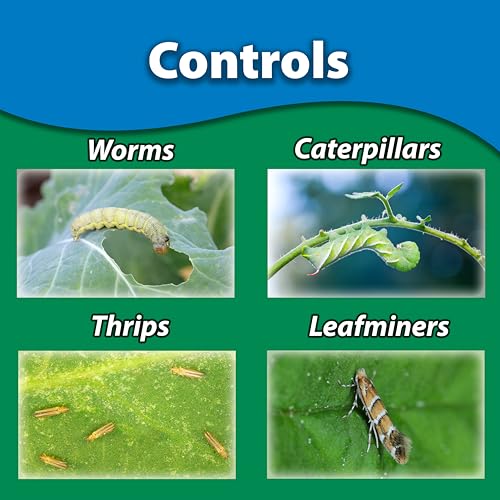


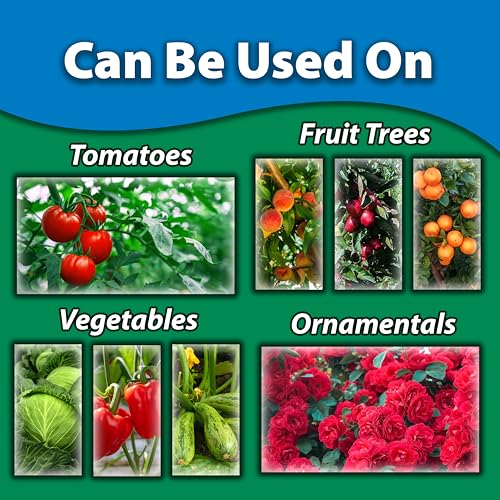

Monterey LG6135 Garden Insect Spray Contains Spinosad, 32-Ounce : desertcart.in: Garden & Outdoors Review: I purchased this product to continue my transition to a more nearly organic approach to pest control in my garden (I still resort to Malathion for certain pests). Now, after two thirds or so of the season is behind me, I want to put in my report. I used the Monterey Spinosad product on vegetables (squash, eggplant, cabbage, broccoli, cauliflower, and okra), fruits (primocane raspberries before flowering, apples, plums--both Japanese and European Gage varieties, quince, peach, black currants, red currants, and gooseberries), and one ornamental--hollyhocks. I used a 2 gallon RoundUp pump sprayer set to deliver almost a mist and followed the directions carefully about making sure the product remained well mixed and never saw a single sign of burning on any of the plants, including those with new growth, which was effectively all of them, including the various fruits (I mention this here because it was a complaint of one user). When applying it to flowering plants, I tried to spray well after sunset, but even so at times I did notice a few pollinating insects were still active (the product is said to be safe for bees once it has been dry for thirty minutes). That said, the number and kinds of insect pollinators now out in my garden is amazing. I was watching yesterday as a honeybee tried to get into three pumpkin blossoms in succession, before finding one with some room (the first two had three and four bumblebees respectively, the third only one). I should note that until late June I had not seen a single honeybee anywhere in my garden, but now there are many of them out and about. They really seem to love the Cleomes or Spider flowers. Some bad news: Spinosad is not effective against all insect pests. Shocking, right? Anyway, having seen a few posts on GardenWeb and elsewhere by people claiming it works to prevent squash borers, I used the product on my summer squash plants, beginning on July 11th (after removing the spun row cover) to try to control squash vine borers. Unfortunately, my 7 to 10 day application intervals were either too long to prevent squash vine borers from successfully getting into my yellow and zucchini squash plants, or the product does not work against them. I view the latter explanation as the more likely reality as vine borers are not listed on the label. It also does not control cucumber beetles or Japanese beetles (nor does it specifically claim to control either pest). I didn't spray for specifically for them, but when I applied the spray they were both present on various plants and were not inconvenienced by its use that I could tell. On the other hand, the product label does say "leaf-feeding beetles" are controlled by it under its guidelines for use on ornamental plants. Next, the control of cabbage worms and flea beetles was excellent (Note: flea beetles are not specifically listed on the label). I did use spun row covers on my cole crops till the end of June, but the Imported Cabbage butterflies have remained active in and around my garden (one landed and began laying eggs even as I was removing the spun row covers!), and yet since shifting to the spinosad product I haven't seen a single caterpillar or "worm" on any of my cole plants. The eggplant in my garden can and have in the past quickly become stunted by flea beetles. The spinosad product knocked them out and seems to protect the plants for at least a week, though after that they can quickly move back in. I accidentally performed a very good control test on this particular pest when I failed on the second application to spray three eggplant I'd planted in a somewhat obscure location. Those three plants, left untreated for 19 days, were riddled with flea beetle holes by the time I did spray them and have not really recovered. The product also seems to have completely prevented weevils from damaging my hollyhocks, which have always had a problem with these insects. Of course, I haven't seen a weevil on them yet this summer, so maybe the weevils just took a year off. Unlikely but possible, as the hollyhocks are now in a different location than they were. The product label again does not specifically list weevils. I used Spinosad on almost all the fruiting trees and the currants, gooseberries, and primocane raspberries to control both tip-boring larvae (on the peach and primocane raspberries after I noticed a problem) and as a preventative measure on the raspberries to suppress fruit flies. I stopped that last attempt as soon as flowering commenced. Regarding fruit flies, I haven't seen any yet, though I expect the nasty spotted winged drosophilas to show up now that the fruit is starting to ripen. They were a big problem in August and September last summer. Overall, I think the Monterey Spinosad spray is great when used correctly for the insects listed on the label. Review: THIS IS A MUST HAVE! OMG.....I am serious! Spinosad the life saver! Imagine my surprise that after 20+ years of gardening, I find a tobacco bud worm on a container of Supertunias. I never had them ever. Yeah, tomatoes are a different story. I think that tomatoes grow their own caterpillars they same way they produce tomatoes. It's in the seed/dna. Ok, so I found the budworm by mistake, but the damage was so telling. Wow! Damage so quickly even with hand picking the buggers & squishing. Well, they attacked adjoining plants and every other flowering plant I have. A HUGE THANKS TO REVIEWERS FOR THE HEADS UP! !! They are right. DO NOT try anything else. Just buy this, get on with your life and enjoy the beauty of your garden. No joke, die on contact and keeps working. I am so so so very happy. I've only had to do one treatment, but will reapply again just to be safe. I did try a few other things before this and nothing worked. From all the info I found online, use this right away as the Tobacco budworm is known to become resistant to many things if applied often or incorrectly. Well, I wasn't taking any chances. I gave everything a complete soaking under and ontop of every leaf and stem. In 3 days, major damage was done to 3 plants and in 1 application, a few days later everything was happy and blooming to the extreme again. I'll spray again soon just to make sure everything is good, but I still caught them early on all, but one plant so I don't expect a reinfestation. Still...I will never run dry with this! It's a must have for every gardener. Don't wait until you need it to order. Price is more than reasonable for what it does to keep it always on hand. Remember that the damage that can be done while you wait for delivery! I don't care what anyone says, the bud worms eat around the clock and in the sun too. I've seen it! Hit the "Add to Cart" now and thank the reviewers later!


| ASIN | B002BP12LI |
| Are batteries included? | No |
| Brand | Monteray |
| Customer Reviews | 4.6 4.6 out of 5 stars (1,988) |
| Date First Available | 6 August 2012 |
| Global Trade Identification Number | 00022179102446 |
| Item Dimensions LxWxH | 10.2 x 17.8 x 27.9 Centimeters |
| Item Form | सपर |
| Item Height | 11 Inches |
| Item Weight | 544 g |
| Item Width | 7 Inches |
| Item model number | LG6135 |
| Liquid Volume | 32 Fluid Ounces |
| Model number | LG6135 |
| Product Dimensions | 10.16 x 17.78 x 27.94 cm; 544.32 g |
| Target Species | Insects |
| UPC | 022179102446 |
D**E
I purchased this product to continue my transition to a more nearly organic approach to pest control in my garden (I still resort to Malathion for certain pests). Now, after two thirds or so of the season is behind me, I want to put in my report. I used the Monterey Spinosad product on vegetables (squash, eggplant, cabbage, broccoli, cauliflower, and okra), fruits (primocane raspberries before flowering, apples, plums--both Japanese and European Gage varieties, quince, peach, black currants, red currants, and gooseberries), and one ornamental--hollyhocks. I used a 2 gallon RoundUp pump sprayer set to deliver almost a mist and followed the directions carefully about making sure the product remained well mixed and never saw a single sign of burning on any of the plants, including those with new growth, which was effectively all of them, including the various fruits (I mention this here because it was a complaint of one user). When applying it to flowering plants, I tried to spray well after sunset, but even so at times I did notice a few pollinating insects were still active (the product is said to be safe for bees once it has been dry for thirty minutes). That said, the number and kinds of insect pollinators now out in my garden is amazing. I was watching yesterday as a honeybee tried to get into three pumpkin blossoms in succession, before finding one with some room (the first two had three and four bumblebees respectively, the third only one). I should note that until late June I had not seen a single honeybee anywhere in my garden, but now there are many of them out and about. They really seem to love the Cleomes or Spider flowers. Some bad news: Spinosad is not effective against all insect pests. Shocking, right? Anyway, having seen a few posts on GardenWeb and elsewhere by people claiming it works to prevent squash borers, I used the product on my summer squash plants, beginning on July 11th (after removing the spun row cover) to try to control squash vine borers. Unfortunately, my 7 to 10 day application intervals were either too long to prevent squash vine borers from successfully getting into my yellow and zucchini squash plants, or the product does not work against them. I view the latter explanation as the more likely reality as vine borers are not listed on the label. It also does not control cucumber beetles or Japanese beetles (nor does it specifically claim to control either pest). I didn't spray for specifically for them, but when I applied the spray they were both present on various plants and were not inconvenienced by its use that I could tell. On the other hand, the product label does say "leaf-feeding beetles" are controlled by it under its guidelines for use on ornamental plants. Next, the control of cabbage worms and flea beetles was excellent (Note: flea beetles are not specifically listed on the label). I did use spun row covers on my cole crops till the end of June, but the Imported Cabbage butterflies have remained active in and around my garden (one landed and began laying eggs even as I was removing the spun row covers!), and yet since shifting to the spinosad product I haven't seen a single caterpillar or "worm" on any of my cole plants. The eggplant in my garden can and have in the past quickly become stunted by flea beetles. The spinosad product knocked them out and seems to protect the plants for at least a week, though after that they can quickly move back in. I accidentally performed a very good control test on this particular pest when I failed on the second application to spray three eggplant I'd planted in a somewhat obscure location. Those three plants, left untreated for 19 days, were riddled with flea beetle holes by the time I did spray them and have not really recovered. The product also seems to have completely prevented weevils from damaging my hollyhocks, which have always had a problem with these insects. Of course, I haven't seen a weevil on them yet this summer, so maybe the weevils just took a year off. Unlikely but possible, as the hollyhocks are now in a different location than they were. The product label again does not specifically list weevils. I used Spinosad on almost all the fruiting trees and the currants, gooseberries, and primocane raspberries to control both tip-boring larvae (on the peach and primocane raspberries after I noticed a problem) and as a preventative measure on the raspberries to suppress fruit flies. I stopped that last attempt as soon as flowering commenced. Regarding fruit flies, I haven't seen any yet, though I expect the nasty spotted winged drosophilas to show up now that the fruit is starting to ripen. They were a big problem in August and September last summer. Overall, I think the Monterey Spinosad spray is great when used correctly for the insects listed on the label.
2**M
THIS IS A MUST HAVE! OMG.....I am serious! Spinosad the life saver! Imagine my surprise that after 20+ years of gardening, I find a tobacco bud worm on a container of Supertunias. I never had them ever. Yeah, tomatoes are a different story. I think that tomatoes grow their own caterpillars they same way they produce tomatoes. It's in the seed/dna. Ok, so I found the budworm by mistake, but the damage was so telling. Wow! Damage so quickly even with hand picking the buggers & squishing. Well, they attacked adjoining plants and every other flowering plant I have. A HUGE THANKS TO REVIEWERS FOR THE HEADS UP! !! They are right. DO NOT try anything else. Just buy this, get on with your life and enjoy the beauty of your garden. No joke, die on contact and keeps working. I am so so so very happy. I've only had to do one treatment, but will reapply again just to be safe. I did try a few other things before this and nothing worked. From all the info I found online, use this right away as the Tobacco budworm is known to become resistant to many things if applied often or incorrectly. Well, I wasn't taking any chances. I gave everything a complete soaking under and ontop of every leaf and stem. In 3 days, major damage was done to 3 plants and in 1 application, a few days later everything was happy and blooming to the extreme again. I'll spray again soon just to make sure everything is good, but I still caught them early on all, but one plant so I don't expect a reinfestation. Still...I will never run dry with this! It's a must have for every gardener. Don't wait until you need it to order. Price is more than reasonable for what it does to keep it always on hand. Remember that the damage that can be done while you wait for delivery! I don't care what anyone says, the bud worms eat around the clock and in the sun too. I've seen it! Hit the "Add to Cart" now and thank the reviewers later!
M**.
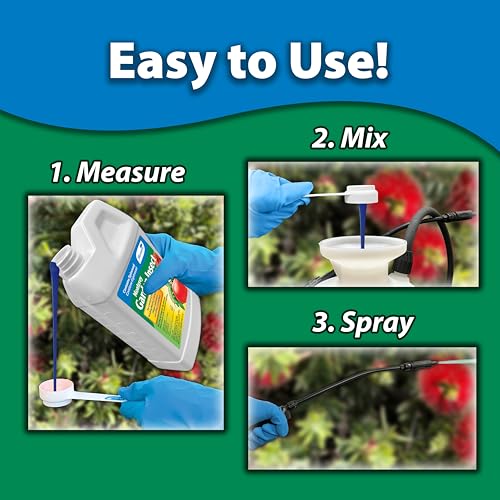
Took care of the caterpillars that were attacking my tomatoes (phew!). Would have given it 5 stars except that it took 4 rounds of spraying to clear up the caterpillars on my peach trees - not sure why those were so much more difficult. In terms of other 'pluses' for the product... - Arrived on time - Easy to use (simply pour the concentrate into one of the pump/spray units you can buy at Home Depot and dilute with water, see attached photo) - It has no odor (a BIG plus!) -Contains Spinosad - which was what my local nursery told me was a 'must use' - According to the details, can also be used to control fire ants - which I also have in my yard. Will be glad to have this on hand for the next time those ants make an appearance! Very happy with the product and because one of these jugs lasts SO long, it's a great value for the price.
L**K
Last summer my garden was invaded by SWD - spotted-wing drosophila. I have ~6 types of thornless blackberry cultivars, several yellow and red raspberry varieties, red and green seedless grapes, and nearly 20 varieties of blueberries. I garden organically and use very few chemicals or treatments at all - anything I do must be safe for children, pets, bees, etc. The grapes were fine (I think the skin is too thick for the SWD to bite through), and the blueberries also appear unaffected. All my cane berries were destroyed, though. (The flies left my vegetables alone, as far as I could tell. Apparently they don't like tomatoes.) Before I figured out what had attacked my raspberries and blackberries, and what to do about it (they looked dried out, like the actual fruit had been sunburned, perhaps) my entire cane berry crop was infested and destroyed. I'd never heard of a fruit fly attacking live crops! Thousands of Anne yellow raspberries...I was pretty much devastated as I've been growing them for years, my son LOVES them and I've never seen them in stores. The skin is thin, the berries delicate - what makes them basically impossible to ship & sell commercially makes them attractive to SWD fruit flies. Supposedly spinosad would fight SWD fruit flies, so this year, I tried this Monterey Garden Insect Spray diluted as directed here, using the "Smith 190285" 1-gal sprayer (also on Amazon). It's incredible! As a test, I sprayed some in & on my compost bin, which was teeming with thousands of SWD fruit flies. The next day there were a few dozen left; I gave it one more dose and they were gone. Weeks later, they're STILL gone (from the compost anyhow). It's still a battle on my raspberries - the flies are not totally gone yet. I'd only done one treatment and about 50% of the crop is clear of flies/eggs - still a huge improvement from last year. I treated again last night and am just going to keep at it. The blackberries are ripening (in June...!) and I have my fingers crossed I treated them in time...we'll see. I'll update if/when I manage to eradicate the awful, horrible and truly disgusting spotted-wing drosophila from my garden.
C**S
First time gardener. Like many with the lockdown I am attempting to grow food/vegetables for the first time. All was going well until the pests came along and started devouring all my beautiful new plants. Everyone I knew was having the same frutrating heartbreaking problem. I tried all the "natural" advice on youtube, lol none of it worked and some of it (dish soapy water & vinegar) killed a few plants. Also keep in mind. Dish Soap is a chemical ;) So I ordered this and a small pump pressure Sprayer as a last attempt. And with a hope & a prayer sprayed away. And it worked! No more bugs! Except those annoying yet harmless seemingly indestructible fungus knats! and my remaining plants are fine. I now use this about once a week just around the outside of and underneath my grow bags (where bugs like to hide) and to make a perimeter around the grow bag area. I only use it on my actual plant leaves if I find a catapiller or if I find the tiny holes on the leaves (flea beetles) starting again. It does say on the bottle that it can be used in organic gardening. So I guess it safer..? But Bottom line and Reality check. My first lesson in growing food. You cannot successfully grow food outside without some kind of pesticide. Its just nature. Plants are natural-nature and so are Bugs natural-nature. After doing some research yes, even "organic" farmers DO use chemical pesticides & fertilizers. They are just less harmful approved ones. The fantasy of zero chemical food growing is just that, a fantasy. That being said. This does work and with this and a homemade sun screen "greenhouse" my plants are happy & growing again.
Trustpilot
1 month ago
3 weeks ago