
DOWNLOAD THE APP


Customer Services
Copyright © 2025 Desertcart Holdings Limited
DOWNLOAD THE APP
Full description not available
N**Y
Practical, informative, interesting, and motivating!
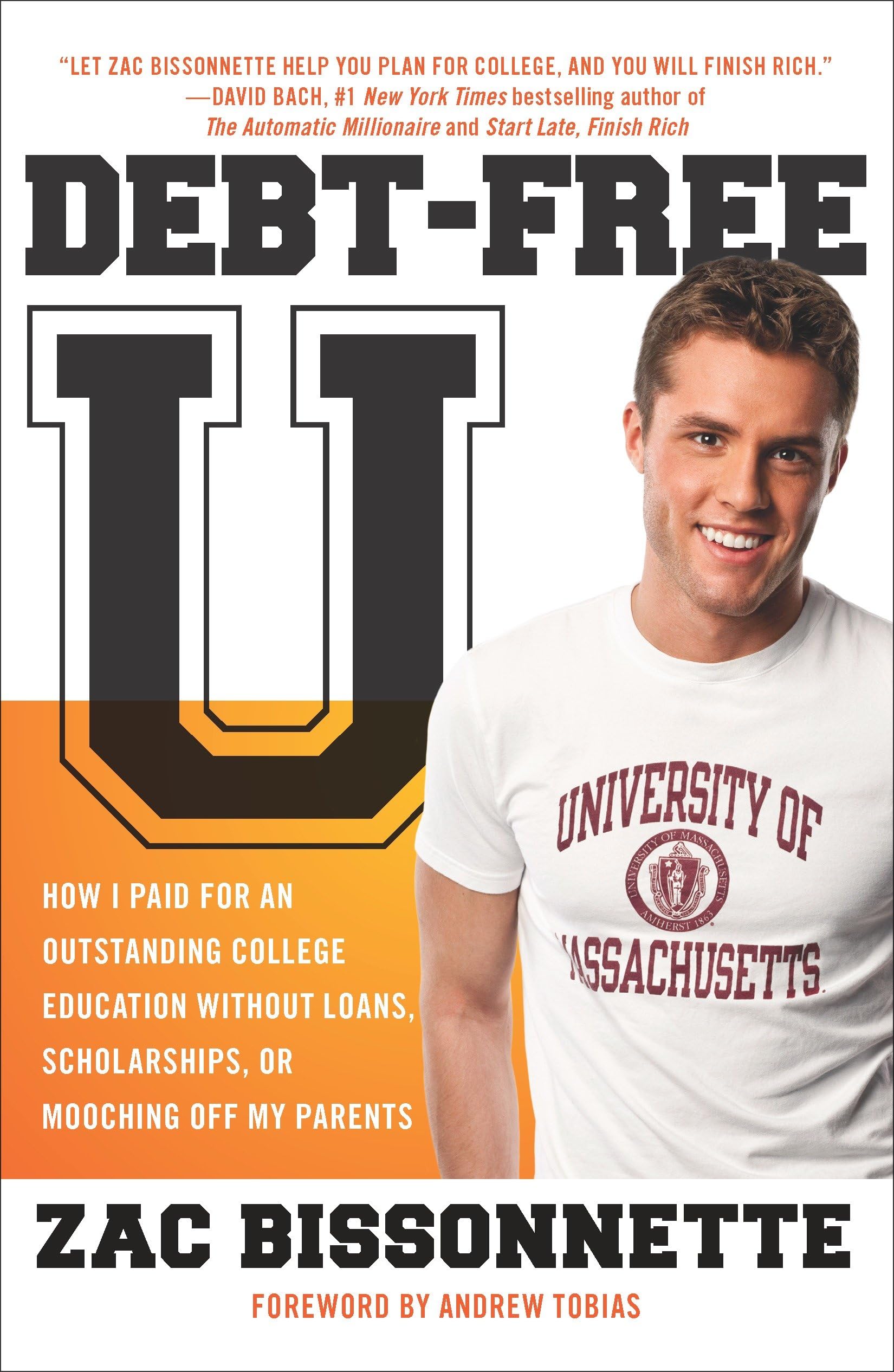
I found Zac Bissonnette's book to be an excellent read. I think he did a great job at laying out some advice that you normally wouldn't hear often (if at all). Also, his writing style and numerous real-world examples, many of which tell about his own friends or people who wrote directly to him about their experiences, really kept me interested, making the book fairly easy to get through.He offers a myriad of practical information and tips for getting through college without taking out student loans (and explains in detail why those student loans should be avoided as much as possible). And if it takes the extra effort of your college kid getting part-time jobs to pay for his education, well, at least he didn't waste all his free time watching TV and playing video games, right? I'm now fairly convinced that taking out a student loan is pretty much a bad idea. The current default rate on student loans (explained in the book) is a bit disturbing.He also explains why college rankings are nothing but made-up nonsense. He provides some pretty solid reasoning that tells why there is really no basis to a vast majority of rankings as far as telling you which colleges are better academically (and no ranking could guarantee any particular college giving a someone a better education than any other). One of the main points he seemed to be pushing for is that no college can turn a bad student into a good one. Likewise, a good student can excel at any college or university, regardless of its ranking. Generally, he says, it's not the school as a whole that determines a student's experience there but such factors as individual classes and professors (for this, he recommends actually looking up reviews online about potential professors for classes and choose classes based on professors who seem to get good reviews for their teaching).Whether you agree with all his advice or not, I think it's very interesting and perhaps even prudent to at least consider it. I personally can't tell you whether a private college education is worth it or if it would be better to go with Mr. Bissionnette's advice of attending first a community college and then a public university. I don't have enough information to argue either way. Regardless, this book offers what appears to be decent financial advice. Because taking debts out for student loans is such a significant threat in our current economy to a student's future financial well-being, looking into more affordable college options should definitely not be completely ruled out. In addition (and I found this an interesting but almost humorous tidbit), he even explained how students might start saving for their retirement while in college with the money they would save by not going to an "overpriced" college and not taking out student loans.It's also important to note that Mr. Bissionnette did not say that private education is terrible or to be /completely/ avoided. In fact, I can recall at least two or three places in his book where he even advised applying to private as well as public institutions (if you were interested in attending a private college to start with)! He did recognize that private colleges often do offer significant grants, scholarships, and financial aid other than loans that public universities just don't have. He said that if you can get a good enough merit-based financial aid package from a private college you want to attend, go for it! However, if attending a private college means graduating with around $50,000 or more in student debt, then it is a pretty poor decision overall because the losses outweigh the gains (to speak of your financial future, at least).Just for a bit of perspective, I'm a high school junior who just happened upon this book while browsing Amazon. Something motivated me to buy it, and I'm really glad I did. Perhaps my age might indicate that I'm still a bit impressionable and easily persuaded? I'm not sure. However, I think this book can potentially save people a lot of financial heartache by helping them make decisions that they can actually afford rather than face horrible consequences later on. I definitely recommend this book to parents or high school students considering college options, especially those who are currently planning on taking out student loans to pay for their education.To parents: If you have a relatively self-motivated high school student, I would have your child read this book as well. I took the initiative myself here, but I found it a bit inspiring in that it suggested practical routes for preparing for future college expenses that could even begin years before. For example, because of this book, I'm considering finding a job this summer to earn money for savings.An additional comment:I will admit that Bissionnette's advice isn't perfect. It requires a lot of work on the part of students following the plan. For example, maintaining a job while in college could be difficult, I would think. And constantly giving up your summers for a full-time job would be frustrating to many. There is a good degree of determination necessary. However, many of the tips may be useful still, even if you wouldn't care to follow everything he suggested. As with all advice books, be cautious not to follow things exactly. All content is written in a generalized or often even an idealized sense, so not everything works for everyone. If you find a useful tip, though, why not try it? Or at least investigate further (perhaps even on your own) to see if it's worthwhile.
A**S
great but I wish he had mentioned CLEP
I really liked this book. Since other people have covered what this book is about I'm just offering my opinions, so you've been warned. I just wish Zac had mentioned the CLEP tests. They're tests administered by the college board and most public colleges accept them, you can actually take the CLEP tests at many colleges and community colleges throughout the U.S. They offer tests in general education classes such as English, Composition, College Algebra, Science, Sociology, etc.If you pass the test, you get credit for it and not have to take the class. That way you don't have to register for the class, buy the textbook and wait a semester to earn your grade. If you're driven and good at studying the CLEP tests are for you, and its much cheaper than if you had taken the class. They're a great way to save money and many community colleges and 4 year public colleges accept them.A lot of colleges have limits on how many they accept, many have a 15-30 CLEP credit limit. They're a great way to save money.When I was in high school I had counselors telling me that scholarships were readily available, and I did try to get them but I wasn't able to ever get one. So when I read Zac's book I was relieved to find out that it wasn't just me. The author isn't saying ignore scholarships but if you've tried to get them, don't beat yourself up about them there are other ways to finance a college education.I live in the mid-west so people don't really care where you go to college here. They just care that you're the right person for the job. I've had a typical middle class upbringing. I've never gone to prep schools, I've never even gone to a private school. My parents are both educated and we've traveled a lot, that being said, I do think that private colleges open certain doors but I think that in some areas of the U.S. like the East Coast it matters more than in other areas such as the mid-west.For example I'm sure if I wanted to work for Goldman Sachs it would probably help to graduate from a private college, have connections, have gone to prep schools, etc. Then again plenty of common people have made it without going to an Ivy league or connections, or both. Different people have different paths to success.I really can't say one way is better than the other. Most of the jobs I've had ever since I started working at age 18 were jobs where I didn't know a single soul. I had to learn how to interview, how to make a good and lasting impression, and to ask friends and family members if they would be willing to be references. I don't believe that its always "who you know."And every job I've had once I made it past the interview, I had to prove to my employer that I was the respectable person they hired and that I was a good worker. I don't believe you need to spend 100k for a good education either. With colleges and city libraries in most cities, the internet, bookstores like Amazon, etc. its up to you to learn as much as you want.Just because you didn't go to an Ivy college doesn't mean you can't get a great education. IMO colleges are a business even the ones that claim to be "non-profit." I also like that Zac supports independent study, I think you can actually learn a lot more on your own. Its a myth that you need college to teach you how to learn or think critically.If people need college for that then how did they get through high school. My parents taught me how to think critically. Actually most of my college classes aren't about thinking critically, most of the professors just want you to do your work, and many of them lecture from the textbook. A lot of them don't like hearing a contradicting opinion.Once I find out a professor is like that, I tend to avoid their classes, but other professors have been great and encouraging, it really depends who you get. It also helps if you go to rate my prof.I think its kind of cool that the author made a career for himself with an art history degree. But it seems like if you're going to major in something like that then it helps to have something else on the side, he had his gig at AOL. Most college kids can't really work at jobs they like right off the bat, for most people it takes working a couple of jobs they hate before they find the one they like.Anyway I'll shut up now, great book, read it, its not perfect, but your own experience is going to be different from his. The point is to learn what you can, apply it to your own life and write your own life story.
Trustpilot
3 weeks ago
1 month ago