
DOWNLOAD THE APP


Customer Services
Copyright © 2025 Desertcart Holdings Limited
DOWNLOAD THE APP
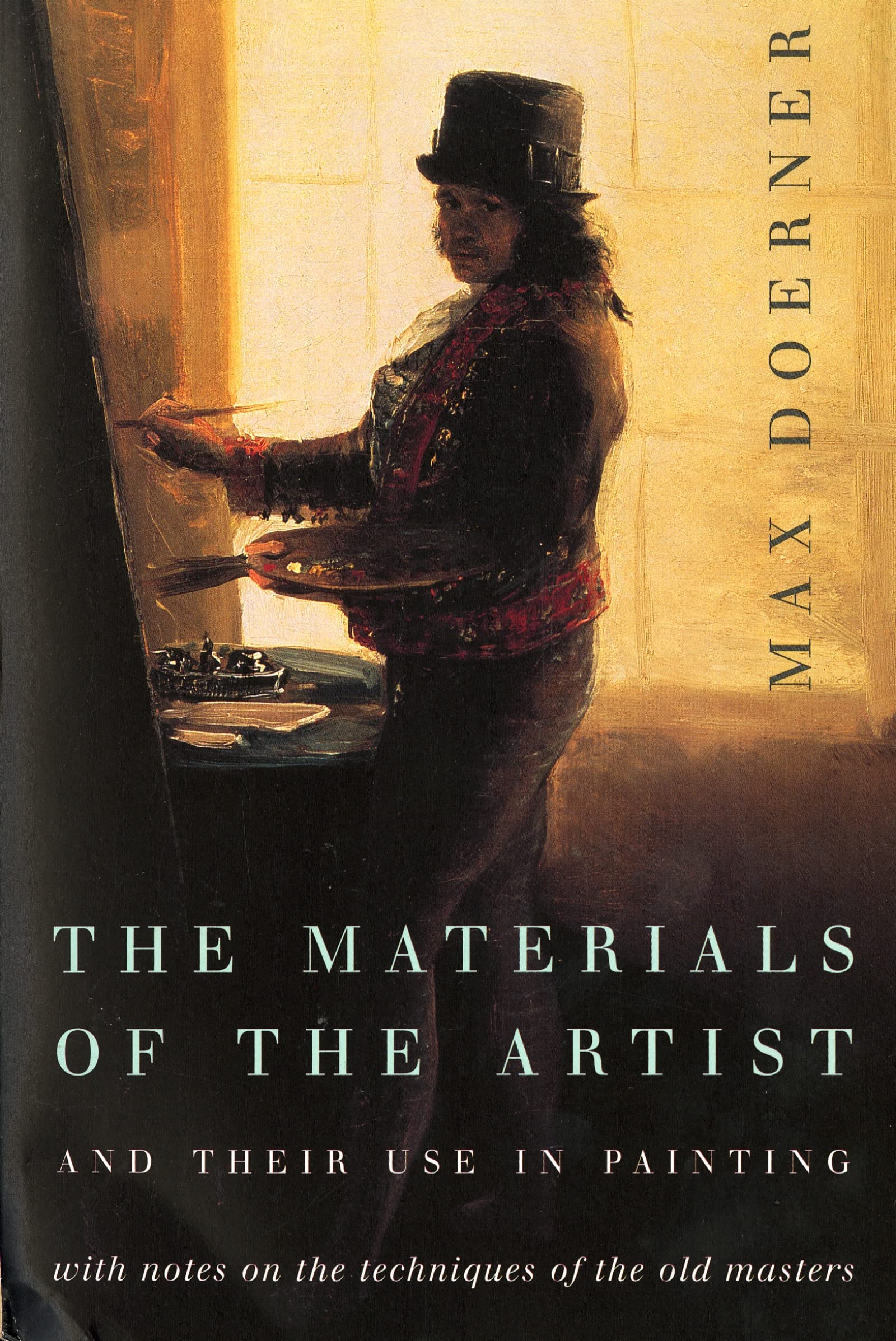
The Materials of the Artist and Their Use in Painting: With Notes on the Techniques of the Old Masters, Revised Edition [Doerner, Max] on desertcart.com. *FREE* shipping on qualifying offers. The Materials of the Artist and Their Use in Painting: With Notes on the Techniques of the Old Masters, Revised Edition Review: Excellent but might not be the whole story - Max Doerner (1870-1939) taught at Academy of Fine Arts in Munich for 25+ years, and in his day an major expert on painting techniques. This book has played a major role in art history and research since the first day it was published. Do note the book was first published in 1934, and then translated from German, hence the writing style can be somewhat turbid. Perseverance pays with there being more information in here than you can shake a stick at. My comment about being careful is a result of recent studies of old master paintings. The old masters would typically have a team of apprentices working alongside them, mixing paint, painting parts of the painting that the master was probably too bored to bother with (as well as good training for the apprentice) etc. The Master/Apprentice setup allowed for a continuous stream of knowledge being passed along the generations. However as oil paint technology advanced, in particular the ability to buy premixed paints off the shelf, the painter no longer needed a team of apprentices. He could pretty much get by on his own. Hence there was no longer anyone for the painter to pass on his knowledge to. This resulted in a considerable amount of technical knowledge being lost. (A good example is the recent theory promulgated by David Hockney that the old masters were able to paint such realistic paintings as they used rudimentary projection techniques to place a guide image on the canvas, overwhich they painted. No one knows if he is right or wrong). From the 1800's on, technical experts such as Doerner and Charles Eastlake ("Methods and Materials of Painting") began to impart their wisdom on how the old master paintings were created. But the techniques thay had available were very rudimentary, more often than not being a case of the expert trying to reproduce a certain style and looking at the painting surface close up. The experts proferred their theories and techniques, often with much aplomb leaving no room for doubt. Unfortunately they were often quite off the mark - they could emulate a style somewhat but never 100%. There are too many variables involved even for a discerning eye. It has only been with recent advances in scientific analysis, usually chemistry based, that a truer understanding of the old master technique is finally being determined. Van Wettering's excellent "Rembrandt - the painter at work" book details the findings of extensive research carried out on a number of paintings considered to have been painted by Rembrandt. The book is 340 pages, and they still haven't got all the answers. But what they have done is to throw in to doubt the theories and techniques of the 19th/20th C experts. There is a welter of information in this book, but if you are trying to perfectly replicate a certain old master painterly technique, and failing to do so, then be warned the experts might not be such experts afterall. All said and done, I do recommend this book for the wealth of information it contains. Along with oil painting it addresses pastels, tempera and mural techniques. Even if you do take the techniques in here as verbatim for an old master then there is all likelihood that you'll create a great painting. Review: A Classic - This book first came out in the 1930s and presents the prevailing methodology of artist's materials of that era. The book contains no illustrations and is meant to be read, not looked at. The information presented in this volume is both specific and broad, and certainly for the patient reader who takes time to study what it has to say, the book will yield much fruit. This volume contains a wealth of information and together with Ralph Mayer's "The Artist's Handbook" and Charles Eastlake's "Methods and Materials of Painting of the Great Schools and Masters" presents a comprehensive and thoughtful overview of traditional art materials and how these were handled during the past four centuries. I highly recommend it.
| Best Sellers Rank | #1,197,782 in Books ( See Top 100 in Books ) #392 in Art Encyclopedias #925 in Watercolor Painting #5,492 in Art History (Books) |
| Customer Reviews | 4.7 out of 5 stars 72 Reviews |
B**H
Excellent but might not be the whole story
Max Doerner (1870-1939) taught at Academy of Fine Arts in Munich for 25+ years, and in his day an major expert on painting techniques. This book has played a major role in art history and research since the first day it was published. Do note the book was first published in 1934, and then translated from German, hence the writing style can be somewhat turbid. Perseverance pays with there being more information in here than you can shake a stick at. My comment about being careful is a result of recent studies of old master paintings. The old masters would typically have a team of apprentices working alongside them, mixing paint, painting parts of the painting that the master was probably too bored to bother with (as well as good training for the apprentice) etc. The Master/Apprentice setup allowed for a continuous stream of knowledge being passed along the generations. However as oil paint technology advanced, in particular the ability to buy premixed paints off the shelf, the painter no longer needed a team of apprentices. He could pretty much get by on his own. Hence there was no longer anyone for the painter to pass on his knowledge to. This resulted in a considerable amount of technical knowledge being lost. (A good example is the recent theory promulgated by David Hockney that the old masters were able to paint such realistic paintings as they used rudimentary projection techniques to place a guide image on the canvas, overwhich they painted. No one knows if he is right or wrong). From the 1800's on, technical experts such as Doerner and Charles Eastlake ("Methods and Materials of Painting") began to impart their wisdom on how the old master paintings were created. But the techniques thay had available were very rudimentary, more often than not being a case of the expert trying to reproduce a certain style and looking at the painting surface close up. The experts proferred their theories and techniques, often with much aplomb leaving no room for doubt. Unfortunately they were often quite off the mark - they could emulate a style somewhat but never 100%. There are too many variables involved even for a discerning eye. It has only been with recent advances in scientific analysis, usually chemistry based, that a truer understanding of the old master technique is finally being determined. Van Wettering's excellent "Rembrandt - the painter at work" book details the findings of extensive research carried out on a number of paintings considered to have been painted by Rembrandt. The book is 340 pages, and they still haven't got all the answers. But what they have done is to throw in to doubt the theories and techniques of the 19th/20th C experts. There is a welter of information in this book, but if you are trying to perfectly replicate a certain old master painterly technique, and failing to do so, then be warned the experts might not be such experts afterall. All said and done, I do recommend this book for the wealth of information it contains. Along with oil painting it addresses pastels, tempera and mural techniques. Even if you do take the techniques in here as verbatim for an old master then there is all likelihood that you'll create a great painting.
A**N
A Classic
This book first came out in the 1930s and presents the prevailing methodology of artist's materials of that era. The book contains no illustrations and is meant to be read, not looked at. The information presented in this volume is both specific and broad, and certainly for the patient reader who takes time to study what it has to say, the book will yield much fruit. This volume contains a wealth of information and together with Ralph Mayer's "The Artist's Handbook" and Charles Eastlake's "Methods and Materials of Painting of the Great Schools and Masters" presents a comprehensive and thoughtful overview of traditional art materials and how these were handled during the past four centuries. I highly recommend it.
M**S
A very good book
A great book, a lot of painting tips . Excellent
M**S
Doerner's Materials of the Artist
Despite some of the misconceptions and statements based on period based analysis and understanding, this is really one of my favourite art books of this genre. The material comes, largely, from lectures and teaching instruction by Max Doerner, professor in the Academy of Fine Arts, Munich. Some of this material comes from his teachers and techniques of earlier artists, and so encompasses the teachings and techniques derived roughly from the Renaissance through to the 1930s. So this work, in many ways, acts as a bridge between the traditional and the modern era of art, keeping alive the traditional methods and materials of working whilst covering the methods of modernists, i.e., Impressionist painters with their improvised design and heavy impasto characteristics. There is a true wealth of information here for the student, as well as in depth tutorials on the use and misuse of various mediums and the techniques and materials of those particular artistic disciplines explored in the text. The author goes into detail which tellingly shows he has personally delved into and explored many of these artistic disciplines (true fresco comes to mind), and although I doubt I shall venture into some of these arenas, they were, nonetheless, fascinating, educational and a treat to read. As I said previously, I found much here to commend this book, important information on traditional working methods, grounds, pigments, light-fastness, chemical interactions and reactions, mediums and mastics, permanence and archival considerations. There are many descriptions and deconstructions of old master techniques; Some of these are based on careful observation of master paintings as well as information gleaned from conservation done within the author's time period, artistic conjecture, speculation and active experimentation. Sometimes knowledge is based on actual information passed down regarding the working methodology of a particular artist or time frame -- and that is very valuable indeed. My point is that we know much more currently about certain facets than the author or people living and working within that original publication time span given our scientific advancements and scientific analysis of paintings. The professor talks about the use of Lead White and Zinc Oxide, tentatively commenting on the new Titanium Dioxide which hadn't been thoroughly tested as yet for permanence or age-induced translucency. He does, however, point out some of the dangers of using Zinc Oxide. We now know that Zinc Oxide can lead to cracking, blisters and, in worse cases, delamination of the paint surface. Many of the paint pigments we have today have been formulated to a high degree of permanence and light-fastness, but many of the author's injunctions still apply to certain fugitive pigments (unless they have been reformulated to greatly improve stability and light-fastness). Cons regarding this work? As expected from the original publication date, the illustrations were black and white and looked like 10th generation Xerox copies. So, if you wish to follow commentary based on the illustrations, it is best that you search out modern colour representations of same. There was only one chapter which I found jarring and disturbing: Chapter X, The Restoring of Easel Pictures. The conservation methods of the period (and certainly earlier) were horrific in some cases. The author relates restoration stories so atrocious that I actually cringed reading them, and I'm sure any present day active conservator has run across some of these horror stories made manifest. The author does go on to say, however, that there needs to be a standardisation of conservation methods and procedures derived and augmented by science in the processes of restoration and conservation. So, kudos for that astute observation. My takeaway here is this: If you are serious about restoration and conservation, don't follow historical treatises (including this re conservation), but rather wean yourself on the latest techniques and accepted practices -- all of which are ever evolving. Oh, and certainly don't undertake restoration and conservation unless you know what you are doing! I heartily recommend and commend this book to the serious fine artist who wishes to infuse their work with lessons learned and the techniques and working habits of the Old Masters who still have much to impart and teach those willing to learn. He covers a wide range of artistic expression and techniques, much of which is valid today, and illumines the working craftsmanship of vanished ateliers.
P**E
Must have for any analog visual artist
This book is a classic for a painter or restorer of art. It goes into using raw materials to make paint and gesso. I learned much about raw pigments and the way artists used materials generations ago. A very important book for any artists bookshelf.
R**E
solid bedrock know-how for the painter
While most curriculums today in art schools will have the words conception underlined, there is a desparate need for the craft of painting to be taught. If you do not want to wait until craftsmanship comes back in style and are a painter, than you must have this book. If you are learning how to better understand the painters of yesterday; you must have this book. If you are curious as to how painters such as Vermeer etc could accomplish want they did, this book is for you. Though the language is sometimes formal the information is so fascinating and inclusive it makes for great and enjoyable reading; Painter or just admirer.
G**.
Informative materials for artist
Very informative ! All artist should have this artist material guide book on the book shelves !
J**K
research on modern art
I'm reading what I can find about information available to artists in early 20th c. which influenced direction of modern art. This book was mentioned by Georgia O'Keefe and Arthur Dove, who were both looking to invent uniquely American art. This book's primary focus us on techniques involving mediums, but is generally helpful.
Trustpilot
2 weeks ago
1 month ago