Desert Online General Trading LLC
Dubai, United Arab Emirates
Desert Online General Trading LLC
Dubai, United Arab Emirates

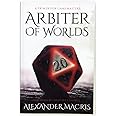
Arbiter of Worlds: A Primer for Gamemasters
M**Y
Theory and Practice
As a GM with 40 years of experience with D&D and other games, and especially as one who prefers an old school approach to gaming, I tend to be skeptical of game master advice. Most of it is just not very good, or dry as sandpaper, or overly focused on one game, or vague, or gets lost in its own florid prose. I bought this book on impulse because I liked Alexander's previous work with the ACKS game system, and a long plane flight gave me time to digest it. I was not disappointed, and intend to read it again. It is the best primer on GMing I have ever read. I found that Alexander's advice so closely matches my own GMing style that he could be my alter ego; nevertheless (or perhaps because of that) I found useful insights and perspectives in this book.I did not find the book dry or tedious; the style is conversational, concise, and professional. Each chapter is short and topical, easily digested in a few minutes. Each chapter presents an idea, and builds on previous chapters, so it is best read from start to finish. Each concept recommends a philosophical approach, explains why it is important, compares and contrasts with alternative approaches, and then explains how to practically apply it. The practical part is as specific is how to draw and populate a hex crawl map.New GMs will find that this book covers all major aspects of preparing, adjudicating, and running games. It is system neutral, and uses a variety of games in it's examples; and it focuses on concepts rather than specifics.Experienced GMs will find much that is familiar, but rather than finding it redundant, I enjoyed the interplay of principles and practices, and I always gain insight listening to another GM's practices. Less so when their style is very divergent; but in Macris' case, his style is so similar to my own that it was a fascinating read with many useful tidbits and observations.Two things stuck in my mind as especially fresh and interesting:First, the appendix on alignment had some interesting insights. (I know, you're already groaning.) Alignment is perpetually controversial. Macris is not prescriptive, surveying several common approaches and leaving it to the reader to to decide how to interpret it, but one thing I found interesting was systematic mapping of alignments to philosophical concepts. I'm sure it's been done before, but reading and arguing about alignment is like a guilty pleasure.But the really cool-and-new thing is what Macris terms the "intersection of law and gaming," in which he describes how to apply legal practice to the interpretation of game rules. This sounds super dry and tedious, but he covers it in two brief chapters and it is easy reading, and very practical. He briefly covers common law vs statutory law, "heavy" vs "lite" games, principles of judicial adjudication, and rules lawyering. I found this a rare insight from a profession I know little about. it is educational simply from a legal point of view, but then applying legal practice to game rules is mind blowing. I need to read it again, and I expect it will significantly inform my philosophy and practice going forward. These two chapters alone on the topic of law are easily worth the price of the book.Final note: Much ink has been spilled trying to define the OSR. In the future I'll just point to this book. It is distilled 80 proof OSR, yet also modern and balanced.
M**E
Should be Required Reading for GMs and players alike
Alexander Macris’ Arbiter of Worlds strides into battle like a formidable fighter/magic user, taking on –– among other adversaries – one of the most entrenched yet flawed ideas in modern FRPGs: that the GM is primarily a storyteller. With an unwavering stance and wielding the powerful magical of real experience, Macris argues instead that the GM’s most vital role is that of Judge—not puppet master, not screenwriter, but the impartial arbiter of a living world shaped by player agency. Should be required reading in an age where for-profit YouTube channels pass as real gaming.
A**K
Good read overall
Lots of recaps that imo are wasted space fillers. However the first 10chapters I found to be quite educational and interesting. The remaining of the book doesn’t pertain to my needs whatsoever in terms of other rpg styles. I mainly only picked up for DND references.
A**S
Arbiter of Worlds, Master of Dungeons
I am not a veteran of the old-school era of tabletop roleplaying games. I was born too late, and the first copy of the D&D rules I owned was the original 3rd edition player's handbook. However, I was born just in time to grow up playing computer game adaptations of the AD&D ruleset that were released in a series known as the "Gold Box Games". While a digital dungeon master and a constrained scenario that a computer game presents doesn't have the same level of potential as something a group of people at a table have, they still managed to instill in me a great love for the things that define those older rulesets.When I went back looking a few years ago for a way to run a game that would scratch that itch, I found myself wondering about the mindset and style of an old-school gamemaster. There are many negative stereotypes and contradictory information associated this style of dungeon mastering. I wanted to read something that would expound upon what makes a good old-school dungeon master, how do they run games smoothly, and what bad habits do they need to avoid?This book, in clear and concise language, provides answers for those questions. Alex will take you through how to structure a game, set up the plot, manage players, and how to your role as the dungeon master fits into the game both philosophically and in-play. Alex is a veteran wargamer as well as RPG designer, so he's also aware of the wargaming roots of D&D, what sets it apart, and how those differences make the game fun. I understand that not everyone enjoys this style of DM'ing, but I think there's valuable information here for anyone who wants to run a roleplaying game, especially the parts around managing players.TL;DR: If you've heard the siren call of the OSR (even if you never played the original editions), and you're wanting to get into the mindset of an old-school DM, read this book. This is the primer that you're looking for, that will guide you in the best ways of your role as the Arbiter of Worlds.
T**S
Great tips for new & experienced game masters
Are you thinking of running a tabletop role playing game (RPG)? Would you like some tips that cover a wide array of thought on the topic? Then, reading this short book will help you out immensely. This book covered areas of running a game I had never thought of. Well worth the price & time to read it.
Trustpilot
1 week ago
1 month ago