We remain fully operational. Our teams are working around the clock to ensure your deliveries continue safely.

DOWNLOAD THE APP


Customer Services
Copyright © 2025 Desertcart Holdings Limited
DOWNLOAD THE APP
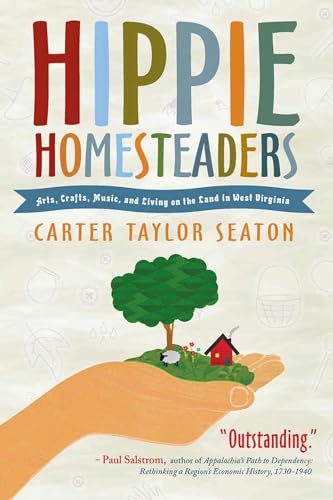
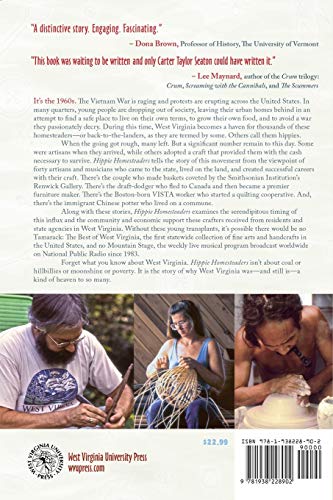
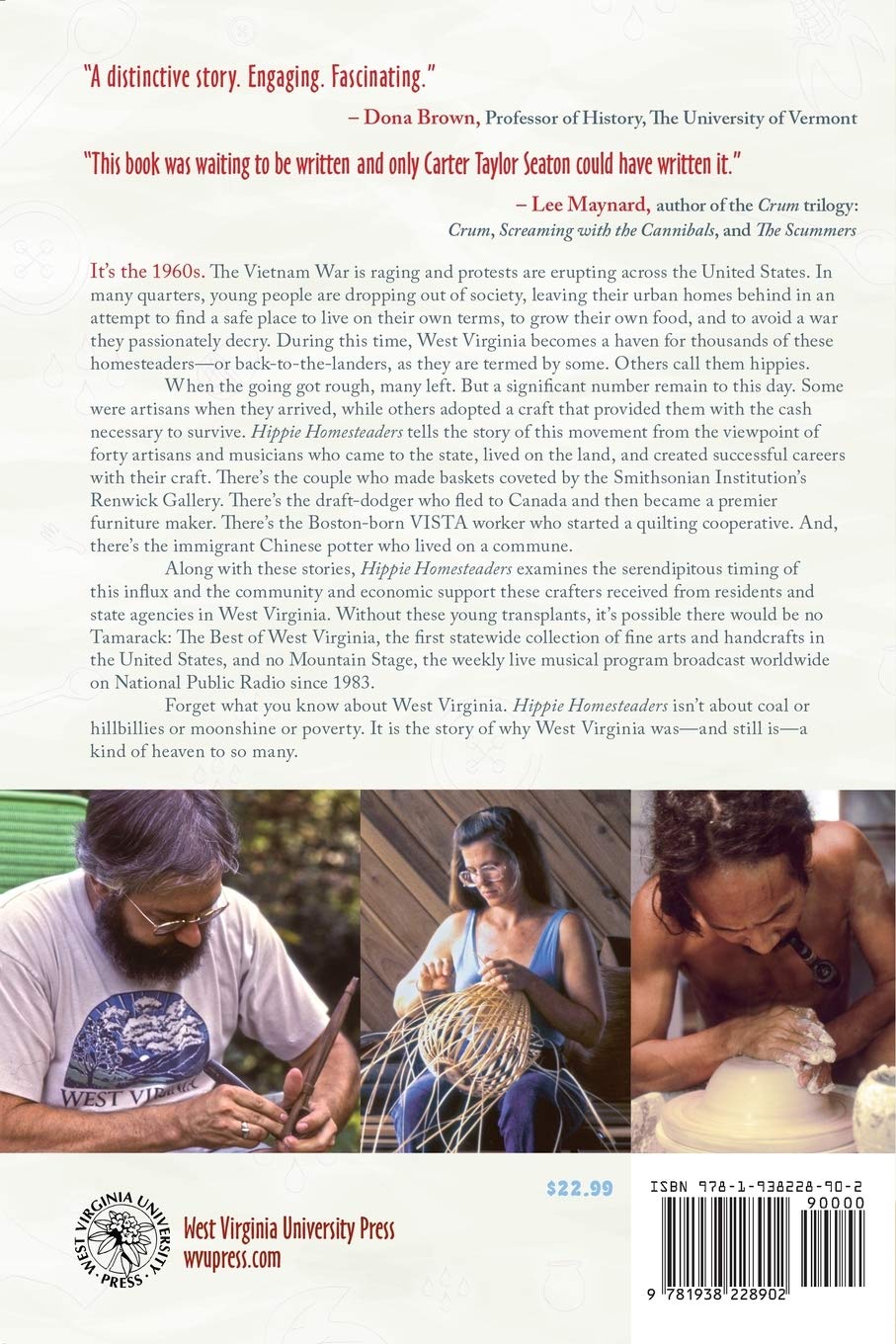
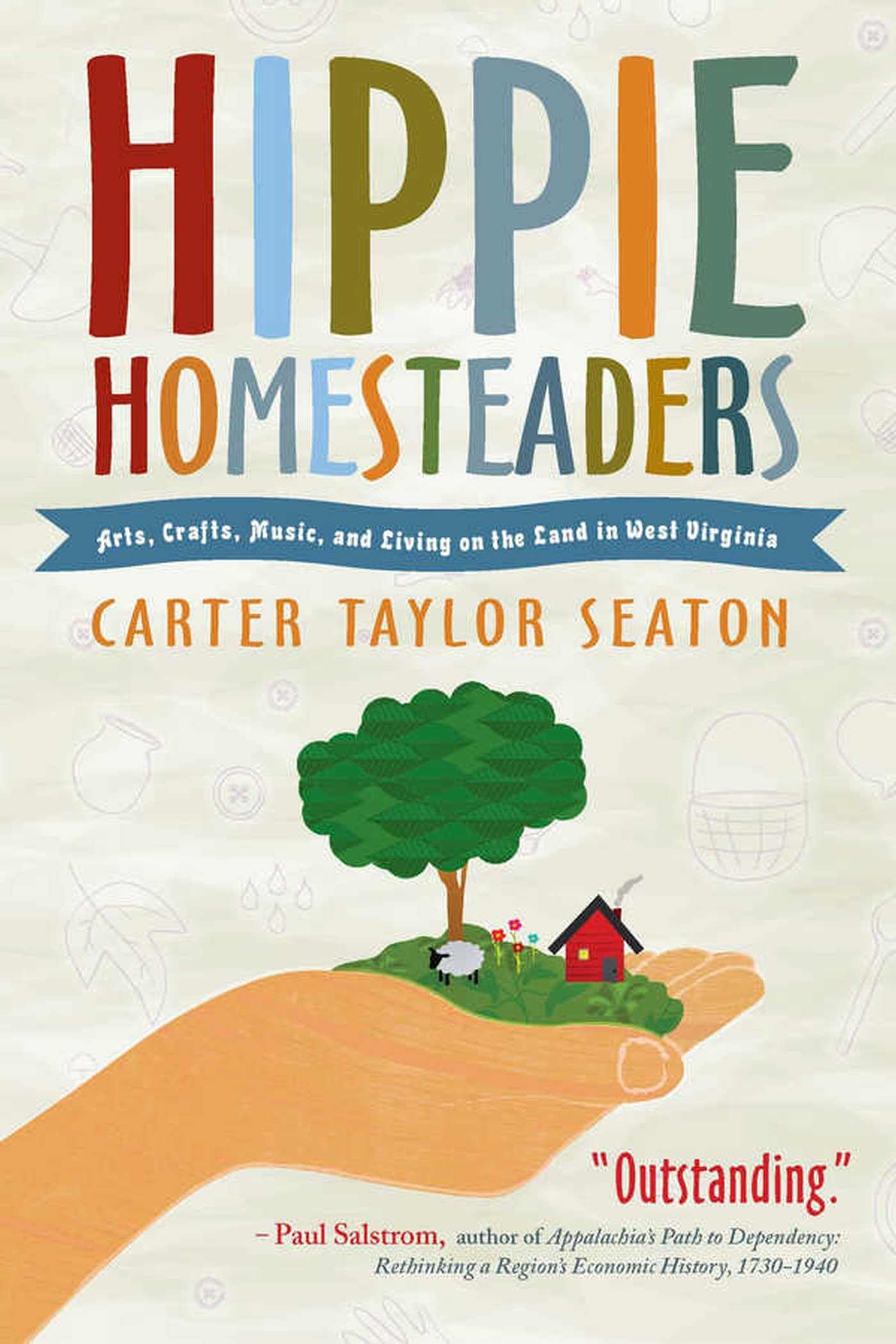
Hippie Homesteaders: Arts, Crafts, Music and Living on the Land in West Virginia [Seaton, Carter Taylor] on desertcart.com. *FREE* shipping on qualifying offers. Hippie Homesteaders: Arts, Crafts, Music and Living on the Land in West Virginia Review: Reading Hippie Homesteaders is much like watching bursts of sunshine dart across green mountains after ... - The 'Almost Heaven' Appalachian mountains, once inhabited by early settlers, changed with the broad form deed and shift of land ownership to outside corporations - followed by the destruction brought about by strip mining and mountaintop removal. Yet there is hope. Carter Taylor Seaton tells stories of hope through the lives of artists and back-to-the-land homesteaders who are breathing new life into these old and abused mountains. She is an engaging writer who captures the vibrant elements of the newly infused arts and valuable social change. Communities once lost in the mechanization of deep and surface mining and outmigration of mountain people, are being rebuilt. Seaton is a masterful storyteller, capturing the unfolding lives of in-migration and the new mountaineers who bring with them the exciting contributions of mountain artisans. Reading Hippie Homesteaders is much like watching bursts of sunshine dart across green mountains after a summer storm. Seaton reminds us that even mountaintop removal cannot destroy the human spirit. In Hippie Homesteaders, Carter Taylor Seaton gives us both a good read and hope for the future. Review: A Look into this movement - It's very interesting to see how many homesteaders were spread all around WV. I was hoping to read about more of the people I knew growing up in Preston County. I'm glad to see Tom Rodd's story was included. He was a neighbor growing up and now he works in Charleston with my brother. I did not know his whole story--it's pretty wild actually! For anyone who is interested in the Back to the Land movement in WV.
| Best Sellers Rank | #1,806,094 in Books ( See Top 100 in Books ) #458 in Folkcrafts #645 in Southern U.S. Biographies #2,110 in Sustainable Living |
| Customer Reviews | 4.2 4.2 out of 5 stars (28) |
| Dimensions | 6 x 0.9 x 9 inches |
| Edition | First Edition |
| ISBN-10 | 1938228901 |
| ISBN-13 | 978-1938228902 |
| Item Weight | 1.05 pounds |
| Language | English |
| Print length | 240 pages |
| Publication date | April 1, 2014 |
| Publisher | West Virginia University Press |
D**.
Reading Hippie Homesteaders is much like watching bursts of sunshine dart across green mountains after ...
The 'Almost Heaven' Appalachian mountains, once inhabited by early settlers, changed with the broad form deed and shift of land ownership to outside corporations - followed by the destruction brought about by strip mining and mountaintop removal. Yet there is hope. Carter Taylor Seaton tells stories of hope through the lives of artists and back-to-the-land homesteaders who are breathing new life into these old and abused mountains. She is an engaging writer who captures the vibrant elements of the newly infused arts and valuable social change. Communities once lost in the mechanization of deep and surface mining and outmigration of mountain people, are being rebuilt. Seaton is a masterful storyteller, capturing the unfolding lives of in-migration and the new mountaineers who bring with them the exciting contributions of mountain artisans. Reading Hippie Homesteaders is much like watching bursts of sunshine dart across green mountains after a summer storm. Seaton reminds us that even mountaintop removal cannot destroy the human spirit. In Hippie Homesteaders, Carter Taylor Seaton gives us both a good read and hope for the future.
H**A
A Look into this movement
It's very interesting to see how many homesteaders were spread all around WV. I was hoping to read about more of the people I knew growing up in Preston County. I'm glad to see Tom Rodd's story was included. He was a neighbor growing up and now he works in Charleston with my brother. I did not know his whole story--it's pretty wild actually! For anyone who is interested in the Back to the Land movement in WV.
C**E
An untold story about the back-to-landers who moved to West Virginia
This is a book that tells a heretofore untold story about the "urban immigrants" who came to West Virginia to live off the land in the 1960s and 70s. As a native West Virginian of a certain age, I witnessed the influx of the back-to-landers in the state's more rural areas in the '70s. Many of those who moved to our mountains enriched our communities with their new ideas, well-honed art and craft skills and willingness to live simply and work hard. I'm so glad Carter pulled these stories together, as they provide new context for my memories of trips to the Mountain State Arts and Crafts Fair, nights spent listening to the Putnam County Pickers and later, Stark Raven Band, and many happy hours spent enjoying West Virginia Culture Center exhibits and lectures. The book also provides some detail on how Larry Groce, Andy Ridenour and company put West Virginia on the music world's radar with NPR's "Mountain Stage" and they're still providing the state--and, in fact, the world--with an eclectic mix of artists packaged in Appalachian spice and soul. I'm not sure if readers who are unfamiliar with the state's arts and crafts heritage or the communes that sprang up in our wilderness will relate to everything written here but there is plenty of backstory for history buffs, particularly those interested in the Vietnam era and the changes the country went through in the 60s and 70s. I would love to see more books like this. I grew up with the Hippie Homesteaders in my home town of Spencer, West Virginia. I'm so glad they came to the mountains.
B**T
Super book!
Makes me proud to be a lifetime West Virginian
B**B
Not a fan
Not too impressed. Was a little on the boring side
B**H
Five Stars
Great book. Thoughtfully researched and written in such a way you don't want to put down the book.
M**Y
History on the Ground
Carter Taylor Seaton's Hippie Homesteaders is a nonfiction account of back-to-the-landers who went to West Virginia in the nineteen-seventies. I suspect I'll return often to this as a reference and because it makes a wonderful balance to my own experience as one of the West Virginians who left. These people are more or less my age, sharing many of my values--but they made the reverse move. Interview by interview, too, this is a striking book. Seaton has interviewed dozens of people, many of whom she already knew from her involvement in the craft world in West Virginia as it evolved. The homesteaders in the book were essential to developing West Virginia's arts and crafts, both the revival of old traditional crafts and the introduction and creation of new ones. The story is also, indirectly, about how government and nonprofit support helped people find a new way to make a living. Many of these out-of-staters (and the native craftspeople as well) thrived under the support of the state arts council and the Mountain State Arts and Crafts Festival and-- eventually, the high-end outlet for West Virginia arts, Tamarack. It's a fascinating and complex story. First there were the artistic and craft-inclined young people looking for a rural life who found cheap land in West Virginia. Then there were the old timers living around them, who were generally extremely generous and friendly. These rural people were often the ones whose own children had left the land, and there must have been an element of vindication for those who stayed when these new young people chose their life style or elements of it. They gave the in-movers farming advice and in some cases taught the newcomers folk art. The newcomers in turn honored the folk art and farming techniques and shared new arts techniques as well as marketing strategies. Almost all of the events and people in this book are outside of the industrial West Virginia where I grew up. That is, the lives of miners and the power of Big Coal are almost absent from the book, except indirectly, as when sculptor Bill Hopen is offered a commission to do a statue of Senator Robert C. Byrd, names his price, and no one even blinks. No one blinks because money is available from big donors, not from the dirt farms or the black lung miners. Hippie Homesteaders gives us the information and tells us a story about lives and art forms of some wonderful people who taught themselves pottery and weaving and stained glass and basketry and music. I love the fascinating interplay between the natives of my beautiful, often exploited state and young people (young no more of course) looking for a better life, a rural life, a safe place, a communal life. Sometimes it didn't work out, and Seaton writes about that too. Sometimes it led to deep roots and an influx of energy and ideas into the state. Carter writes with thoroughness and affection about a complex situation, and this is perhaps the best way to capture history: on the ground, through a multitude of individuals and their individual stories that, in the end, describe the arc of history.
Trustpilot
2 months ago
2 days ago