
DOWNLOAD THE APP


Customer Services
Copyright © 2025 Desertcart Holdings Limited
DOWNLOAD THE APP
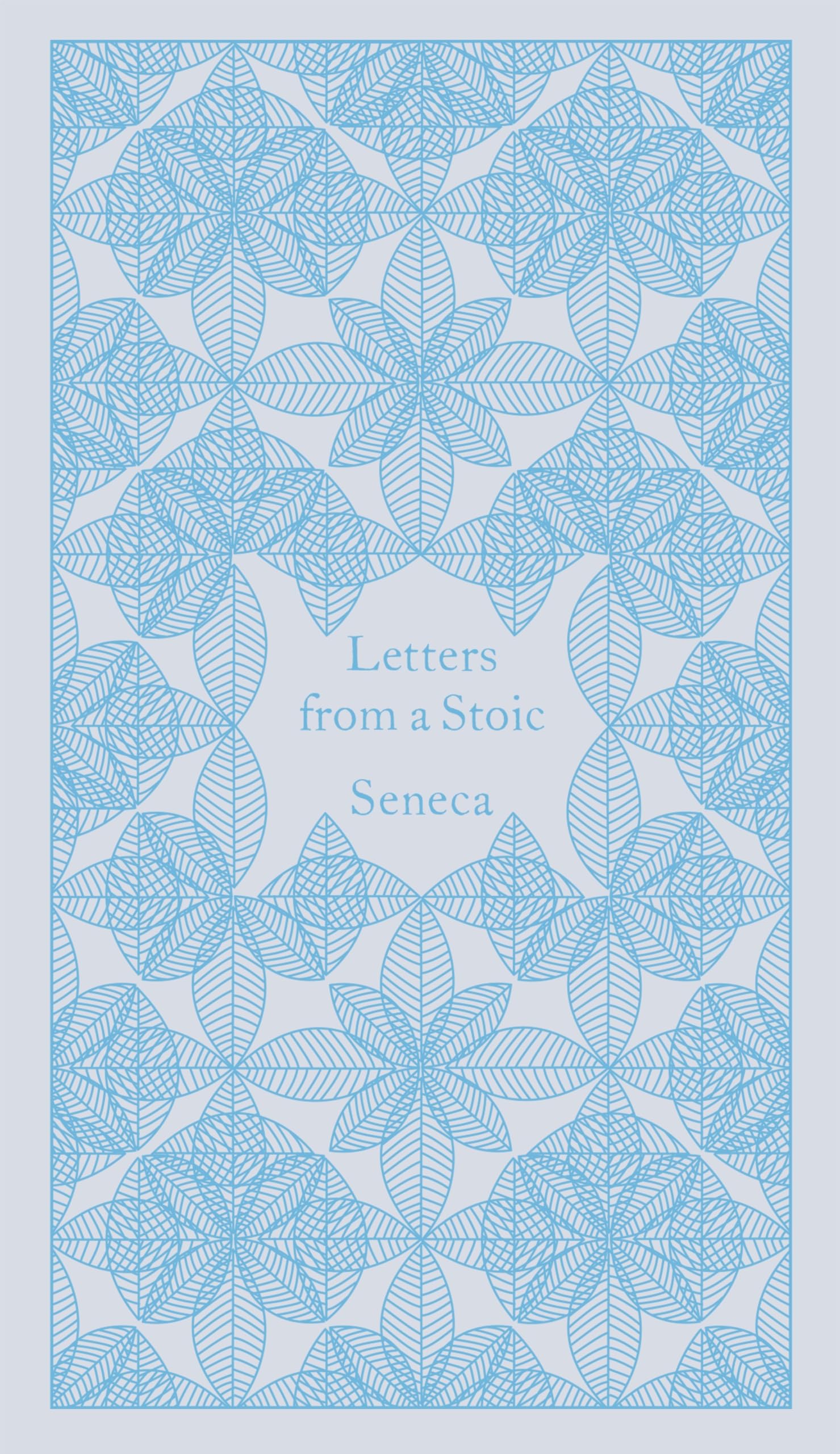
Letters from a Stoic (A Penguin Classics Hardcover) [Seneca, Campbell, Robin, Campbell, Robin, Bickford-Smith, Coralie] on desertcart.com. *FREE* shipping on qualifying offers. Letters from a Stoic (A Penguin Classics Hardcover) Review: Self awareness - This book is an absolute game-changer for anyone looking to improve their life. The wisdom shared here is timeless and incredibly practical. It's helped me reframe my perspective on so many things. I seriously can't recommend it enough if you want to live a more fulfilling and resilient life. Definitely a must-read for personal growth! Review: So it was to my great delight that I stumbled on Seneca's "Letters From a ... - As I progress on my quest for wisdom from the classical periods I recently read Cicero's "Selected Works" and Lurcreius' "On the Nature of Things" both of which I thought lacked in any deep knowledge and found them both to be greatly disappointing. So it was to my great delight that I stumbled on Seneca's "Letters From a Stoic" which I highly recommend. Some of my favorite passages loosely organized around a theme are as follows: On One's Relationship to the Material World: *It is not the man who has too little who is poor, but the one who hankers after more. *You ask what is the proper limit to a person's wealth? First, having what is essential, and second having what is enough. *Although the wise man does not hanker after what he has lost, he does prefer not lose them. *The qualities of a just, a good and an enlightened character does not regard as valuable anything that can be taken away. *I am not against possessing riches but I want to ensure that you possess them without tremors. On One's Relationship to Society: *Inwardly everything should be different but our outward face should conform to the crowd. *The road is long if one poceeds by way of precepts but short and effectual if by way of personal example. *You ask me to say what you should consider it particularly important to avoid. My answer is this: a mass crowd. *Associating with people in large numbers is actually harmful. *Retire into yourself as much as you can. Associate with people who are likely to improve you. *Avoid whatever is approved of by the mob. *If you shape your life according to nature, you will never be poor; if according to people's opinions you will never be rich. On One's Relationship to the Body: *Pick (any exercise) for ease and straightforwardness...but whatever you do, return from body to mind very soon. *Where you arrive does not matter so much as what sort of person you are when you arrive there. *A way of speaking which is restrained, not bold, suits a wise man in the same way as an unassuming sort of walk does. *Refusal to be influenced by one's body assure one's freedom. *People who know no self-restraint lead stormy and disordered lives. On Death: *Every day, therefore, should be regulated as if it were the one that brings up the rear, the one that rounds out and completes our lives. *If God adds the morrow we should accept it joyfully. *The man you should admire and imitate is the one who finds it a joy to live and in spite of that is not reluctant to die. *You will go the way that all things go...This is the law to which you were born. *You will die not because you are sick but because you are alive...In getting well again you may be escaping some ill health but not death. *We are born unequal, we die equal. On the Value of Philosophy/Stoicism: *It molds and builds the personality, orders one's life, regulates one's conduct, shows one what one should do and what should leave undone, sits at the helm and keeps one on the course as one is tossed about in perilous seas. *Only philosophy will wake us; only philosophy will shake us out of that heavy sleep. Devote yourself entirely to her. *For the only safe harbor in this life's tossing, troubled sea is to refuse to be bothered about what the future will bring and to stand ready and confident, squaring the breast to take without skulking or flinching whatever fortune hurls at us. *It is in not man's power to have whatever he wants; but he has it in his power not to wish for what he hasn't got. *Part of the blame lies on the teachers of philosophy, who today teach us how to argue instead of how to live...The result has been the transformation of philosophy, the study of wisdom, into philology, the study of words. *No man is good by accident, virtue has to be learned. By the way, before renouncing all worldly possessions keep in mind that Seneca did not practice what he preached, was intimately attached to the material world, and readers interested in an excellent biography of Seneca's life and role during Nero's reign should consider reading James Romm's "Dying Every Day: Seneca at the Court of Nero."
| Best Sellers Rank | #21,113 in Books ( See Top 100 in Books ) #3 in Literary Letters #4 in Ancient Roman History (Books) #11 in Ancient Greek & Roman Philosophy |
| Customer Reviews | 4.7 4.7 out of 5 stars (5,875) |
| Dimensions | 4.37 x 1.23 x 6.87 inches |
| Edition | Reissue |
| ISBN-10 | 0141395850 |
| ISBN-13 | 978-0141395852 |
| Item Weight | 11.3 ounces |
| Language | English |
| Print length | 352 pages |
| Publication date | April 28, 2015 |
| Publisher | Penguin Classics |
H**S
Self awareness
This book is an absolute game-changer for anyone looking to improve their life. The wisdom shared here is timeless and incredibly practical. It's helped me reframe my perspective on so many things. I seriously can't recommend it enough if you want to live a more fulfilling and resilient life. Definitely a must-read for personal growth!
M**.
So it was to my great delight that I stumbled on Seneca's "Letters From a ...
As I progress on my quest for wisdom from the classical periods I recently read Cicero's "Selected Works" and Lurcreius' "On the Nature of Things" both of which I thought lacked in any deep knowledge and found them both to be greatly disappointing. So it was to my great delight that I stumbled on Seneca's "Letters From a Stoic" which I highly recommend. Some of my favorite passages loosely organized around a theme are as follows: On One's Relationship to the Material World: *It is not the man who has too little who is poor, but the one who hankers after more. *You ask what is the proper limit to a person's wealth? First, having what is essential, and second having what is enough. *Although the wise man does not hanker after what he has lost, he does prefer not lose them. *The qualities of a just, a good and an enlightened character does not regard as valuable anything that can be taken away. *I am not against possessing riches but I want to ensure that you possess them without tremors. On One's Relationship to Society: *Inwardly everything should be different but our outward face should conform to the crowd. *The road is long if one poceeds by way of precepts but short and effectual if by way of personal example. *You ask me to say what you should consider it particularly important to avoid. My answer is this: a mass crowd. *Associating with people in large numbers is actually harmful. *Retire into yourself as much as you can. Associate with people who are likely to improve you. *Avoid whatever is approved of by the mob. *If you shape your life according to nature, you will never be poor; if according to people's opinions you will never be rich. On One's Relationship to the Body: *Pick (any exercise) for ease and straightforwardness...but whatever you do, return from body to mind very soon. *Where you arrive does not matter so much as what sort of person you are when you arrive there. *A way of speaking which is restrained, not bold, suits a wise man in the same way as an unassuming sort of walk does. *Refusal to be influenced by one's body assure one's freedom. *People who know no self-restraint lead stormy and disordered lives. On Death: *Every day, therefore, should be regulated as if it were the one that brings up the rear, the one that rounds out and completes our lives. *If God adds the morrow we should accept it joyfully. *The man you should admire and imitate is the one who finds it a joy to live and in spite of that is not reluctant to die. *You will go the way that all things go...This is the law to which you were born. *You will die not because you are sick but because you are alive...In getting well again you may be escaping some ill health but not death. *We are born unequal, we die equal. On the Value of Philosophy/Stoicism: *It molds and builds the personality, orders one's life, regulates one's conduct, shows one what one should do and what should leave undone, sits at the helm and keeps one on the course as one is tossed about in perilous seas. *Only philosophy will wake us; only philosophy will shake us out of that heavy sleep. Devote yourself entirely to her. *For the only safe harbor in this life's tossing, troubled sea is to refuse to be bothered about what the future will bring and to stand ready and confident, squaring the breast to take without skulking or flinching whatever fortune hurls at us. *It is in not man's power to have whatever he wants; but he has it in his power not to wish for what he hasn't got. *Part of the blame lies on the teachers of philosophy, who today teach us how to argue instead of how to live...The result has been the transformation of philosophy, the study of wisdom, into philology, the study of words. *No man is good by accident, virtue has to be learned. By the way, before renouncing all worldly possessions keep in mind that Seneca did not practice what he preached, was intimately attached to the material world, and readers interested in an excellent biography of Seneca's life and role during Nero's reign should consider reading James Romm's "Dying Every Day: Seneca at the Court of Nero."
G**L
"It is not the man who has too little who is poor, but the one who hankers after more
These letters of Roman philosopher Seneca are a treasure chest for anybody wishing to incorporate philosophic wisdom into their day-to-day living. By way of example, below are a few Seneca gems along with my brief comments: "Each day acquire something which will help you to face poverty, or death, and other ills as well. After running over a lot of different thoughts, pick out one to be digested throughout the day." --------- I'm completely with Seneca on this point. I approach the study of philosophy primarily for self-transformation. There is no let-up in the various challenges life throws at us - what we can change is the level of wisdom we bring to facing our challenges. "It is not the man who has too little who is poor, but the one who hankers after more." ---------- This is the perennial philosophy from Aristotle to Epicurus to Epictetus to Buddha: we have to face up to our predicament as humans; we are in the realm of desire. The goal of living as a philosopher is to deal with our desires in such a way that we can maintain our tranquility and joy. "But if you are looking on anyone as a friend when you do not trust him (or her) as you trust yourself, you are making a grave mistake, and have failed to grasp sufficiently the full force of true friendship." --------- Friendship was one key idea in the ancient world that modern philosophy seems to have forgotten. Seneca outlines how we must first test and judge people we consider as possible friends, but once we become friends with someone, then an abiding and complete trust is required. "The very name of philosophy however modest the manner in which it is pursued, is unpopular enough as it is: imagine what the reaction would be if we started dissociating ourselves from the conventions of society. Inwardly everything should be different but our outward face should conform with the crowd. Our clothes should not be gaudy, yet they should now be dowdy either. . . . Let our aim be a way of life not diametrically opposed to, but better than that of the mob.". ---------- The call of true philosophy isn't an outward display but an internal attitude. There is a long, noble tradition of living the life of a philosopher going back to ancient Greece and Rome, that has, unfortunately, been mostly lost to us in the West. It is time to reclaim our true heritage. "You may be banished to the end of the earth, and yet in whatever outlandish corner of the world you may find yourself stationed, you will find that place, whatever it may be like, a hospitable home. Where you arrive does not matter so much as what sort of person you are when you arrive there." -------- This is the ultimate Stoic worldview: our strength of character is more important that the particular life situation we find ourselves in. Very applicable in our modern world; although, chances are we will not be banished to another country, many of us will one day be banished to a nursing home. "This rapidity of utterance recalls a person running down a slope and unable to stop where he meant to, being carried on instead a lot farther than he intended, at the mercy of his body's momentum; it is out of control, and unbecoming to philosophy, which should be placing her words, not throwing them around." --------- The ancient world had many people who talked a mile a minute, an unending gush of chatter. The Greco-Roman philosophers such as Seneca and Plutarch warn against garrulousness. Rather, we should mark our words well. From my own experience, when I hear long-winded pontifications, I feel like running away. "The next thing I knew the book itself had charmed me into a deeper reading of it there and then. . . . It was so enjoyable that I found myself held and drawn on until I ended up having read it right through to the end without a break. All the time the sunshine was inviting me out, hunger prompting me to eat, the weather threatening to break, but I gulped it all down in one sitting." --------- Ah, the experience of being pulled into a good book! When we come upon such a book, go with it!
L**K
I think this is an excellent book but I also like these Penguin pocket hardbacks and hope it is a range they plan to expand upon, the volumes are small enough for a large coat pocket or the side pocket of some cargo pants, there is attached to the spine a ribbon book mark and the binding is good, it holds fast and provides a sturdy book but is not stiff and there is no difficulty with the pages turning. This edition has a great introduction which provides biographical information at the writer and some comment and context to the work itself, including suggestion that while Seneca was a great writer and very wise in print he was not always the best at applying his own philosophy in his own life, although as the author states in the introduction he succeeded in humanising what had been and can be otherwise a very harsh philosophy (indeed another stoic's shame at shedding a tear at bereavement gets a mention in contrast). Like I mentioned in a review of another from this series, I get the feeling having read the book and then reading the introduction once more than it would have been a better idea to have read the book itself first and then read the introduction. I do share the view expressed in the introduction that Seneca probably did compose the letters with a thought that they would be published or collected, the detail in the introduction supports this alone but reading the letters I cant help but believe they are second or third drafts as opposed to spontaneous single compositions. The letters themselves are not long, it would be possible to choose to read one each day like those treasury books which are divide so as to permit a different reading for each day of a year or seasons of a year. Each letter is full of fantastic, quotable sentences and paragraphs and Seneca further to this also includes details of some reading he has done and what he has found quotable in them, kind of in a "thought for the day" fashion. I particularly liked his reference in one of the earlier letters about reading Epicurus, as a "reconnaissance" of the rival camp rather than a "desertion" of his own. There is great wisdom and thinking in each letter and they are as entertaining as they are enlightening, while this book would appeal to fans of Seneca's other books, Penguin has printed in their great ideas series a small book including an essay on the shortness of life (a life well lived is long, whatever its length may be being the main conclusion), readers interested in Stoicism or philosophy, it should prove just as accessible and interesting to a general reader too.
B**Y
An excellent read. This is an important read for anyone interested in Stoicism, especially and particularly Roman Stoicism. Seneca is slightly unusual for his day in that he often espouses the thoughts of thinkers from other (albeit closely-related) schools, such as Epicurus. The letters cover an extraordinary range of topics and his letters are interesting from a purely historical perspective, too, as they give insights into daily Roman life. Read his letters and you will find it difficult not to be touched and affected.
I**K
El libro que me cambió la vida. Cada carta tiene lecciones muy profundas
A**Z
Tenía tiempo buscando el libro con un buen acabado. me encantó, un diseño elegante y sobrio, lass hojas son bastante gruesas y la calidad de la impresion es muy buena.
A**S
Its just great, you can learn a lot from it and the price is pretty fair! Book quality is also good
Trustpilot
2 weeks ago
2 days ago