Some deliveries may take a little longer than usual due to regional shipping conditions.

DOWNLOAD THE APP


Customer Services
Copyright © 2025 Desertcart Holdings Limited
DOWNLOAD THE APP
Full description not available
J**N
Good book; poor printing quality
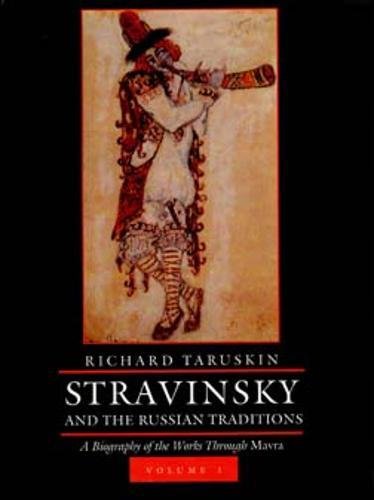
I ordered this book a year or so ago, and while the little I read before I returned it was great, the print quality was poor. It was like a printer that needed a new toner cartridge or something. The photographs in particular were poor - I understand old photograph quality can vary, especially from the 19th century, but these reproductions were especially poor, darker areas just rendered completely black, as if one had turned up the contrast all the way in an editing program. To be fair the text was readable, but it too was a little blurred on close inspection.I returned it and reordered it, but the second copy I received had the exact same problem (may it was the same copy, who knows). I tried to contact the publisher, the very respected University of California Press, but the only contact information led to a phone call that turned out to be the book's distributor in Chicago, who were very nice, but of course had nothing to do with the actual printing.I've never done this before, returned a book because of print quality (although ironically a Stravinsky score - Faun and Shepherdess Op.2 - I also returned, but that was obviously a poor scan of an original printed score, with some staff lines and notes elided). Normally I don't think it would bother me, as I could read the entire book, but it just didn't seem right given that this was a quite expensive book (I think the only book over $100 I have bought). Not complaining about the price, I understand this is probably a small print run, and reflects scholarly or academic book pricing. But pretty much every other book I have, including cheap paperbacks and whatnot, has better print quality than this one.Disappointed as what little I read was really interesting and well written and researched; I would very much like to own a good quality copy of this book.Note: the one I got (and the one marked as available as of October 2022 on Amazon is listed as First edition, first printing (full number line) (July 15, 1996).Also not sure how to rate this - I'm fairly confident based on the little I read I would give it 5 stars for content, but had to knock some off because of the print quality. I do think unfair those reviews that give one star because of the delivery service, but the print quality I think is part of the quality of the product itself.
M**G
On shaky ground
"The Rite of Spring" is a work of a Russian composer on a Russian sujet. But that a serious musicologist tries to tell me that, due to a few vague allusions to traditional folk tunes, it is a pure product of the Russian musical tradition. Please!No doubt, it is work of genius, a great dark musical vision, but, conceding that in its spirit it is a "authentic" Russian composition, in its composing strategies it owes Debussy and Ravel much more than any Russian composer.Frankly, I don't understand why Taruskin tries so hard to hide this vital influence on Stravinsky in this book. Though Stravinsky emancipated from these influences in later years, the impact on his early ballet music was tremendous. And Stravinsky was the last one to deny it.Surely it is worth to discuss the influences in detail, since there are a lot of interferences. Debussy and Ravel themselves were strongly influenced by Russian composers like Mussorgsky and Borodin.But to blind this part out of the composer biography is just not possible if you want to give a comprehensive picture. The plenty musical examples that Taruskin offers documenting the sources of Stravinsky's compositions are too selective in this respect. It might though be admitted that the impressionistic influences are harder to describe since they refer less to thematic references but much more to matters of technique. There would have been a great opportunity in these extensive volumes to look at all this in detail. Instead of this Taruskin simplifies things or makes awkward derivations. The bitonal Petrouschka chord-combination c major/f-sharp major for example happens to be already accidentally in Wagners "Siegfried" and happens even literally in the cadenza-like part of Ravel's "Jeux d'eau" where Stravinky most likely took his inspiration from. It's just strange and exerted to derive it from Rimsky's system of "octatonic" chord-combinations. Apropos "octatonic", even to claim this system, that Rimsky theoretically fixated for his teaching, as a Russian specific is strange enough, since it is well known that those harmonic influences came to Russian music through Berlioz, Liszt and especially Wagner.Despite this serious objections, Taruskin deserves a lot of praise for his great research. I never read such a brilliant report about the history of Russian music between Glinka and Stravinsky and the circle around Diaghilev with all its paradoxes.An enormously interesting book despite the fact that its main thesis, i.e. that Stravinsky is rooted mainly in the Russian tradition, stays on very shaky ground.
S**Y
debunking the myth
Taruskin's 2 volume set into Stravinsky's "Russian" period is still the MOST comprehensive investigation for those wanting a more discernible picture of the gestation of works from that period, including the Firebird, Petrushka, the Rite and Les Noces. For example Taruskin compares wedding laments used by Russian brides with those found in the opening of Les Noces. This link becomes significant when one is trying to resolve how much Stravinsky knew about his Russian heritage during the composition of these works. In his conversation books with Robert Craft, several inconsistencies emerge as to the influence of Russian music on Stravinsky's own music. For an interesting read, check out Taruskin's article, "Stravinsky and the traditions: Why the memory hole?" in Opus Magazine 1987. Getting back to the books, of particular significance is a "thematic" catalog of folk materials in which Taruskin attempts to reconstruct the origins of Stravinsky's Russian masterpieces.I did not give the book 5 stars because I reserve that for the rarest of rarities which are reserved for books/movies/cds which provoke thought in the most unexpected of ways and are unlike anything else like the movie "Being John Malkovich". Another insightful and recent book on early Stravinsky (purely biographical) is Stephen Walsh's "Stravinsky : A Creative Spring : Russia and France, 1882-1934".
S**S
Detail
The most detailed book on Stravinsky's early, nationalistic and neo-classical works. This is a must for any Stravinsky fan, it also has a facsimilie copy of Stravinsky's the Storm cloud from 1902.
Trustpilot
2 weeks ago
2 months ago