
DOWNLOAD THE APP


Customer Services
Copyright © 2025 Desertcart Holdings Limited
DOWNLOAD THE APP
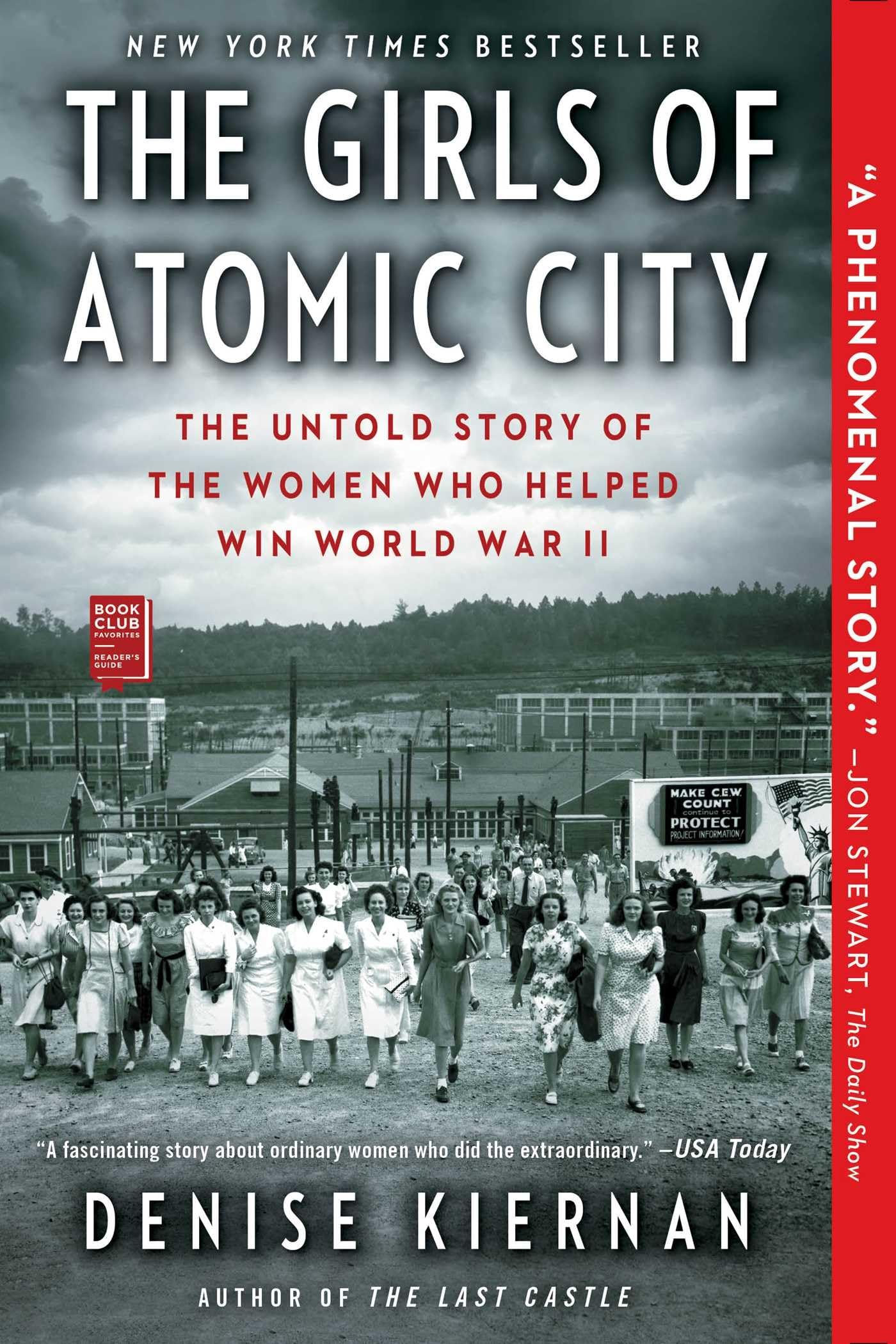
desertcart.com: The Girls of Atomic City: The Untold Story of the Women Who Helped Win World War II: 9781451617535: Kiernan, Denise: Books Review: Brilliant and impartial synthesis - I was born in Tennessee and used to work in aerospace so when I saw this book about Oak Ridge, Tennessee it caught my eye immediately. Oak Ridge was one of the locations for the work of The Manhattan Project to get an atomic bomb ready for use on Japan in WWII. Kiernan does an amazing job of interweaving the personal experiences of those involved with this project with other information about the science and politics involved. Kiernan begins with the scientists of Europe who are working on splitting the atom and describes how many scientists brought different pieces of information to the table. She reports that it is a woman who suggested the possibility of nuclear fission and how it might be done altho she is never really credited for her work. It makes interesting reading seeing how they fit the pieces together though and Kiernan gives very clear explanations of the science involved. I did not expect to be able to understand that part, but I did fairly well. The rest of the book focuses on the stories of several women and men who work specifically at the Oak Ridge site making the "product". This location eventually has a population of about 75,000. It begins with government and military agents recruiting workers by telling them they were needed to work on a secret project that may very well end the war, but they could not know what it was or where they were going to live. The recruiters played on patriotism and fear about relatives who were fighting overseas. These workers were literally picked up by a cab or bus and put on a train or other form of transportation and taken to Oak Ridge. Before the workers arrived we see the usual process of manifest destiny play out on the poor rural population around Oak Ridge. Families are poorly compensated typically, and that of course is a book in itself, but one that has already been written. Then the construction workers are brought in to build housing for the coming workers. Houses for middle class family employees, dorms for single workers, huts with no windows in a segregated area for African Americans who are typically held to the same work they are outside, janitorial, etc. Schools are eventually built for the white children of workers but not for the Af Ams. One historian said it was the first community he was aware of that had been built with slums deliberately planned. Workers are told what they need to know to do their piece of the project and nothing else. They don't even actually know what they are doing or at least what the purpose is. For example some women are spending hours a day sitting on a stool reading gages and spinning dials, not knowing what they are measuring. Some are testing pipes for leaks, not knowing what the pipes are for. They are not allowed to discuss ANYTHING work related with anyone, no family, no friends, no one, which stresses all relationships. Workers are recruited to spy on each other and to be merely accused by an informant was cause for dismissal. Anyone breaking the rules disappears quickly. When fired they are not given a clearance to work on anything else outside of this work for six months. No one can hire them for any job without that piece of paper. All of this stress makes a very tense situation and causes mental issues for some. One case of a "mentally ill" man is described wherein he is literally held captive because he has figured out the secret and wants to warn the emperor of Japan. The weight of what they have been involved in eventually effects many workers. Other workers injured in accidents were also used for medical research. A psychiatrist is called in to help and gets some treatment and some recreational relief. Movies, and bowling alleys are built for white people, while if lucky African Americans may be able to catch a glimpse of the outdoor movie screen from a nearby hill. Although they manage to make their own recreation. Although there are hard circumstances, many seem to thrive. They have employment and are being paid well. They are also learning new skills. They make their own fun also with dances put on in tennis courts and houses. They form groups with people with similar interests to develop hobbies and other social groups, and have access to some hiking and other outdoor activities. As I review my highlights here are some things I found especially interesting. Kiernan describes the setting as an "Orwellian backdrop for a Rockwellian world". "The challenges of living with military supervision were replaced by the challenges of living without it." (employment, police and fire services, public transportation, elections, etc. when the war ends and the situation changes.) A change is reported to research and development of peace time uses for nuclear power. After the war one woman goes to put flowers on her brothers "grave" in Pearl Harbor. She cries in her grief. A Japanese tourist nearby asks her if she lost someone here and when the answer is yes, she embraces the woman and says she is so sorry. Counterpoint to the guilt some workers feel. The author does a way more balanced job of reporting than I have done here, and describes her process as melding together individual memory, collective community memory, primary source material, media coverage, etc. If George Bush or Barack Obama asked you today if you would work on a secret project to end our wars but he couldn't tell you what it is or where you will go or for how long, what would your answer be? Five stars. Review: but does not spend a great deal of time on it - This book chronicles the development of and life in Oak Ridge, Tennessee, from 1943 on; it also describes technical aspects of the development of the atomic bomb. As you all know, the United States as of this writing, June 16 2018, remains the only country to use nuclear weapons in actual warfare; one atomic bomb was dropped on each of two Japanese cities, Hiroshima and Nagasaki, in August of 1945. More than 100,000 people were killed instantly and many more died later. The United States was in a race against Germany and perhaps other countries to develop the bomb first. The book describes the lives, the secrecy, the buildings, the frenetic pace, and more aspects of the tens of thousands of people who worked at Oak Ridge and on the bomb with a focus on women. It is well written and compelling, especially up to the date of the bomb's use. After that, while still enjoyable and interesting, the page-turning aspect of the book diminished somewhat. The {Project, as the Manhattan Project was known, was compartmentalized with the aim of telling people only enough to do their jobs well and nothing more. The book also is compartmentalized, with chapters about the women's lives and the development of Oak Ridge interspersed with chapters on "Tuballoy," as uranium was called. The book focuses in particular on a handful of women, whose lives and work it follows in some detail. The book touches on the discrimination of black people and even the use of one black man as a guinea pig to test how plutonium moved through the human body and could be detected, but does not spend a great deal of time on it. I found the book quite absorbing and learned much from it; it meshes with other books on that era, some focused on the Trinity Site (where the bomb was tested), others focused on Los Alamos, where much of the work on the bomb was done as well (for example, '109 Palace Avenue"). In addition, I spent some time in Oak Ridge, including working at what was then called (and still is now) the Oak Ridge National Laboratory, and it was additionally interesting for me to read about people and places I had known. I do recommend this book. It lost a star, however, for some careless editing (e.g., "due" for "do," "site" for "sight") and for a few unfortunate content errors that aren't important enough to affect the book's main messages.
| Customer Reviews | 4.3 out of 5 stars 3,963 Reviews |
B**Y
Brilliant and impartial synthesis
I was born in Tennessee and used to work in aerospace so when I saw this book about Oak Ridge, Tennessee it caught my eye immediately. Oak Ridge was one of the locations for the work of The Manhattan Project to get an atomic bomb ready for use on Japan in WWII. Kiernan does an amazing job of interweaving the personal experiences of those involved with this project with other information about the science and politics involved. Kiernan begins with the scientists of Europe who are working on splitting the atom and describes how many scientists brought different pieces of information to the table. She reports that it is a woman who suggested the possibility of nuclear fission and how it might be done altho she is never really credited for her work. It makes interesting reading seeing how they fit the pieces together though and Kiernan gives very clear explanations of the science involved. I did not expect to be able to understand that part, but I did fairly well. The rest of the book focuses on the stories of several women and men who work specifically at the Oak Ridge site making the "product". This location eventually has a population of about 75,000. It begins with government and military agents recruiting workers by telling them they were needed to work on a secret project that may very well end the war, but they could not know what it was or where they were going to live. The recruiters played on patriotism and fear about relatives who were fighting overseas. These workers were literally picked up by a cab or bus and put on a train or other form of transportation and taken to Oak Ridge. Before the workers arrived we see the usual process of manifest destiny play out on the poor rural population around Oak Ridge. Families are poorly compensated typically, and that of course is a book in itself, but one that has already been written. Then the construction workers are brought in to build housing for the coming workers. Houses for middle class family employees, dorms for single workers, huts with no windows in a segregated area for African Americans who are typically held to the same work they are outside, janitorial, etc. Schools are eventually built for the white children of workers but not for the Af Ams. One historian said it was the first community he was aware of that had been built with slums deliberately planned. Workers are told what they need to know to do their piece of the project and nothing else. They don't even actually know what they are doing or at least what the purpose is. For example some women are spending hours a day sitting on a stool reading gages and spinning dials, not knowing what they are measuring. Some are testing pipes for leaks, not knowing what the pipes are for. They are not allowed to discuss ANYTHING work related with anyone, no family, no friends, no one, which stresses all relationships. Workers are recruited to spy on each other and to be merely accused by an informant was cause for dismissal. Anyone breaking the rules disappears quickly. When fired they are not given a clearance to work on anything else outside of this work for six months. No one can hire them for any job without that piece of paper. All of this stress makes a very tense situation and causes mental issues for some. One case of a "mentally ill" man is described wherein he is literally held captive because he has figured out the secret and wants to warn the emperor of Japan. The weight of what they have been involved in eventually effects many workers. Other workers injured in accidents were also used for medical research. A psychiatrist is called in to help and gets some treatment and some recreational relief. Movies, and bowling alleys are built for white people, while if lucky African Americans may be able to catch a glimpse of the outdoor movie screen from a nearby hill. Although they manage to make their own recreation. Although there are hard circumstances, many seem to thrive. They have employment and are being paid well. They are also learning new skills. They make their own fun also with dances put on in tennis courts and houses. They form groups with people with similar interests to develop hobbies and other social groups, and have access to some hiking and other outdoor activities. As I review my highlights here are some things I found especially interesting. Kiernan describes the setting as an "Orwellian backdrop for a Rockwellian world". "The challenges of living with military supervision were replaced by the challenges of living without it." (employment, police and fire services, public transportation, elections, etc. when the war ends and the situation changes.) A change is reported to research and development of peace time uses for nuclear power. After the war one woman goes to put flowers on her brothers "grave" in Pearl Harbor. She cries in her grief. A Japanese tourist nearby asks her if she lost someone here and when the answer is yes, she embraces the woman and says she is so sorry. Counterpoint to the guilt some workers feel. The author does a way more balanced job of reporting than I have done here, and describes her process as melding together individual memory, collective community memory, primary source material, media coverage, etc. If George Bush or Barack Obama asked you today if you would work on a secret project to end our wars but he couldn't tell you what it is or where you will go or for how long, what would your answer be? Five stars.
D**Y
but does not spend a great deal of time on it
This book chronicles the development of and life in Oak Ridge, Tennessee, from 1943 on; it also describes technical aspects of the development of the atomic bomb. As you all know, the United States as of this writing, June 16 2018, remains the only country to use nuclear weapons in actual warfare; one atomic bomb was dropped on each of two Japanese cities, Hiroshima and Nagasaki, in August of 1945. More than 100,000 people were killed instantly and many more died later. The United States was in a race against Germany and perhaps other countries to develop the bomb first. The book describes the lives, the secrecy, the buildings, the frenetic pace, and more aspects of the tens of thousands of people who worked at Oak Ridge and on the bomb with a focus on women. It is well written and compelling, especially up to the date of the bomb's use. After that, while still enjoyable and interesting, the page-turning aspect of the book diminished somewhat. The {Project, as the Manhattan Project was known, was compartmentalized with the aim of telling people only enough to do their jobs well and nothing more. The book also is compartmentalized, with chapters about the women's lives and the development of Oak Ridge interspersed with chapters on "Tuballoy," as uranium was called. The book focuses in particular on a handful of women, whose lives and work it follows in some detail. The book touches on the discrimination of black people and even the use of one black man as a guinea pig to test how plutonium moved through the human body and could be detected, but does not spend a great deal of time on it. I found the book quite absorbing and learned much from it; it meshes with other books on that era, some focused on the Trinity Site (where the bomb was tested), others focused on Los Alamos, where much of the work on the bomb was done as well (for example, '109 Palace Avenue"). In addition, I spent some time in Oak Ridge, including working at what was then called (and still is now) the Oak Ridge National Laboratory, and it was additionally interesting for me to read about people and places I had known. I do recommend this book. It lost a star, however, for some careless editing (e.g., "due" for "do," "site" for "sight") and for a few unfortunate content errors that aren't important enough to affect the book's main messages.
M**S
The profound amidst the mundane
This book combines the seemingly mundane with the historically profound. It is proudly feminist, as it should be. It is also carefully historic, also as it should be. This book follows the lives of a number of unheralded women who started work at then super secret Oak Ridge nuclear reservation when it was little more than ankle-sucking mud and shoddy, makeshift huts. Oak Ridge would grow to a community of 78,000, with its own bus system, hospitals, sports teams and huge factories generating "product" for the "gadget". Yet Oak Ridge could not be found on any map. Secrecy prevailed. Variations of the mantra of Loose Lips, etc., was very real and strictly enforced. The government salted the work places with internal spies charged with reporting any breach of the rules, like talking about what you do with your roommate. Behind closed gates, the factories and laboratories were producing the fissionable material that would be used in the atomic bombs dropped on Hiroshima and Nagasaki. But the compartilization was so complete, none of the employees (at least those interviewed for this book) understood what they were helping to build. The women worked heroically under trying conditions: terribly poor housing, ankle-sucking mud everywere, for years, conditions. Things were markedly worse if you were Black--worse housing in worse areas, zero respect, lesser employment. The blatant racism is stunning. Yet in telling their stories, the book inadvertently highlights the second class status of the thousands of women employees. It is the men who are in charge, more in the know, make the key decisions and analyze the data provided by the women. Many of the women, at least those subject of this book, were high school graduates from rural southern communities. A salary of 58 cents an hour was a huge step-up. Also, they were less likely to overthink things and simply did what they were told, precisely. The result was the output of "product" was higher in facilities with relatively uneducated girls than those staffed with doctorates. For me, the most illuminating part of this book was intelling the story of this important place through the eyes of those who worked there. This place deserves to be remembered and, as the author notes, its history risks slipping away for lack of funding to build a lasting study center/memorial/archive. I was skeptical when I started this book: did I really want to read about the household challenges of young women asked to do an admittedly difficult job? Thankfully I pushed on and by the end was richly rewarded. Worthwhile.
J**B
Interesting, BUT…
It is an interesting report on an important piece of history. The author captures what it was like to be working on a secret project in a secret city via the use of multiple points of view expressed in somewhat disjointed Readers Digest length/ style vignettes. I would have preferred a more linear chronology, fewer pages and a single point of view. The book also gave a bit of the science behind the Manhattan Project and did so in an easy to read and not over technical way. Good job there. Still, although not read I relished, it does give a great deal of information that I found interesting. My book club read this… if not for that, I likely would have put it down one third of the way through.
R**N
"The Girls of Atomic City" tells Oak Ridge's story in a new light
Denise Kiernan has succeeded in her new book, "The Girls of Atomic City," to tell the story of Oak Ridge, TN, during the Manhattan Project in a way that is unique and gives insight until now hidden. Writers who have focused on this story before have either featured the technical details or have focused on the overall and truly amazing accomplishment that ended a World War having already killed 54,000,000 people! A great story, however, told. But, Denise takes a much more intimate and personal approach to telling this amazing story in Oak Ridge (where 60% of the approximately $2 billion "Project" was spent) using the eyes (and memories) of some of the working ladies who actually did the real work of separating uranium (without knowing it), checking the leaks in pipes (not knowing where the pipes went), keeping the statistical data, doing the hard work of a janitor, a chemist (who got closest to the "product") and secretaries who saw documents they could never discuss. This approach results in a more realistic telling of the day to day activities in Oak Ridge and the government sites of X-10, Y-12, K-25 and S-50. The intrigue springs from every page! The stories of these nine ladies, (Helen, Colleen, Celia, Toni, Jane, Kattie, Virginia, Dot and Rosemary), each unique, yet each holding much in common, is bound together by Denise's wonderfully talented skill as a writer. She paints a composite picture of Oak Ridge and the Manhattan Project that will become a classic in the literature of this extraordinary historical accomplishment that has led to so many technological advances of the Nuclear Age. This amazing world changing experiment was begun using many women from various backgrounds as workers. The interviews and detailed memories of the lives Denise touched while researching this book have produced more than a mere book, she has created lasting relationships with the last of the living who actually experienced something many cannot imagine. They were personally involved in what has been labeled the most significant military industrial scientific breakthrough in the history of the world. Remember, these nine represent literally thousands of other women who worked just as diligently, just as courageously, to help win that awful war. Denise captures the grit, the determination and the resultant exuberance when their efforts produced that glorious peace stopping the killing. Reading "The Girls of Atomic City" is a delightful and spellbinding tale that were it not true would be fiction of the highest order, but it is real...these women lived it. Denise has captured it. The book is a must read for anyone who studies the Manhattan Project history or especially the history of Oak Ridge, TN, and who wants to share the insights of these women who were there when it happened.
K**.
Part of history well worth reading
Incredible story of how tens of thousands of ordinary American citizens worked in Oak Ridge, Tennessee and helped build the atomic bomb. Each person knew how to do their job but did not know the purpose of their individual tasks other than it was part of the war effort. When the bombings occurred in Japan, they were just as surprised as the rest of the world. It was probably the best kept secret in American history. The book features the stories of some of the women who worked in various capacities at Oak Ridge including a chemist, nurse, secretaries, mathematician, and a janitorial service worker. Also included is the backstory on how the bomb was developed including the role of several women scientists who really have never received their fair share of credit. While the history is utterly fascinating, the writing is just average. It did get a little frustrating having to keep flipping back and forth between the page listing the cast of characters and the actual writing because it was hard to keep track of everyone. However, I am glad the author included the stories of so many women because they played such an important role in the effort to end the war. This book was full of random tidbits of information such as married black couples were not allowed to live together and their housing units were of much lesser quality than white workers. As I stated before, workers didn't know the reasons they were performing certain tasks like checking gauges and examining pipes, and for some it really took a toll on their mental state as it felt like you didn't have a purpose other than doing something that felt meaningless. After the bombings occurred, many workers had mixed feelings. There was a feeling of relief the war was over, but also sadness at the utter destruction and lives lost. This is a part of history that is definitely well worth reading.
G**S
IMPORTANT WORLD WAR II INSIGHT/ FOR LOVE AND LOVE OF COUNTRY AT A PRICE!
The title of this posting incorporates two books, a work of non fiction and a novel. Both detail the secrets of the U.S. government's World War II Oak Ridge Tennessee Laboratory from its creation in 1943 to the end of the Second World War in 1945. Denise Kiernan's book The Girls of Atomic City, The Untold Story of the Women Who Helped Win World War II , tells the incredible story of the overnight construction of a secret huge industrial complex ( Site X) in Oak Ridge Tennessee, the sole purpose of which was to convert uranium into enriched nuclear fuel for the construction of the first atomic bomb under the stealth Manhattan Project. Within a year, Oak Ridge Tennessee grew to a community of 75,000 inhabitants and into one of the largest industrial complexes in the world! Kiernan details how thousands of young women were recruited to Oak Ridge from throughout the country with the promise of good paying jobs that would ," Help Win The War." These young recruits , mostly in their early 20s , boarded buses and trains without knowing exactly where they were going and not having any idea of the position they were about to assume. Adding to this remarkable story is that for the duration of their stay, none of the workers at Oak Ridge ever knew the true nature of the work. Only after the atomic bomb was dropped on Hiroshima in 1945 was the nature of their work revealed to them. The Girls of Atomic City tells the Oak Ridge story from the standpoint of the sociological interaction of the thousands of young men and women living together in camp-like accommodations, finding a way to establish a social life while at the same time working on a top-secret project that even talking about to friends was forbidden. Additionally, the book translates into layman's language the scientific process of creating the fuel ( enriched uranium) for ( The Gadget ) which was to become the atomic bomb. What Kiernan does not develop is the story of the enormous health hazards that these young women and everyone at Oak Ridge were exposed to every day. Marianne Wiggins' novel Evidence of Things Unseen, accomplishes that in a beautiful love story that winds its way from Tennessee to the eastern shore of North Carolina and the back to the Oak Ridge Laboratory to uncover the horror of the impact of radiation sickness upon unknowing workers. In an odd twist, Wiggins' novel completes Kiernan's work of non-fiction. Denise Kiernan is also the author of Signing Their Lives Away and Signing Their Rights Away, the fame and mis-fortune of the men who signed The Declaration of Independence. Her work has appeared in The New York Times and the Wall Street Journal.
J**G
THE GIRLS OF ATOMIC CITY IS AN EXCELLENT BOOK
I've heard of Oak Ridge, Tennessee, but I had no idea that it sprang from nowhere during World War II so that workers who were recruited--and eventually it was home to 75,000 residents--could do their part to help build the atomic bomb. The majority of these government employees did not know what they were doing. They were told not to talk about their work, not even with each other. This book is filled with interesting facts, yet Kiernan's relaxed writing style makes it easy to read. I love all the anecdotes told by people who worked in Oak Ridge. I felt as if I could put myself in their places and feel what it was like to be there. The book has some sad stories, too, particularly regarding segregation. The workers of color had to live in their own area, usually in "hutments." I was appalled, but not terribly surprised, to learn that one black male employee who was injured in a car accident was injected with uranium. Someone wanted to study what would happen to him. The bones broken in the accident weren't set for days while he was injected and samples were taken from him. Many who worked on The Manhattan Project also suffered from feelings of guilt after the bombs were dropped. I enjoy history, especially about World War II, and although this book is about "the girls of atomic city," information about plenty of men is included, too. Oak Ridge still exists. The population has decreased, but remnants of the original city can be seen. A permanent exhibit about the town's part in the war is there. I don't know if it would be worth visiting. It doesn't really matter. I'm not going anywhere. But Kiernan intrigues me with this book and makes me want to learn more.
Trustpilot
2 months ago
2 weeks ago