
DOWNLOAD THE APP



Desert Online General Trading LLC
Warehouse # 7, 4th Street, Umm Ramool, Dubai, 30183, Dubai
DOWNLOAD THE APP
Desert Online General Trading LLC
Warehouse # 7, 4th Street, Umm Ramool, Dubai, 30183, Dubai

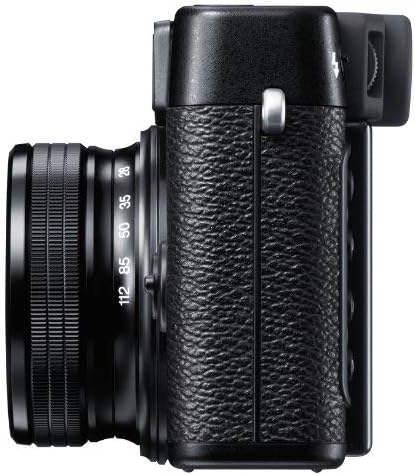


📷 Elevate your visual storytelling with precision and style!
The X10 Digital Camera combines a large 2/3-inch 12MP EXR-CMOS sensor with a bright f2.0-f2.8 Fujinon 4x optical zoom lens, delivering exceptional image quality and low-light performance. It supports RAW shooting and in-camera RAW processing, offers diverse manual shooting modes, and records Full HD 1080p video. Featuring a 2.8-inch LCD, 360° Motion Panorama, and manual pop-up flash, it’s a compact powerhouse designed for enthusiasts seeking creative control and professional results.
| Metering Methods | Multi, Average, Spot |
| Exposure Control | Advanced, Aperture priority, Automatic, EXR, Manual, Movie, Program, Scene, Shutter priority |
| White Balance Settings | Flash torch |
| Self Timer | 10 Seconds |
| Screen Size | 2.8 Inches |
| Display Type | LCD |
| Display Fixture Type | Fixed |
| Display Resolution Maximum | 460,000 |
| Has Color Screen | Yes |
| Flash Memory Type | SD/SDHC/SDXC |
| Memory Slots Available | 1 |
| Memory Storage Capacity | 26 MB |
| Write Speed | write speed: up to 20 MB/s |
| Flash Memory UHS Speed Class | 1 (U1) |
| Flash Memory Video Speed Class | Class 10 |
| Flash Memory Bus Interface Type | SD |
| Compatible Mountings | Fujifilm X |
| Sensor Type | CMOS |
| Image stabilization | Optical |
| Maximum Aperture | 2 f |
| Expanded ISO Minimum | 100 |
| Photo Sensor Resolution | 12 MP |
| Photo Sensor Size | 2/3-inch |
| Maximum Shutter Speed | 1/4000 Seconds |
| Minimum Shutter Speed | 30 seconds |
| Form Factor | Compact |
| Special Feature | Lightweight |
| Color | Black |
| Item Weight | 12.32 ounces |
| Video Resolution | FHD 1080p |
| Viewfinder | Optical |
| Flash Modes | [IN] Manual pop-up flash |
| Camera Flash | Built-In |
| Skill Level | Amateur |
| Compatible Devices | Fujifilm X |
| Continuous Shooting | 10 |
| Aperture modes | F2.0 |
| Viewfinder Magnification | 0.52x |
| Flash Sync Speed | 1/60 |
| Video Capture Format | AVC |
| Expanded ISO Maximum | 3200 |
| Battery Weight | 2 Grams |
| Delay between shots | 0.1 Seconds |
| Battery Cell Type | Lithium Ion |
| Battery Average Life | 270 Photos |
| Guide Number | 7 |
| Aspect Ratio | 1.27:1 |
| File Format | JPEG Exif 2.3, RAW (.RAF) |
| Effective Still Resolution | 12 |
| JPEG Quality Level | Fine |
| Maximum Image Size | 12 MP |
| Bit Depth | 12 Bit |
| Total Still Resolution | 12 MP |
| Maximum Focal Length | 112 Millimeters |
| Optical Zoom | 4 x |
| Lens Type | Zoom |
| Zoom | Optical Zoom + Digital |
| Camera Lens | f2.0 wide-angle and f2.8 telephoto, bright Fujinon 4x optical manual barrel zoom lens |
| Minimum Focal Length | 28 Millimeters |
| Digital Zoom | 2 |
| Number of Diaphragm Blades | 9 |
| Connectivity Technology | HDMI, USB |
| Wireless Technology | Yes |
| Video Output | HDMI |
| Total USB 2.0 Ports | 1 |
| Total USB 3.0 Ports | 2 |
| Total USB Ports | 1 |
| Total Video Out Ports | 1 |
| Shooting Modes | Program |
| Digital Scene Transition | zoom |
| Digital-Still | Yes |
| Movie Mode | Yes |
| Image Capture Type | Stills & Video |
| Night vision | No |
| Auto Focus Technology | Center, Continuous, Contrast Detection, Live View, Multi-area, Single, Tracking |
| Focus Features | Contrast Detection |
| Autofocus Points | 49 |
| Focus Type | Autofocus & Manual |
| Focus Mode | Automatic AF (AF-A), Continuous-Servo AF (AF-C), Manual Focus (MF) |
| Autofocus | Yes |
C**E
The tipping point? I think so.
In the ancient days of film, my main camera was a Pentax 67. People thought I was a better photographer than I really was because then as now, bigger is better. So it was probably inevitable that I would end up with full-frame DSLRs. These cameras are so good, I can almost forget how big and heavy they are. Still, there are times when a big SLR is too much. Problem is, unlike the best compact 35mm film cameras (which were as good or better than 35mm SLRs), compact digital cameras are either not that good, or not that compact. Of course what "good" is, is up to you. If you think the output from an LX5 or S95 at 1600 ISO looks good, you can stop reading and save your $600. But if you are looking for that point where the camera cannot get any smaller without giving up too much image quality, that's where the X10 resides. I'm not going to go through all the features because the camera will probably be discontinued before I try everything. But here is what you can expect from the X10: Very good sharpness even in the corners at 28mm, low barrel distortion (although the camera is probably correcting), very respectable 8 x10 prints, noise that is both low and well handled, very good image quality at ISO 400 and usable image quality at ISO 800. That the X10 can handle fairly extreme dynamic range without incinerating the highlights is icing on the cake. A few likes/dislikes. The optical finder is excellent quality and has adequate dioptric correction. If it was made by Leitz, this zoom finder alone would be $600. However...unless you are focusing manually (a drag with the X10) when the camera beeps you really don't know what it is focusing on. Thus, while I love the absence of distractions in the finder, I don't use it as much as I expected to. As I have mentioned elsewhere, the front element is very exposed, the 40mm filter thread is ludicrous and the hood/adapter is barely better than nothing. The strap is nothing to write home about and doesn't even have a piece of suede for your shoulder. Unlike everybody else, I like the RAW button. On the X10 there is not a huge difference in quality between RAW and jpg (and for now you have to use the tedious SilkyPix). So, rather than fill the card with RAW files, I hit the button only rarely, if I really think I have something special. The metal cap with felt liner is a cute touch--old timers will know that the felt wears out fast and the cap falls off, but how can you hate a metal lens cap? Is the X10 for you? Obviously not if you want interchangeable lenses. Having briefly had a m43 outfit, I think multiple lenses defeat the purpose of a small camera but if this were my only camera it would be a completely different story. One thing in the X10's favor is that it produces very good results whether tweaked extensively or with everything just set to auto. If you lament the absence of viewfinders on many small cameras, the X10 should fill the bill. And lastly, although I swore I wouldn't mention this, yes, it is stylish, metal, made in Japan and even the box is pure Steve Jobs; it's black (of course) has an underexposed picture of the camera on matte paper and simply says "X10" as if to say, if you don't know what this is, you're not cool enough. (12/11/11) I'm going to add a little to this review. I suppose it was inevitable but I think some people's expectations for this camera are a bit ridiculous. If taking night shots is your main gig (and like everybody, you are a professional) no camera with a sensor this size is going to give the gorgeous, almost noise-free results you can get from a low megapixel, large sensor camera like a D700. Nor is the X10 a Leica M9 with a zoom lens that costs $600. And yes, the menus and the instruction manual are dense and confusing. But so is the list of features. Beyond (my opinion) unreasonable expectations, there does seem to be a serious issue with white clipping when shooting directly into a light source or specular highlight. I've seen this with the Sigma DP1x so I know what it looks like (awful), but haven't been able to reproduce it with the X10. Since virtually all sellers allow returns it should be easy enough to point the camera at the sun or a bright light and see what happens. I must say, I'm glad I'm no longer in the photo industry because the amount of anger, not just at the manufacturer, but at anybody who doesn't have this problem (we're stupid and obviously not professionals) has really gotten out of hand. Usually, I don't buy his "good copy/bad copy" nonsense but in this case I wonder if the problem really is limited to certain individual cameras. (2/22/12) Took my 2000th photo with the X10 today and still no white orbs. Now, the last thing I want to do is claim they don't exist or that they are in any way ok or acceptable. I have no doubt they exist and they're not acceptable. I don't seem to get them and the irony is that the cause of the problem, Fuji's EXR sensor, allows the camera to handle a somewhat greater brightness range without blowing the highlights vs. other small sensor cameras. But it is this very same EXR sensor that is the source of the white spots and that's why Fuji's firmware update didn't change anything. In other words, in high contrast situations, the X10 will hold more detail in the highlights--but if there is a super-bright pinpoint of light you may be in trouble. The reason I say "may" is because I haven't encountered it. If the camera didn't perform as well as it does in all other respects it would be easy to say, forget it, at least until the situation is resolved (and if a different sensor is required, don't hold your breath). But since the X10 has been great for my use, I'm in the unusual situation of advising against buying one, yet based on everything I've shot, I still give it 5 stars. I bought this camera to replace a Lumix LX5 which didn't have any "issues" but never, on it's best day gave the quality I get from the X10.
E**G
This Fuji hits my spot
This is supposed to be my wife 's X'mas gift and it doesn't seem to turn out that way as I have been spending more time than her with this camera. To give you some background, I myself have already owned a Canon EOS 7D DSLR and a Sigma DP2S compact camera. While the Sigma is compact and excels in image quality when light is sufficient, it remains sluggish. It 's like an old man. Compared to the Sigma, the Fuji X10 is like an energetic pretty young lady. Fuji really knows how to market this thing by capitalizing its success on the X100. I originally was considering getting the SONY NEX-5N for my wife, but there were a couple of issues swaying me from SONY to Fuji. First, there was this clicking noise thing with the NEX-5N during video recording. Unfortunately, SONY screwed up and released the camera too soon without thorough QA. Despite the fact that SONY has offered new NEX-5N owners with free repair, I didn't want to deal with the hassle. I wanted a camera that worked out of the box for my wife as it was supposed to be a surprise gift. Because of this hesitation, I had a little more time to look at other cameras including the Nikon 1 series and even Micro 4/3. From the beginning, I didn't really like the Nikon 1 series at all. When a camera company employed Ashton Kutcher for its commercials and introduced a new line of camera with a pink body option, I knew I would try to disassociate myself from it, although my wife might have thought otherwise. For the record, our first digicam was a Nikon. So no offense to Nikon fanboys. I did actually try out the J1 at my local Best Buy. The J1 's AF was screaming fast. However, it lacked a PASM mode dial and VR seemed to be not as effective as I had expected. After some pixel peeping at Fuji X10 's captured images, I would say its IQ is on par with Nikon 1 series'. Another important thing to consider is that Nikon J1 is made in China and is priced higher than Fuji X10, which is made in Japan. The metal material on Nikon J1 body does not seem to be made out of magnesium alloy. It has a color coating similar to my Yashica EZ-F521 Chinese knockoff. On the other hand, the Fuji X10 really feels substantial in my hands. Its body feels really solid similar to my Canon EOS 7D. As for Micro 4/3, here you have Panasonic GF series and its latest pricey GX1, apart from the confusing and constantly revised Olympus PEN series. I almost clicked the buy button when the Panny GF2 was selling at $299 a couple weeks ago. However, I resisted. While my wife might have been glad to settle with the GF2 since she had owned a Lumix point and shoot before and liked it, I felt that Panasonic had not really made much progress in CMOS sensor advancement. Quite a few online reviewers like Steve Huff were saying that the Fuji X10 and Nikon 1 were as good as micro 4/3 in terms of IQ. And don't forget their sensors are smaller than Micro 4/3's. On top of that, Fuji X10 has a secret recipe which is its EXR technology. By pixel binning and doubling up the pixels in each color channel while sacrificing the sensor resolution by half, the X10 could either increase dynamic range in high contrast situations or reduce high ISO noise without sacrificing details in low light conditions. In the former case, it is similar to shooting HDR without the use of a tripod. With the X10, you can now capture HDR-like images with subjects in motion without the need of exposure bracketing and morphing multiple frames into one image. How cool is that? But then you only get 6 megapixels out of it. So what? Are you going to make large prints out of this compact camera? In essence, the most important feature with the Fuji X10 is its EXR mode. It can be found in the PASM mode dial. EXR mode is similar to iAuto of Panasonic Lumix except that Fuji 's version is more intelligent. The camera would analyze the scene and determine for you whether to apply more dynamic range or more noise reduction using its proprietary EXR recipe. This is a truly brain dead point and shoot to get the best image out of the camera. And I 've found it performed consistently well in my first few days of use. Image stablization also works nicely indoor. I could get pretty good still images around 1/8s shutter speed consistently. Well, not having a mirror flapping up and down did help. Since I have an interchangeable lens system already, I didn't want my wife to become another lens snob like me as I have already owned a bunch of lenses for my EOS 7D. This is pretty much my biggest gripe if I were to go with SONY NEX. The Fuji X10 features a built-in fast zoom lens. Unlike other compact cameras with built-in zoom lens, the Fuji X10 tops off at F2.8 when you zoom out to the telephoto end. This is quite a bit of advantage in terms of capturing freeze motion of your subjects in the entire zoom range. Another advantage of the built-in lens is that the sensor would be less prone to dust. Even though my EOS 7D has anti-static coating and ultrasound vibration in its sensor, I still need to clean it from time to time as I change lenses a lot in the field. As far as AF is concern, the Fuji X10 is quite snappy. There is one cool feature in its face recognition. The X10 could register a few captured faces in its memory and allow the AF to prioritize its focus to these registered faces upon recognized by the camera. Although I have not tried it yet, I think this is a pretty cool feature. This would be extremely useful if you let some brain dead strangers to take pictures of yourself and your family among other background pedestrians. Regarding the video recording function of Fuji X10, it really puts my Canon EOS 7D to shame. Besides full HD 1080p/30, the X10 supports dynamic auto focus, auto adjustment of exposure, and even auto adjustment of white balance, all without significant lag when you pan the camera around the scene. It performs just like my old Digital 8 SONY Camcorder. No more fiddling with exposure knob and focus ring. I am jealous at my wife now. I will update more about video recording once we get more experience with it. Another important feature worth mentioning is the super macro mode. Since the X10 sensor is relatively small, it allows you to capture a magnified image of your subject better than a DSLR with a non-macro lens. Your working distance can be about an inch away. The super macro mode works very well especially it gives you more depth of field on the subject with the relatively small sensor. I actually prefer this than using the macro lens on my EOS 7D where I would normally have to go F11 or beyond to achieve more depth of field and bring the whole subject body into focus. If the light condition is not good, I would have to use flash, which is not my preference. So there you have it. A nice compact camera with beautiful retro styling packed with Fuji 's advanced EXR technology. Have I mentioned the price yet? Oh $599 may be a bit steep for most people. One would argue that you could almost get an entry level DSLR for that kind of money. At first I agreed and thought this camera should have been priced slightly above the Oly XZ-1 or Canon G12. But then when you look at it closely and check the images posted on X10 Group under Flickr, you would find this little camera really stands up against the bigger Micro 4/3. I told myself why not give it a try as I am intrigued by Fuji EXR sensor, which in my opinion is still inferior to Sigma Foveon sensor in broad day light. I figured that the opportunity cost would be the loss of our enjoyment if I have waited for the X10 price to drop when competition catches up. Yes, people are willing to pay a premium for new cool stuff. There are also reasons why people want to buy a Lexus over a Toyota even though some of their models are the same cars. I think most reviewers have covered other technical stuff on the Fuji X10 and I don't want to re-iterate other highlights. There isn't really much low light worth mentioning from me unless I want to nitpick this thing to death. I want to offer potential buyers another perspective in terms of choosing the right camera for their needs. You have to decide what your priorities first. For instance, if I were a starter in serious photography, I would not have picked the Fuji X10. I could get an entry level DSLR or even SONY NEX with more bangs for the buck. I would say this Fuji X10 is a very good companion to any serious photographer who has already had another main camera body for serious work. The X10 is meant for fun and casual. Don't treat its image quality too seriously like your DSLR. Just get a Sigma or any latest DSLR if image quality is your top priority. The Fuji X10 is perfect for street photography. It 's discrete and quiet. It draws no attention in the crowd. You could switch it to silence mode and nobody would even notice you taking pictures of them. With the cool looking hood, you would draw conversation from fellow photographers. It could even be your pick up line. Without any commitment to an interchangeable lens system, you can almost view the Fuji X10 as a good one night stand. A very good one with a smile indeed. And one more thing. There have been some discussion in dpreview.com about white orbs appearing in blown out highlight areas. So far, touch wood, I have not encountered such problem in my first few days of use. I tried to shoot at some reflective surfaces and light sources. I did not find any white blobs or dots what-so-ever in my images. If I ever do, and hopefully not, I would update this review accordingly. Update 12/6/11: After spending a couple more days deliberately shooting at reflective surfaces and light sources, I think I 've found on one occasion where there was a cluster of white orbs. I didn't see these orbs on X'mas tree nor any shiny surfaces both indoor and outdoor. The orbs appeared when I shot directly at the sun. The center spot of the sun in the captured image was a cluster of orbs with radiating light rays, whereas my other cameras would normally show one circular radiating star. It 's not that bad, not a show stopper for me. Perhaps this could be a calibration issue with the camera's analog front end since a handful of users claimed they saw more orbs than usual. I 'll trust that Fuji would fix it in its next firmware upgrade. Remember, cameras like this requires very high precision engineering and manufacturing. I wouldn't be surprised that there are defect escapes when new model is first released. In the past, I have bought a lemon lens and a defective speedlight from Canon to give you an idea. This is no worse than the dreadful red dot issue when the Nikon D7000 and Canon 5D MK2 were first released. That 's why I don't pre-order, and I always purchase from Amazon, Adorama, J&R, or BH photo so that I can return for exchange or refund immediately. Update 12/14/11: The face recognition really works marvelously. You can register faces of your partner, family members, or friends and the camera would name those faces when you look into the LCD viewfinder while taking your shot. It would even recognize the same face with or without eye glasses. Wonderful handy feature. Also I have not seen any white orb after over two weeks of usage. I believe my copy is a keeper. I would be cautious about upgrading the firmware once Fuji has it available for fixing the white orb syndrome.
Trustpilot
1 month ago
1 month ago