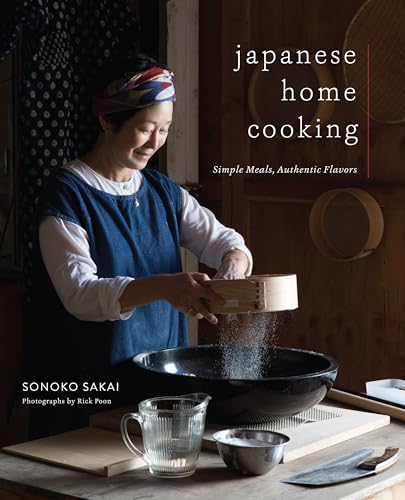

Japanese Home Cooking: Simple Meals, Authentic Flavors [Sakai, Sonoko, Poon, Rick] on desertcart.com. *FREE* shipping on qualifying offers. Japanese Home Cooking: Simple Meals, Authentic Flavors Review: Fantastic book!! - I am a fortunate Angeleno who has had the wonderful opportunity to attend two of Sonoko Sakai’s cooking classes at her home. She is a master chef who is truly passionate about making traditional Japanese cuisine accessible to the home cook. I love the introduction to this book and was very touched by her description of her journey to teaching cooking with a focus on the craft of artisanal cooking. The book is much more than an assortment of recipes, it is a complete education in the culture of traditional Japanese cooking. The subtitle “simple meals, authentic flavors,” refers to the home-style way of preparing food. This does not mean that the preparation of the recipes are necessarily easy and fast. But the ingredients are clean and authentic, and the recipes are clear and instructive with gorgeous pictures. The resulting dishes are so incredibly delicious. My favorites dishes so far are the water kimchi which is super beautiful and refreshing and the amazuzuke (quick vinegar pickles) which also make beautiful gifts. Speaking of gifts, I am planning to buy copies of this book for holiday gifts for friends and family. Review: All the basics and very approachable. - Just received it but we've looked through most of the book and picked a few recipes to make ASAP. I generally appreciate how succinct and relatable the language in the book is. Sakai does a good job of giving context and talking about personal experience/history without getting too wordy. The recipes are straight forward but not in a choppy shorthand kind of way. While I am familiar with the most of recipes in the book, I'm happy to have a simple reference for the essential Japanese foods that is so approachable. I also reference the book "Japanese Cooking a Simple Art" for in depth info on techniques. All that said, I dont understand the other reviews saying that the recipes aren't "easy enough."...maybe those folks aren't familiar with Japanese cooking. If you want plug and play food, try something else. Japanese cooking often requires cooking from scratch more often than many Westerners are used to. Ingredients and flavors in Japanese cooking are so specific that Americanized versions aren't going to work...and substituting specialized ingredients isn't really an option...IE if finding Kombu and Bonito is too much work you aren't going to find any substitutes that work. BUT, if you like to cook and are interested in some basic pickling, dashi stock, making your own tofu, making Ramen noodles in addition to complete entrees that tie everything together...just getting a little outside your comfort zone and working from scratch then buy this book. There really is nothing too crazy. Sure, we aren't all going to make sashimi at home, but there's something in here for all skill levels.

| Best Sellers Rank | #19,736 in Books ( See Top 100 in Books ) #10 in International Cooking, Food & Wine #10 in Japanese Cooking, Food & Wine #12 in Soul Food Cooking, Food & Wine |
| Customer Reviews | 4.8 4.8 out of 5 stars (807) |
| Dimensions | 8.3 x 1.1 x 10.3 inches |
| ISBN-10 | 161180616X |
| ISBN-13 | 978-1611806168 |
| Item Weight | 2.37 pounds |
| Language | English |
| Print length | 304 pages |
| Publication date | November 19, 2019 |
| Publisher | Roost Books |
A**R
Fantastic book!!
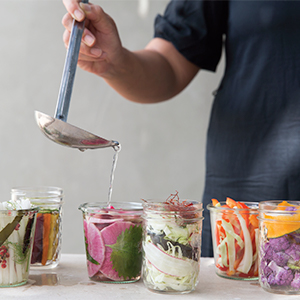
I am a fortunate Angeleno who has had the wonderful opportunity to attend two of Sonoko Sakai’s cooking classes at her home. She is a master chef who is truly passionate about making traditional Japanese cuisine accessible to the home cook. I love the introduction to this book and was very touched by her description of her journey to teaching cooking with a focus on the craft of artisanal cooking. The book is much more than an assortment of recipes, it is a complete education in the culture of traditional Japanese cooking. The subtitle “simple meals, authentic flavors,” refers to the home-style way of preparing food. This does not mean that the preparation of the recipes are necessarily easy and fast. But the ingredients are clean and authentic, and the recipes are clear and instructive with gorgeous pictures. The resulting dishes are so incredibly delicious. My favorites dishes so far are the water kimchi which is super beautiful and refreshing and the amazuzuke (quick vinegar pickles) which also make beautiful gifts. Speaking of gifts, I am planning to buy copies of this book for holiday gifts for friends and family.
T**S
All the basics and very approachable.
Just received it but we've looked through most of the book and picked a few recipes to make ASAP. I generally appreciate how succinct and relatable the language in the book is. Sakai does a good job of giving context and talking about personal experience/history without getting too wordy. The recipes are straight forward but not in a choppy shorthand kind of way. While I am familiar with the most of recipes in the book, I'm happy to have a simple reference for the essential Japanese foods that is so approachable. I also reference the book "Japanese Cooking a Simple Art" for in depth info on techniques. All that said, I dont understand the other reviews saying that the recipes aren't "easy enough."...maybe those folks aren't familiar with Japanese cooking. If you want plug and play food, try something else. Japanese cooking often requires cooking from scratch more often than many Westerners are used to. Ingredients and flavors in Japanese cooking are so specific that Americanized versions aren't going to work...and substituting specialized ingredients isn't really an option...IE if finding Kombu and Bonito is too much work you aren't going to find any substitutes that work. BUT, if you like to cook and are interested in some basic pickling, dashi stock, making your own tofu, making Ramen noodles in addition to complete entrees that tie everything together...just getting a little outside your comfort zone and working from scratch then buy this book. There really is nothing too crazy. Sure, we aren't all going to make sashimi at home, but there's something in here for all skill levels.
T**N
Washoku has some competition :)
I received a preview digital copy of netgalley.. Had never heard of the author, nor of the book... Perused it on my iphone.. and immediately placed an order! I did read the complaint in a previous review about it not being simple.. and I don't disagree.. but I also don't agree.. Japanese cooking is all about simplicity that may be complex. There are some very simple recipes.. think soy sauce chicken thighs, or a dashi made simply by soaking kombu.. but if you are looking to create fast to put together short cut Japanese style dishes.. this book is not for you.. If your looking to really understand on a deeper level Japanese cuisine... then you hit the jackpot. I have never seen Japanese cookbooks that teach you how to make your own tofu, miso, buckwheat noodles, dried persimmons, or mochi . yes.. make your own miso and mochi . faint. (Keep in mind, the miso ferments for 4-6 months) Washoku has long since been my go to Japanese cookbook... and it still is! If youre new to Japanese cooking and ingredients.. it is an amazing resource with lots of pictures of pantry items. This book, though, dives deeper... see above.. make your own tofu! The art design/layout is great. If I were to nitpick.. I have caught two spelling errors already.. and hope that this editorial misses are not in any recipes/measurements. Looking forward to cooking from this book.. I haven't yet.. have just been reading it like a novel so far. I highly recommend this book!
S**A
My new favorite cookbook
I can't say enough good things about this cookbook! For context, I am a pretty intense home cook, and after four trips to Japan have become obsessed with learning everything I can about Japanese cooking. I have just about every Japanese cookbook available, and have read them all. I had seen Sonoko Saiki speak at the 2018 Grain School in Colorado Springs about soba and buckwheat, so waited with giddy anticipation for her cookbook to come out this past fall. I was not disappointed! There are several things that make her book so special and unique. First, she has lived in both Japan and the U.S, so has the perfect background for explaining processes and ingredients in a way that makes them accessible to a U.S. home chef. Second, starts the book with a long narrative about ingredients, how to find them, and how to create your own simple, essential pantry items. Third, she sprinkles wonderful personal stories throughout the book about her relationships with specialty vendors both here and in Japan. Fourth, she tells you where to get hard to find ingredients. And I could go on and on, but you get the idea. If you are into Japanese cooking, you need this book! I'll also say that I had the fantastic opportunity to take a soba making class from Sonoko after I read the book. It was such an amazing experience to get to work with her in person and I highly recommend taking one of her classes if you can! She teaches both out of her LA home, and she also travels to events and workshops around the country.
I**E
Tres beau livre
A**E
Very Informative and good to understand. Lot of Information to use in your everyday cooking.
Y**A
Este libro me ha encantado. Me enganchó su lectura desde las primeras páginas. Esta muy bien organizado, las recetas son sencillas pero muy bien explicadas incluso las que hay que son mas complejas. El libro es ordenado, y se ve que está hecho con mucho cariño. Es un libro especial.
K**Y
This cookbook is more like a textbook than a cookbook. Too many food philosophies and stories from her childhood. Recipes seem to be for Americans. Content organization is confusing. I returned it and bought a different Japanese cookbook which is so much better and easier to follow.
A**R
A mi esposa que es 3/4 japonesa le encanto.
Trustpilot
2 months ago
2 weeks ago