Desert Online General Trading LLC
Dubai, United Arab Emirates
Desert Online General Trading LLC
Dubai, United Arab Emirates

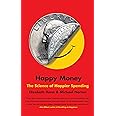
Happy Money: The Science of Happier Spending
T**R
Happy Money The book
Happy MoneyThe book, Happy Money: The Science of Happier Spending by Elizabeth Dunn and Michael Norton, summarizes current research on how you spend money changes how happy and satisfied you are in life and affects your health and well being.This is a wonderful book that explains how you can increase your happiness by spending on experiences with the people you value rather than spending on prestige belongings that many people think will make them happy.According to the book, research shows that spending money on leisure activities like trips, movies, sporting events, gym memberships and the like leads to more happiness than buying expensive consumer and prestige items. Experiences tend to be appreciated more as time goes by whereas things tend to be less appreciated as time goes on as better things than they bought emerge. Experiences tend to make us feel more connected to other people which improves life satisfaction. When couples do exciting and novel things together, their relationships improve. Anything we do to make the time with our friends or partners special is money well spent. Experiences make memorable stories for retelling for years to come and give us a sense of who we are or who we want to be. Experiences can’t be compared to things purchased. Experiences that remind of us of the past and give us nostalgia, like going to a museum, watching an old movie, or hearing a favorite song, can bolster our vitality and reduce stress.Research indicates people earning over $75,000 a year do not have an increase in happiness. High income individuals spend more time doing high stress activities like working, commuting, and shopping than those who make less. High income individuals view their time as highly valuable which makes them feel like they have less time. In contrast, buying time, called time affluence, increases happiness. You can gain time affluence by moving closer to work to reduce your commute, working in a job that requires less hours, or hiring people to do your yard work or cleaning.Research shows that having expensive things does not bring happiness, health, or well-being. The University of Michigan found that those with cheaper cars had the same satisfaction driving them as people with expensive cars. Surprisingly, homeowners are not happier than renters, and are on average are 12 lbs heavier than renters. Those who simplify their lives by reducing their wardrobe, moving into a smaller abode, changing their consumption patterns, and reducing their stuff are happier. The enemy of appreciation is abundance; if we make everything we do special it will increase appreciation and happiness.I highly recommend this book for people wanting more happiness, time, and life satisfaction. Five Stars.
T**N
Very Good... Until the Epilogue
The bulk of 'Happy Money' is a well-researched and enjoyable book that outlines practical strategies for getting the most happiness out of your spending. It is something that millions of Americans could benefit from.The epilogue, however, takes a weird and, for liberty-minded individuals, nauseating turn. It essentially argues for a Nanny State, or at least for much more government intervention into peoples' lives. There were perhaps some interesting ideas and discussion points, but I felt like their political biases (and misleading data) really took over.I would much rather have individuals educated on the science behind happier spending and given the liberty to make their own decisions, then having them forced, or not-so-gently nudged, into "optimal" decisions by an "all-knowing" government, as the authors suggest. To their credit, they did briefly mention education over force as an option, but that certainly wasn't the theme of the section. It was a disappointing way to end an otherwise good book.
C**C
Lovely book filled with wonderful research and examples
I picked up this book when Dan Ariely (amazing behavioral economist and author of "Predictably Irradtional) endorsed it. Glad I did."Happy Money" features insights on how to get the most from a product not based an item's price tag, but by its psychological value. For instance, ditch the BMW and go for a trip to Bora Bora. Because novelty creates more pleasure than repetition, make things a treat like dinner outings. While many of these pointers seem like common sense, they're also deceptively profound--if everyone adopted these tactics, we'd be living in a much more sustainable, value-driven society. The point on investing in others is particularly crucial: the authors point out that one of the most gratifying uses of money is improving the well-being of others. Some authors expound upon this subject beautifully (Lynn Twist's "The Soul of Money" is one such book), but it's wonderful seeing Elizabeth Dunn and Michael Norton mentioning these points in a more matter-of-fact way.I highly recommend this book to people of ALL income levels. Those who work hard to stretch a dollar will be given great advice on how to "feel" rich even if the bank balance indicates otherwise. Those with resources can learn how to have a wealthy spirit, as it's clear that this does not always coincide with being financially well-off.Though written by two accomplished academics, it contains no jargon but plenty of humorous self-deprecation. It's an easy read.My only complaint was thinking I had 40 percent left of the book, only for it to be the "reference" portion. Of course, I should've expected nothing less given the extensive use of scientific studies to back assertions.One of my favorite books of the year, for sure.
K**T
feeling good about spending
This book has some very interesting observations about spending. The one about one's investment in an overly high end home does not have a lasting effect on "happiness". I have long believed that persons buying far above their capacity to pay is indicative of feelings of inferiority and by buying fancy "stuff" they are trying to prove to themselves their intristic worth as humans.The book focuses heavily on the idea that happiness should be the prime motivation for spending. Sometimes maybe. Travel is a good example. In the end, however the author projects happiness into socialism, and claims that this is the way to go to achieve true happiness. Bull!Kent
Trustpilot
4 days ago
1 month ago
2 weeks ago
4 days ago