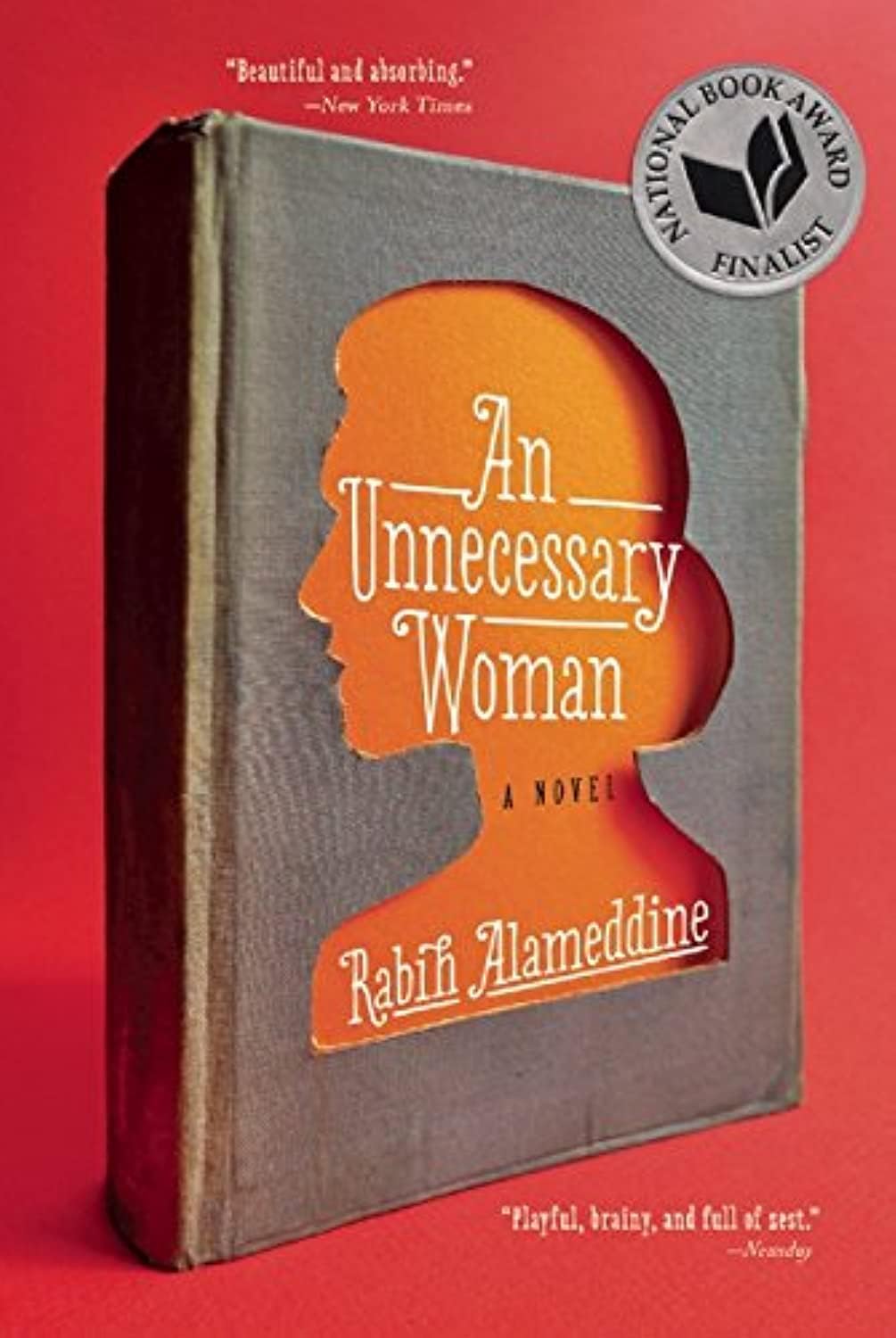

An Unnecessary Woman
Product ID: 8853584
Desertcart purchases this item on your behalf and handles shipping, customs, and support to Kenya.
NATIONAL BOOK AWARD FINALIST A happily misanthropic Middle East divorcee finds refuge in books in a "beautiful and absorbing" novel of late-life crisis ( The New York Times ). Aaliya is a divorced, childless, and reclusively cranky translator in Beirut nurturing doubts about her latest project: a 900-page avant-garde, linguistically serpentine historiography by a late Chilean existentialist. Honestly, at seventy-two, should she be taking on such a project? Not that Aailiya fears dying. Women in her family live long; her mother is still going crazy. But on this lonely day, hour-by-hour, Aaliya's musings on literature, philosophy, her career, and her aging body, are suddenly invaded by memories of her volatile past. As she tries in vain to ward off these emotional upwellings, Aaliya is faced with an unthinkable disaster that threatens to shatter the little life she has left. In this "meditation on, among other things, aging, politics, literature, loneliness, grief and resilience" ( The New York Times ), Alameddine conjures "a beguiling narrator . . . who is, like her city, hard to read, hard to take, hard to know and, ultimately, passionately complex" ( San Francisco Chronicle ). A finalist for the National Book Critics Circle Award and the National Book Award, An Unnecessary Woman is "a fun, and often funny . . . grave, powerful . . . [and] extraordinary" ( Washington Independent Review of Books ) ode to literature and its power to define who we are. "Read it once, read it twice, read other books for a decade or so, and then pick it up and read it anew. This one's a keeper" ( The Independent ) Review: AN EXCEPTIONAL NOVEL - An Unnecessary Woman by Rabih Alameddine Reviewed by Arlene Yedid An Unnecessary Woman is a unique novel that tells the story of a cynical woman who exits on her own terms.in her beloved city of Beirut.. At 72, Aaliya has few fond remembrances, having chosen a solitary existance. As narrator of her story, she does not speak much about the Lebanese Civil War; just that she had to sneak across the city’s partition for bread and that the bombing was loud. She doesn’t recount much of the sporadic warfare that has plagued and changed the face of Lebanon. So what is this novel trying to reveal? It is more than a story about a cantankerous, eccentric woman extolling her beloved Beirut. This novel is a portrait of a woman seeking a meaningful existence through literature rather than life. This book, that breathes the rhythm of life through Alameddine’s magnificent prose, is sprinkled with references to favorite authors, books, and music. For some, encountering so many unfamiliar references to authors is off- putting; yet, the vivid storytelling creates a compelling work. If you give up on reading this book, you have lost a treasure. Alameddine is the master of flowing prose. Using Aaliya as narrator could seem limiting; however remembrances pepper the narrative, revealing layers of life-altering episodes. She was forced to marry at the age of 16, and fortunately her difficult husband divorced her 6 months later. While working in a book shop, Aaliya had an extended love affair with a much younger clerk, whose luster dimmed when he became a radical soldier. Aaliya. Is haunted by the death of her close friend Hannah, feeling guilt for ignoring warning signs of impending tragedy. Aaliya is an enigma. She translates books into Arabic, but doesn’t send them to publishers. She has no relationship with her family, but they don’t seem to deserve her respect. Love was never an emotion she felt toward her overly critical mother, whom she felt no guilt for avoiding seeing or rejecting housing her. Eventually, you see an unexpected, touching scene revealing Aaliya’s repressed love toward her indifferent mother. The novel’s climax occurs when she experiences a calamity leading to her neighbors’ unsolicited efforts to help salvage her plight. The old Aaliya would chase them away; perhaps a new Aaliya realizes that she needs to truly live in the moment rather than through a solitary existence.. Rabih Alameddin creates an unforgettable novel in which he proves that Aaliya is not “An Unnecessary Woman.” Review: Beautifully Told - This is my first exposure to Rabih Alameddine. In An Unnecessary Woman,we spend time with Alliyah who has been translating special works of literature into Arabic, just to keep herself busy. Living alone since her husband divorced her in the seventies, self sufficient and unusual, actually extraordinary, more than a modern woman, she's her own woman. She keeps herself to herself in her apartment in Beirut, accompanied by the many volumes and tomes she's translated. She's independent and self sufficient, a self developed scholar with a strong story to tell through her memories, readings, ideas, and observations. She's captivating, profound and funny. This is a one woman show with a stream of consciousness rather than a traditional plot, we spend days with a friend. Never does it feel that we need anyone else's company. Throughout the book you want everyone else to know her as we do. It would be great to read half the books she has translated. This is a great character and like all great characters she's still in my head affecting my point of view. I look forward to this author's other treasures.
| Best Sellers Rank | #131,325 in Books ( See Top 100 in Books ) #222 in Cultural Heritage Fiction #739 in Sociology Reference #3,316 in Literary Fiction (Books) |
| Customer Reviews | 4.0 out of 5 stars 2,162 Reviews |
A**A
AN EXCEPTIONAL NOVEL
An Unnecessary Woman by Rabih Alameddine Reviewed by Arlene Yedid An Unnecessary Woman is a unique novel that tells the story of a cynical woman who exits on her own terms.in her beloved city of Beirut.. At 72, Aaliya has few fond remembrances, having chosen a solitary existance. As narrator of her story, she does not speak much about the Lebanese Civil War; just that she had to sneak across the city’s partition for bread and that the bombing was loud. She doesn’t recount much of the sporadic warfare that has plagued and changed the face of Lebanon. So what is this novel trying to reveal? It is more than a story about a cantankerous, eccentric woman extolling her beloved Beirut. This novel is a portrait of a woman seeking a meaningful existence through literature rather than life. This book, that breathes the rhythm of life through Alameddine’s magnificent prose, is sprinkled with references to favorite authors, books, and music. For some, encountering so many unfamiliar references to authors is off- putting; yet, the vivid storytelling creates a compelling work. If you give up on reading this book, you have lost a treasure. Alameddine is the master of flowing prose. Using Aaliya as narrator could seem limiting; however remembrances pepper the narrative, revealing layers of life-altering episodes. She was forced to marry at the age of 16, and fortunately her difficult husband divorced her 6 months later. While working in a book shop, Aaliya had an extended love affair with a much younger clerk, whose luster dimmed when he became a radical soldier. Aaliya. Is haunted by the death of her close friend Hannah, feeling guilt for ignoring warning signs of impending tragedy. Aaliya is an enigma. She translates books into Arabic, but doesn’t send them to publishers. She has no relationship with her family, but they don’t seem to deserve her respect. Love was never an emotion she felt toward her overly critical mother, whom she felt no guilt for avoiding seeing or rejecting housing her. Eventually, you see an unexpected, touching scene revealing Aaliya’s repressed love toward her indifferent mother. The novel’s climax occurs when she experiences a calamity leading to her neighbors’ unsolicited efforts to help salvage her plight. The old Aaliya would chase them away; perhaps a new Aaliya realizes that she needs to truly live in the moment rather than through a solitary existence.. Rabih Alameddin creates an unforgettable novel in which he proves that Aaliya is not “An Unnecessary Woman.”
I**N
Beautifully Told
This is my first exposure to Rabih Alameddine. In An Unnecessary Woman,we spend time with Alliyah who has been translating special works of literature into Arabic, just to keep herself busy. Living alone since her husband divorced her in the seventies, self sufficient and unusual, actually extraordinary, more than a modern woman, she's her own woman. She keeps herself to herself in her apartment in Beirut, accompanied by the many volumes and tomes she's translated. She's independent and self sufficient, a self developed scholar with a strong story to tell through her memories, readings, ideas, and observations. She's captivating, profound and funny. This is a one woman show with a stream of consciousness rather than a traditional plot, we spend days with a friend. Never does it feel that we need anyone else's company. Throughout the book you want everyone else to know her as we do. It would be great to read half the books she has translated. This is a great character and like all great characters she's still in my head affecting my point of view. I look forward to this author's other treasures.
E**Y
An Unpleasant Woman
This book is a first person monologue delivered by Aaliyah, a now elderly Lebanese woman who grew up marginalized within her family and married at the age of sixteen to a man who divorced her four years later. She then gets a job in a bookstore, loses herself in books, and devotes herself to translating some of the books she loves into Arabic (not from the originals but from English and French translations of those books). Understandably embittered, she speaks in derogatory terms about her family, her former husband, her community, her neighbors and her culture. An insufferable snob (as one of the other reviewers has noted) she frequently refers fondly to writers and composers (often from central and eastern Europe), while deriding others (ranging from Hemingway to Samuel Beckett). The only people she ever seems too care about are a bookish young man who becomes her lover and then a jihadist, and a sweet but delusory young woman named Hannah (an almost sister in law). For some readers this book may be redeemed by the narrator's bookishness and her sometimes interesting comments on literature and music. But I found that time spent reading this book was time spent in the company of a thoroughly unpleasant woman. The book was redeemed a bit for me by the ending, when her neighbors, who she has been referring to as witches, pitch in to help save her Arabic translations of western literature (the work of a lifetime), from a bathroom flood. Their concern for her work, and their inclination to be impressed by it, give a boost to Aaliyah's very low self esteem, which underlies her alienation and snobbery. At the end she is ready to make direct translations of English and French books into Arabic (a more worthwhile endeavor). So there is a hint of grace in the ending. I would say that the character and the time and place in which she lives have been very fully realized in this book. While respecting the literary achievement, I can't say that I enjoyed the time spent in the company of Aaliyah and her world.
J**S
Purpose and Courage
Is Aaliya, a seventy-two year old single woman living in Beirut, really an unnecessary woman? After reading Ralph Alameddine’s rich and multi-layered novel about her life, I realized that her life, like all lives, are necessary. All lives serve some purpose although it may be difficult for the person herself (or others observing her) to recognize it. When the novel opens, Aaliya is looking in the mirror at her newly colored blue hair and pondering what book she will translate into Arabic in the upcoming new year, two interesting details that let the reader know up front some important facts about the protagonist. We know she loves reading and translating and that she’s elderly and perhaps a little quirky. As the story unfolds, the reader learns that she was once married but that the union didn’t work out and that she still lives in the aparatment she had shared with her spouse decades ago. There are three other women (the witches) who also live in the building, but Aaliya doesn’t socialize with them. However, when she needs them, they are there. There’s a dramatic scene when Aaliya’s older brother brings their mother to her apartment and announces that he’s leaving the mother there with Aaliya. The mother begins to scream at the sight of her daughter, and in a thrice, Aaliya’s “friends” come to her rescue. They are also there to assist and support at the end of the novel when catastrophe strikes. Not only does Alameddine construct a story about a solitary life with its connections to others, but he also paints a picture of Beirut, a city beloved by Aaliya’s. It’s beautiful, yet war torn. Through Aaliya’s eyes, he reveals much about the Lebanese culture, including gender “challenges” and struggles. Translating books into Arabic is something Aaliya has done for decades, and although there is no remuneration for her labors of love, the work itself is reward enough. It gives purpose to her life. An added plus for the reader are the references to books, authors, and music. Because of these references, I’ve been introduced to some of the work of well-known (but not to me) authors, especially of other countries. And the music allusions sent me to Amazon Prime in search of classical music of great composers. Are any of us really necessary as we scurry about in our everyday lives? Yes. Just like Aaliya, we are. It just takes some people a little longer to realize it. This novel with its many themes of friendship, purpose, courage, families, courage, resourcefulness, and loneliness can help the reader rethink his or her purpose and place in the universe.
L**H
Satisfying, Recommended read
I really enjoyed this book. Not sure I'd classify it as a stay-up-all-night page turner, but it kept me coming back every day with no desire to start any other book until the end. It is well written and engrossing with several unexpected plot developments along the way. The suspense developed in a deliberate, but well-paced manner until the (to me) very surprising ending. I don't recall the other reviews I read to decide to buy the Kindle edition. There were synopsis to be found there so I'm not going to do that. I always read the middle star reviews on Amazon now and pay attention to the total number of reviews under 5 before I buy anymore. Been stung too many times. At the risk of possible spoiler **** stop reading here. **** I recommend checking out a range of reviews and paying attention to the more literate, thoughtful ones. (Not necessarily mine, BTW - LOL) But so many readers these days prefer romance novel type endings and those readers deserve a warning when they aren't going to get that. (I see the conflicting warnings up there, but I'm leaving as is.)
J**E
A Necessary Read!
"An Unnecessary Woman" is a delicious, intelligent, poignant novel -- laced with wit and humor. Yes, all of that in a chapterless novel written in first-person, present tense, from the female narrator's point of view. Never mind that the author is a man; Alameddine is immensely successful in creating and living in the skin of an aging female recluse characterized by shyness and a low opinion of her own worth. He is masterful at crafting sentences (and quotable quotes) that reflect human insights and observations that many of us share -- but don't express. Born female and ordinary into a male-dominated Lebanese society, and stigmatized by divorce, Aaliyah has lived a mostly unappreciated life, filled with characters whom she chronicles in her candid stream-of-consciousness narrative. Aaliyah is a keen observer of life, but not a participant. She is an eavesdropper, absorbing her neighbors' daily chats and activities, but never joining in. Reading is one of Aaliyah's two obsessions. The other is translating books -- books that, when completed, end up boxed, stacked, and unread by anyone other than herself. One component of this novel that diminished my personal enjoyment was author Alameddine's overabundance of literary allusions. In fact, I looked up some of Aaliyah's references to various writers for the sole purpose of enriching my reading experience. It would be wonderful to possess Alameddine's repertoire of literary knowledge, but I don't. Nevertheless, my unfamiliarity with certain works does not diminish the merit of this book. One last note: Without divulging any details, I will add that "An Unnecessary Woman" provides a very satisfying ending.
J**S
Remarkable scenes
Because this book is, in effect, a monologue, and because it is essentially meditative, it's easy to forget that it is also a novel of scenes -- ones that are so embedded within the whole that they seem wholly organic. And what scenes! I want to go back and reread the heroine's visit to her mother where there is not revelation, not a new connection made between mother and daughter, but experience itself. This is a great gift that this author gives -- he carries us along even as he is suspending us; he allows his heroine to judge, but such is the pendulum of her thought that judgement never fossilizes. And -- yes -- the scene of the emergency visit from her three neighbors at the end of the book, with the unforgettable image of individual pages hanging on clotheslines to dry, or being ironed and sometimes blow-dried -- a rescue yes, but more important even is that the ultimate rescue happens -- understated, so small, but so essential to ongoing life: the heroine is recognized as the person she is, and just as importantly she allows herself to be recognized. Again, neither transformative nor transformed -- but the organic rendering and sifting of experience -- a feat that this writer can pull off again and again, with great subtlety. Then there's the utterly surprising sex scene . . . A further note: last evening I saw the film THE WIND RISES by the great Japanese animator of SPIRITED AWAY. The movie turns on a phrase from Paul Valery: 'the wind is rising; one must live.' That lovely line -- again both indeterminate in explicit meaning and determinate in its metaphorical mandate --saturates this remarkable book.
R**Y
Character Driven Story
The reader hears the story from the viewpoint of the main character Aaliya. She is 72 years old and has lived in Beirut her whole life including the civil war. She ran a book store for many years and has lived alone since she was divorced at age 20. She is a feisty, interesting person with neighbors and family and one real friend that we get to meet. There are lovers alluded to but only one is described in detail. The story about how she happens owns a Kalashnikov is very good. She translates books as a hobby but she doesn't show them to anyone. There are a lot of books mentioned in the course of the story and while I had read some of them, I ended up with a list to check out. This book will be liked by readers who don't need a plot driven story. A love of books will be helpful because the main character's life revolves around books. I found the occasional criticism Aaliya made of an author or translator both surprising and amusing. It was interesting getting a bit of description of Beirut and its history.
F**A
A good read
Aliya, the main character, is a Beiruti translator in her 70s who recounts her fascinating expedition through world literature. "An unnecessary woman" is a painful reminder that life is too short to read all the fascinating literary works from around the world. The book can be categorized as a work of meta-novel. I like this book because I usually appreciate books that introduce me to other books. Thanks to Aliya, I now have read Kundera, discovered photographs of Andre Kertesz... and I plan to go through more titles in the next months.
P**A
An unusual and enjoyable book
I found the book a bit difficult to follow at the beginning. I am not aware of so many of the writers or artists that the author quotes. Otherwise, the book flows as one's everyday life flows. We think of many things during the day, similarly the book flows from one subject to another. These changes are easy to follow because there are very few characters. I have bought his other books, hope I enjoy those too.
S**N
poorly written and the protagnost was self-pitying (with reason I may add) and obsessive in the wrong way
We are reading as a book club. I don't know if the other members think like I do. the descriptions of Beirut in war time were vivid and helped you un derstand how hard it is for ordinary people to live under siege. that was about the most positive thing about the whole book
M**N
An Unnecessary Woman by Rabih Alameddine
Great book. Amusing and highly intelligently written. A good read!
K**R
Four Stars
Great book Novel idea
Trustpilot
2 weeks ago
3 weeks ago