
Buy anything from 5,000+ international stores. One checkout price. No surprise fees. Join 2M+ shoppers on Desertcart.
Desertcart purchases this item on your behalf and handles shipping, customs, and support to Kenya.
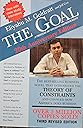
Written in a fast-paced thriller style, The Goal is the gripping novel which is transforming management thinking throughout the Western world. The author has been described by Fortune as a 'guru to industry' and by Businessweek as a 'genius'. It is a book to recommend to your friends in industry - even to your bosses - but not to your competitors. Alex Rogo is a harried plant manager working ever more desperately to try and improve performance. His factory is rapidly heading for disaster. So is his marriage. He has ninety days to save his plant - or it will be closed by corporate HQ, with hundreds of job losses. It takes a chance meeting with a colleague from student days - Jonah - to help him break out of conventional ways of thinking to see what needs to be done. The story of Alex's fight to save his plant is more than compulsive reading. It contains a serious message for all managers in industry and explains the ideas which underline the Theory of Constraints (TOC) developed by Eli Goldratt. Eliyahu M. Goldratt is an internationally recognized leader in the development of new business management concepts and systems, and acts as an educator to many of the world's corporations. The 20th anniversary edition includes a series of detailed case study interviews by David Whitford, Editor at Large, Fortune Small Business, which explore how organizations around the world have been transformed by Eli Goldratt's ideas. Review: Put this book on your reading list ASAP - First and foremost, this is the best business related novel I have read thus far. As a senior engineering student I spend a great deal of time with my nose in textbooks studying production system bottlenecks along with countless other production issues. Needless to say that the authors of these textbooks do not consider the dryness of the technical material a detraction, its engineering after all. In contrast, The Goal deals with many of the same issues my fellow classmates and I grapple with in an appealing and engaging approach. The way the author, E. Goldratt, weaves an interesting back story of a troubled engineer turned manager with an astute evaluation of complex production issues brings to life the dead equations and theory in our textbooks. There are several cleaver analogies the author uses to explain the theory of constraints to the reader who may not be an engineer. The Boy Scout story involves a troupe out on a hike that seems to keep falling behind schedule and getting separated. The main character and troubled engineer, Alex Rogo, is the troupe leader and decides to solve the disorganization problem by conducting a few experiments. He finds that a plump scout named Herby is holding everyone back as he is the slowest hiker, then compares this situation with a production system and thus a bottleneck is explained. The matchstick game is also a practical, basic explanation of constraints. The experiment sets up some scouts in a row, each with a bowl. They are to roll a die and pass the number of matchsticks prescribed by the die to the next scout down the line. If the number on the die is greater than the number of matchsticks they have in their bowl they are to pass their entire matchstick inventory to the next scout. Although each boy has the capacity to roll a 6 every time on his turn, statistically this is nearly impossible. This experiment demonstrates the variation production cells naturally experience and how this variation affects the next production center down the line. There are some interesting characters that seem completely out of place in the story. One such character is Jonah, which is Alex's old college physics professor turned business consultant. As Alex's troubles mount Jonah becomes his professor once again, and like most college professors, only gives Alex enough information to solve the problem on his own. It is interesting that the Goldratt is himself a physicist turned business consultant. I would venture to say that the relationship between Jonah and Alex in the book is representative of the author and reader relationship; an expert advising a novice. Another reason Goldratt may have made Jonah a physicist was to lend an air of scientific method to business problem solving. The book also provides some practical, simple tricks to deal with production problems. One of these is to relocate an in-process inspection operation before a bottleneck station to off-load production demand through it. I could go into all the technical issues dealt with in the book such as: how to increase throughput, reduce inventory and operating expenses, how to deal with changing bottlenecks, and the like but there are textbooks that better deal with that sort of thing. It is worth mentioning that there are some really interesting production system modeling software packages out there, such as Arena, which can mimic production systems very well and facilitate system experimentation to solve throughput problems. I sincerely wish that I had this book imbedded somewhere in my required reading list in my first year engineering courses, it would have made all those long hours of textbook work seem a little more relevant. Michael Magallon Review: Theory of Constraints explained and its wide applications revealed - The Goal is a fascinating book about the Theory of Constraints which was introduced to the world by Eliyahu Goldratt. I must admit the title didn't appeal much to me, but bought it anyway because it was recommended highly. After reading it, I realized that the title was perfect since it plays well into the questioning that needs to take place in order to identify the constraint or bottleneck in an organization. The book is written as a novel, which makes the book a lot easier to read and also a lot more entertaining Alex Rogo is a plant manager and at the beginning of the novel is greeted at his plant by the VP who informs him that his production numbers need to improve or they will be shutting down the plant. Of course, during all this mess Rogo is also going through a rocky marriage and throughout the book the reader is taken through the struggle of both issues. Alex seeks advice from an old Physicist from Israel named Jonah. Jonah takes Alex through the Socratic method of analysis which is the way Alex then communicates with his management team to solve the issues causing the low throughput in the factory. The conversations that take place between Jonah, Alex and the entire management team are extremely interesting and informative. I wonder how often this level of discussion actually takes place, but it sure makes for interesting reading. A lot of the applications of the theory of constraints, although they take place in the factory, could be easily implemented in all industries. Mr. Goldratt has written a business book that will remain relevant for many years to come. I highly recommend this incredible business book. Anyone who does business consulting and does not read and use the information on this book is doing his/her clients a great disservice.
| Best Sellers Rank | #88,619 in Books ( See Top 100 in Books ) #19 in Organizational Change (Books) |
| Customer Reviews | 4.6 out of 5 stars 570 Reviews |
M**N
Put this book on your reading list ASAP
First and foremost, this is the best business related novel I have read thus far. As a senior engineering student I spend a great deal of time with my nose in textbooks studying production system bottlenecks along with countless other production issues. Needless to say that the authors of these textbooks do not consider the dryness of the technical material a detraction, its engineering after all. In contrast, The Goal deals with many of the same issues my fellow classmates and I grapple with in an appealing and engaging approach. The way the author, E. Goldratt, weaves an interesting back story of a troubled engineer turned manager with an astute evaluation of complex production issues brings to life the dead equations and theory in our textbooks. There are several cleaver analogies the author uses to explain the theory of constraints to the reader who may not be an engineer. The Boy Scout story involves a troupe out on a hike that seems to keep falling behind schedule and getting separated. The main character and troubled engineer, Alex Rogo, is the troupe leader and decides to solve the disorganization problem by conducting a few experiments. He finds that a plump scout named Herby is holding everyone back as he is the slowest hiker, then compares this situation with a production system and thus a bottleneck is explained. The matchstick game is also a practical, basic explanation of constraints. The experiment sets up some scouts in a row, each with a bowl. They are to roll a die and pass the number of matchsticks prescribed by the die to the next scout down the line. If the number on the die is greater than the number of matchsticks they have in their bowl they are to pass their entire matchstick inventory to the next scout. Although each boy has the capacity to roll a 6 every time on his turn, statistically this is nearly impossible. This experiment demonstrates the variation production cells naturally experience and how this variation affects the next production center down the line. There are some interesting characters that seem completely out of place in the story. One such character is Jonah, which is Alex's old college physics professor turned business consultant. As Alex's troubles mount Jonah becomes his professor once again, and like most college professors, only gives Alex enough information to solve the problem on his own. It is interesting that the Goldratt is himself a physicist turned business consultant. I would venture to say that the relationship between Jonah and Alex in the book is representative of the author and reader relationship; an expert advising a novice. Another reason Goldratt may have made Jonah a physicist was to lend an air of scientific method to business problem solving. The book also provides some practical, simple tricks to deal with production problems. One of these is to relocate an in-process inspection operation before a bottleneck station to off-load production demand through it. I could go into all the technical issues dealt with in the book such as: how to increase throughput, reduce inventory and operating expenses, how to deal with changing bottlenecks, and the like but there are textbooks that better deal with that sort of thing. It is worth mentioning that there are some really interesting production system modeling software packages out there, such as Arena, which can mimic production systems very well and facilitate system experimentation to solve throughput problems. I sincerely wish that I had this book imbedded somewhere in my required reading list in my first year engineering courses, it would have made all those long hours of textbook work seem a little more relevant. Michael Magallon
J**E
Theory of Constraints explained and its wide applications revealed
The Goal is a fascinating book about the Theory of Constraints which was introduced to the world by Eliyahu Goldratt. I must admit the title didn't appeal much to me, but bought it anyway because it was recommended highly. After reading it, I realized that the title was perfect since it plays well into the questioning that needs to take place in order to identify the constraint or bottleneck in an organization. The book is written as a novel, which makes the book a lot easier to read and also a lot more entertaining Alex Rogo is a plant manager and at the beginning of the novel is greeted at his plant by the VP who informs him that his production numbers need to improve or they will be shutting down the plant. Of course, during all this mess Rogo is also going through a rocky marriage and throughout the book the reader is taken through the struggle of both issues. Alex seeks advice from an old Physicist from Israel named Jonah. Jonah takes Alex through the Socratic method of analysis which is the way Alex then communicates with his management team to solve the issues causing the low throughput in the factory. The conversations that take place between Jonah, Alex and the entire management team are extremely interesting and informative. I wonder how often this level of discussion actually takes place, but it sure makes for interesting reading. A lot of the applications of the theory of constraints, although they take place in the factory, could be easily implemented in all industries. Mr. Goldratt has written a business book that will remain relevant for many years to come. I highly recommend this incredible business book. Anyone who does business consulting and does not read and use the information on this book is doing his/her clients a great disservice.
L**R
Julie Rogo Knocks It Down One Star
Per my graduate class in quality engineering: "Read The Goal and provide an executive summary of the book. The summary should cover the main points of the process that Mr. Rogo and his team took to turn around the plant. In addition to the summary, answer the following questions." Part I -- Executive Summary The problem of production has challenged human beings since they first evolved. Even hunters and gatherers had to do elementary planning to evaluate local resources and ration their prizes to assure they met the basic needs of the tribe. Moreover, gathering these basic commodities from nature -- wild game, fruits, nuts, roots, stems, berries, and so forth -- constituted only the first step of the tribal production process. A primitive division of labor within the tribe created the equivalent of an assembly line on the micro scale with hunters, gatherers, preparers, tribal elders, caretakers, medicinal specialists, etc. Over the millennia, this division of labor continued to specialize and to multiply the range of possible productive occupations. This trend exploded with the advent of new individual freedoms after the American Revolution. The resulting Industrial Revolution greatly swelled the diversity, complexity, and specialization of knowledge needed in the rapidly modernizing society. It resulted in the modern fields of engineering and especially industrial engineering, the study of systems that keep industries humming. Because of their long history of storytelling, humans still show a strong preference for learning through dramatic interpretation. Young people learn moral lessons like the just rewards of industry through stories such as "The Little Red Hen." Such fictional tales of virtue tend not to make their way so much to older generations. A few exceptions exist in novels such as Atlas Shrugged by Ayn Rand, a story which illustrates the role of the mind in man's life. A more recent exception comes in The Goal by Eliyahu Goldratt, a story which illustrates his "Theory of Constraints" dramatically. Goldratt, a consultant by profession, considers himself a philosopher in his own right. His frustrations in the early 1980s in attempting to convey his new theory of production to his clients led him to write The Goal with the help of professional writer Jeff Cox. Goldratt seeks to show, in the form of a novel, how commonly held yet faulty assumptions about ideal production plant behavior, such as using all processing resources to capacity, neglect integrated thinking at a systems level and lead to net profits far short of potential. To borrow the words of Ayn Rand, Goldratt tells the reader, in effect: "Check your premises." By the end of the tale, protagonists and readers alike have profitably done just that. Goldratt cleverly tells the story from a first person point of view of its main protagonist, Alex Rogo. The novel opens with Alex struggling to keep his manufacturing plant afloat. As the plant manager, Alex has done his best to apply his degree as an industrial engineer to solve mounting production problems at his plant. But he has had to face the hard truth that his best simply will not do. The plant has fallen into a perpetual "fire fighter" mode in which jobs get "expedited" based on whichever higher manager screams the most loudly on that particular day. Preposterously long work shifts resulting from this modus operandi have placed stresses on his marriage to his wife, Julie, as well as his relationship with their two young children. Alex encounters Jonah, an old friend and science teacher who challenges Alex on a number of his basic assumptions with a Socratic method of inquiry. "Then, tell me, what is the goal of your manufacturing organization?" he asks Alex after a brief series of opening questions. Although seemingly innocuous, the answer to the question of "the goal" actually opens a floodgate of other questions. These in turn cascade into answers that help Alex and his team of managers to transform the plant from the biggest loser in the company to the most profitable one. For any plant, of course, "the goal" proves actually quite simple -- to make money. But Alex takes pages and pages of thought and dialogue in the early part of the novel to answer this question, first refuting other common answers such as "to produce products as efficiently as we can" and other misleading slogans before arriving at the final answer to his own satisfaction. His ensuing exchanges with Jonah over the remainder of the novel, combined with many other plot elements, help Alex to work backwards from this goal to the intermediate tasks the plant performs to achieve it. This leads to open challenges and confrontations with management up and down the chain of command in the company as Alex and his new converts strive to drive dogma from the corporate culture and replace it with a well-reasoned production philosophy -- the "Theory of Constraints." The "Theory of Constraints" itself seems obvious by the end of the novel. It simply shows, for example, that the throughput of a plant will remain constrained by the narrowest "bottleneck" in the production line, with that line including the market demand itself. Hence, attempts to use other resources up and down the line from that bottleneck to full capacity result in backlogs before the bottleneck and idleness after it. Other problems, such as excess inventory and untimely retooling, also result from the "full capacity" fallacy. Moreover, as a plant reorganizes its resources to make the plant more effective, thus increasing its overall capacity, it can experience the phenomenon of moving bottlenecks. Alex Rogo and his team of experts deal with just this occurrence as their plant improves and they later document this as a key component of their process improvement strategy. (See Part II Question 1 for the step by step strategy.) Goldratt keeps the story interesting with side plots to illustrate his theory, such as a Boy Scout hike that stretches or shrinks depending upon the sequence and ability of the hiking troops. He also shows that "constraints" apply beyond manufacturing plants to human relations as Alex struggles to hold his family together under the "constraints" of 16 hour work shifts. By the end of the novel, Goldratt resolves the conflicts among the characters satisfactorily and shows the happy reality of practicing his "Theory of Constraints." Readers who liked Atlas Shrugged will enjoy The Goal. While much narrower in scope, it nevertheless remains a novel that challenges many widely held assumptions. As did Ayn Rand, Eliyahu Goldratt demonstrates himself a profound thinker who dares all of us to think more profoundly. Part II -- Questions and Answers 1. Review the step-by-step approach implementing the Theory of Constraints (TOC) approach. In your opinion, which is the hardest step and why? Per Chapter 37: 1. IDENTIFY the system's constraint(s). 2. Decide how to EXPLOIT the system's constraint(s). 3. SUBORDINATE everything else to the above decision. 4. ELEVATE the system's constraint(s). 5. WARNING!!!! If in the previous steps a constraint has been broken, go back to step 1, but do not allow INERTIA to cause a system's constraint. In my experience, the overcoming of inertia mentioned in Step 5 represents the greatest challenge to implementing TOC. Comfort embodies the core of inertia. With management content with how a process currently operates, overcoming that inertia can prove almost impossible. 2. The first edition of this book hit print in 1984. Are the lessons still relevant? Explain. The lessons of this book remain as relevant today as they did in 1984. Although the industrial culture has learned much since then, the principles remain timeless and warrant consistent and unyielding repetition. Only repetition of a principle assures its continued practice. 3. What is your biggest takeaway from this book and why? First, my personal takeaway: Julie Rogo behaves like a psychotic drama queen from hell, and her parents, lying sacks of garbage. I fantasize a novel called Alex Shrugged in which immature Julie leaves her hard-working, productive husband under cover of her conniving, coddling parents only to return to the house to find the locks changed, the house sold, and her husband, children, and assets vanished without a trace. She would have gotten her just deserts. Now, my professional takeaway: The largest lesson I took from this book involves the importance of setting forth principles dramatically. The compelling and engaging story complete with plot, theme, character, and style help to illustrate otherwise dry principles. One can say much the same for Ayn Rand's great novel Atlas Shrugged which illustrated the role of the mind in man's life. 4. The author claims that the TOC is hard for management to accept because the result runs contrary to common practice (i.e., 100% utilization may not be good). Which of these results, or measurements, or practices is the hardest to accept for management (in your opinion)? Explain. I agree with the author that a result such as using a resource at less than full capacity remains the hardest pill for management to swallow. Management mythology suggests the old nineteenth century whip cracking slave driver who gets maximum effort from his minions and punishes those who "slack." Reality shows that slack remains a vital and indispensable part of any good management system. 5. There is an old saying that "if you measure it, they will do it." How does this phrase relate to the TOC approach? Every measurement implies an acceptable range of performance. When the plant measured efficiencies of individual components in the system rather than the overall performance of the system, the metrics misled management to focus on "improving" those efficiencies at the expense of overall plant performance. Once the focus changed to the right metrics, plant performance improved dramatically. 6. As the demand on the system increased, problems arose in the plant -- first diagnosed as moving bottlenecks. As the demand on any system reaches capacity, what are the keys to implementing TOC? Per the answer to Question 1, management must follow the process of constraint identification regularly. 7. Would you have accepted the French order for $701 per part (Model 12)? Is the answer the book takes always the correct answer? Explain. Per Chapter 38: "We calculate the load that this large deal will place on the bottlenecks -- no problem. We check the impact on each of the seven problematic work centers -- two might reach the dangerous zone, but we can manage. Then we calculate the financial impact -- impressive. Very impressive. At last we're ready." Yes, I would have accepted the order. Yes, the book offers the right answer under the conditions given. The Goal of the plant is to make money. This decision served that goal. 8. Are there any flaws in this philosophy? State your perceived flaws, if any, and defend your answer. The philosophy assumes that management can identify and control all constraints. This does not always hold true, especially in an age of intrusive government regulations with origins in political ambitions. The novel could have at least mentioned this externality as a "constraint" to the effectiveness of the Theory of Constraints.
V**N
The Goal
"The Goal" is a novel that encompasses depths of management knowledge by using the illustration of a manufacturing plant that is under the supervision of the protagonist, Alex Rogo. Goldratt successfully made use of a struggling plant that is constantly facing delays in orders and losing money as a platform to implement unorthodox ideas and management strategies to readers of different fields and backgrounds. In the story, Alex Rogo is facing an uphill task to revive the productivity level of his plant, which has not been able to meet datelines despite conscious effort to rush production as much as possible, with the limited budget and resources given by its headquarter. At the same time, he is also struggling in his marriage and family life, where time is a major factor that is affecting the relationship of the whole family. Seeking help from an unexpected source of Mr Jonah, a physicist from Israel, readers are guided step by step to think outside the box in unconventional ways of running the plant and defining different concepts to improve the business. One of the most famous theories, Theory of Constraint, is used to drive the company into pursuing an ongoing process of improvement. In the story, the goal of the company is properly defined, which is to make more money, and the plant redefined its ways of operations to increase throughput, reduce inventory and reduce operating expense. Goldratt is able to use interesting illustrations from everyday life to let the readers know of his concepts and their applications. Some examples are the awareness of bottleneck in the boy-scout hike, and then finding solutions to improve the process of the system. In conclusion, "The Goal" is a book that is revolutionary, which opens up the readers' minds into different perspectives when looking at a system, especially in terms of how to make improvements to them.
P**N
Remember the Goal
In reading The Goal, I was not completely sure what to expect when I first began to read it. I was told that it was a novel, but at the same time I was being required to read it for an engineering Statistical Quality Control class, so I figured it would be quite interesting to see a novel used to explain something for engineering. The novel, as soley a a story, was entertaining and brings up many aspects of life that pertain to working and how it relates with having a family. The interesting part about this aspect of the book, is that it utilizes the theory of the book as a whole, which pertains to engineering and manufacturing, showing the theory to be more universal. The theory that I have spoken of is mainly that of having a goal and making sure that the goal remains the focus. This theory is the basis for all else that is presented in the book, although it is not the only theory presented. The theory of constraints is also spoken of and many other specific thoughts in the area of manufacturing. Overall, I found this book to be very useful in bringing my view of how to approach problems, and in many ways life, to focus. It was an excellent reminder that we need to remember what we are doing and understand the implications of actions, but most of all, to focus on what we are trying to achieve.
K**T
Industrial Engineering Class Read
I enjoyed this book even though it was a mandatory read for my introduction to Industrial Engineering class. It keeps you interested yet helps provide a more realistic story of how the everyday essentials of IE is used in the real world.
J**M
A lot of useless dabbling.
About 15-20% of this book is dedicated to the protagonist's wife, Julie, whose only function seems to be to complain about her protagonist's husband's inability to spend more time with her because he is too busy trying to save his manufacturing plant from closing. Boring and a total waste of my reading time such is. As other reviewers have mentioned, this book is written as a narrative. It offers some very common and necessary wisdom concerning running any operations. You must understand the overall business goal. It sounds basic, but not always understood. In a manufacturing plant, the goal is to improve the bottom line by increasing throughput (manufacturing goods that lead to sales) while simultaneously reducing inventory and operating expenses. The author is very critical of cost accounting method of running a manufacturing plant precisely because it focuses too much on the ratios of individual processes. One must look at the entire manufacturing process as a whole in order to improve it. Namely, one must identify the bottlenecks to manufacturing, and take steps to reduce the impact of that bottleneck. After reading this book, I realize that the main protagonist, Rogo, should have been fired for his lack of common sense. I mean how does a person who can't even identify the main bottleneck affecting his operation even get to be a plant manager? I would recommend this book for those who are not interested reading operations textbooks. If a narrative suits you better, than this is book is a good option.
F**F
A classic that stood the test of time
With 'The Goal', Goldratt introduced one of the most important mechanisms for continuous improvement, the philosophy initially introduced by Deming, and then brought to perfection by the Japanese industry. The book reads like a novel -- which I found very pleasurable --, with Alex Rogo, the main character, facing termination of his manufacturing plant due to poor performance. With the help of Jonah, a brilliant physicist/systems thinker, Alex gradually discovers a process for elevating a system's performance, process dubbed by the book author "The theory of constraints". In a nutshell, the premise is this: the throughput of a system is currently limited by the performance of its weakest component. Determine that component and implement measures that help it improve. With 3 million copies sold worldwide in 3 editions, the Goal, which was written 27 years ago (in 1984) boldly stood the test of time, to become one of the most important business books of all time.
C**.
Da leggere
Il primo libro di Goldratt. Lo considero un capolavoro. Per chi dirige o gestisce impianti produttivi o progetti complessi (vedere al riguardo anche "Critical Chain" è veramente difficile non identificarsi nel protagonista del racconto, che si condividano o meno le teorie di Goldratt. Da moltissimi spunti di riflessione.
L**O
Great business book
とてもいい本です。ビジネスならこれが必要。 A must read for businesspeople.
P**S
Bestseller mondiale publié en 20 langues et 3 millions d'exemplaires
A lire absolument. Le bestseller mondiale publié en plus de 20 langues et plus de 3 millions d'exemplaires. C'est ce livre qui à été l'élément fondateur de l'approche de la "Théorie des Contraintes". Si vous ne l'avez pas lu il faut le lire. Si vous ne l'avez pas lu depuis plus de 10 ans relisez le ! En passant un hommage à l'auteur Eliyahu Goldratt qui a été le premier à osez écrire un roman d'entreprise ou business thriller (dans les années '80 pour la première édition). Vous ne regarderez plus jamais une usine de la même manière.
I**A
Business book mit Thriller Touch
Obwohl ein Business Book der viel mit speziellen Begriffen aus der Produktion hantiert, liest sich das Buch schnell und gibt wahrlich richtige denkanstoße in richtung Brechen mit dem Alten, verkrusteten und Betriebsblindheit. Das Buch ist nicht langweilig sondern schafft die Interesse des Lesers zu bändigen und mit der Hauptgestalt zu erleben und zu spüren wie dieser, nicht nur auf privater als auch auf beruflicher Ebene den ultiativen Rettungsversuch startet. Die Fabrik die er leitet und seine Ehe stehen auf der Kippe und ein Treffen mit einem alten Bekannten hilft ihm Schritt für Schritt die richtigen Fragen und Antworten zu stellen und zu finden und daraus die entsprechenden Maßnahmen einzuleiten. An seiner Seite stehen enge Mitarbeiter die ihn unterstützen und es ihm ermöglichen die Wende zu schaffen. Das Buch ist schnell gelesen, muss meiner Meinung nach ein zweites Mal in Ruhe gelesen werden um die Essenz rauszupicken um es u.U. auch bei sich am Arbeitsplatz anzuwenden. Einfach toll und empfhlenswert!!! Dafür 5 sterne.
D**D
An amazing book
An amazing book that, although decades old, can still teach us a lot. Such an easy read too.
Trustpilot
1 month ago
5 days ago