
Buy anything from 5,000+ international stores. One checkout price. No surprise fees. Join 2M+ shoppers on Desertcart.
Desertcart purchases this item on your behalf and handles shipping, customs, and support to Kenya.
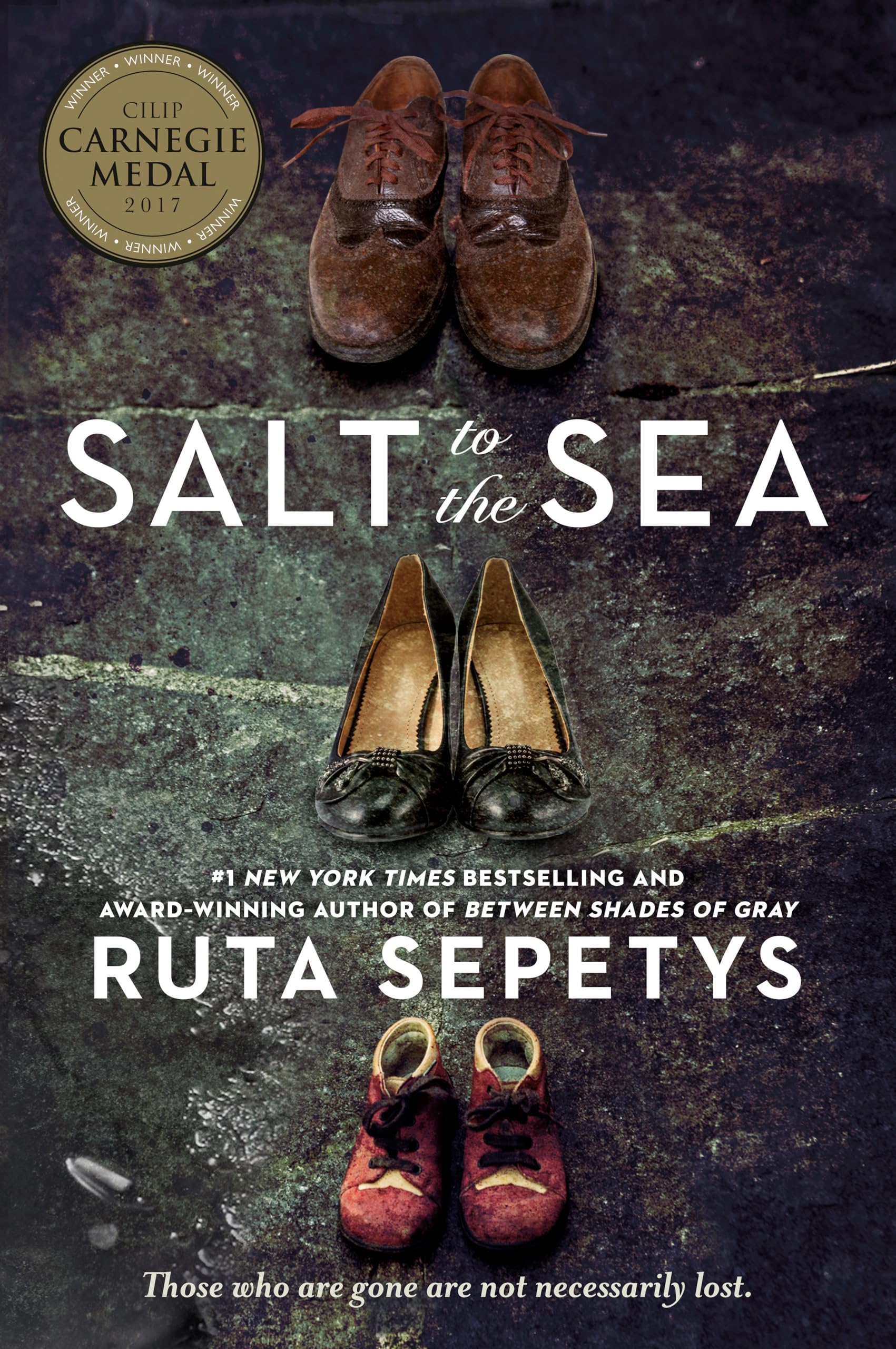
#1 New York Times bestseller and winner of the Carnegie Medal! "A superlative novel . . . masterfully crafted."-- The Wall Street Journal Based on "the forgotten tragedy that was six times deadlier than the Titanic ."-- Time Winter 1945. WWII. Four refugees. Four stories. Each one born of a different homeland; each one hunted, and haunted, by tragedy, lies, war. As thousands desperately flock to the coast in the midst of a Soviet advance, four paths converge, vying for passage aboard the Wilhelm Gustloff , a ship that promises safety and freedom. But not all promises can be kept . . . This paperback edition includes book club questions and exclusive interviews with Wilhelm Gustloff survivors and experts. Review: Salt to the Sea - “Salt to the Sea” tells the story of 4 teenagers during the winter of 1945; Emila, Florian, Joana and Alfred. Each individual is from a different homeland and they are each struggling with their own secrets and tragedies. They all end up converging together on a journey to Gotenhafen, on the coast of what was then East Prussia in an attempt to flee from the advancing Soviets, along with thousands of other refugees, boarding a ship called the Wilhelm Gustloff, that was going to carry them to safety and freedom. Emilia is a 15 year old girl from Poland, who had been sent West by her father in 1941. When we meet her she is hiding in a cellar in the forest. Florian, a German boy around the age of 19, meets Emilia in the cellar, where he saves her from a Russian solider. Florian is in injured and Emilia is struggling for other reasons, but follows Florian through the forest as she looks to him as a knight or savior. The meet Joana when they enter a barn, seeking refuge from the winter storm around them. Joana is slightly older, I don’t think we are told her age, but we know she is older than Florian by a few years so I estimate about 23. Joana is Lithuanian , but had repatriated to Germany, as her mother’s family was German. She had been working in a hospital as a physician’s assistant for the last 4 years in East Prussia. They have others traveling with them, such as Klaus, who they refer to as the wandering boy, who is about 6 years old and a shoe maker who they refer to as the Poet. At one point, Florian tries to leave in the middle of the night, but Emilia follows him and at the end of the day, they end up back with the group an decide to continue to travel together to Gotenhafen. They face horrible conditions and a multitude of obstacles as they make their journey to the coast. Alfred, a young German solider in the German Navy, we do not really meet until the group arrives in Gotenhafen. However, we do hear from in letters than he is writing describing the conditions there and the ships, such as the one he is on, the Wilhelm Gustloff. The book is written from four different perspectives and the chapters are only 2 pages long at most. When I first started this book, I thought, well this is going to get complicated, but it doesn’t. I did have to flip back and look at the name at the beginning of the chapter in the beginning to clarify, but you soon get to know each character quite well. Surprisingly, the book flows very well in this format. I really enjoyed this book, as I expected to, as I really enjoyed “Between Shades of Grey” by Ruta Sepetys. I enjoy both history and historical fiction; I like that Sepetys chooses to write her historical fiction novels both based on her own heritage and around events that are not really that well known. I was aware of what happened to the Wilhelm Gustloff, as well as many other ships around this time period, but not well. In the back of the book, Septeys also gives readers some history on the actual history of the event, which I think is also an excellent idea. Overall, I really enjoyed the book, not only were the characters well developed, but so was the story line. It is a book that is filled with a lot of emotion and a lot of very sad subjects that go along with World War II. I also really enjoyed the ending and if you have read “Between Shades of Grey”, you will realize that Septey has integrated one of the characters into this book, which I also thought was great. If you enjoy historical fiction or any of Ruta Septeys other books, I highly recommend you read “Salt to the Sea.” Review: A Real-Life Tragedy Told from Four Limited Perspectives - • A very easy, captivating read. Quick pace with extremely short chapters (2-3 pages long), each almost always ending in a mini cliffhanger that drives you to keep reading breathlessly to the end. Kudos to the author for the incredible pace of this book! • This is a historical-fiction reenactment of an epic tragedy that occurred in the final year of WWII, one that not a lot of people knew about before this book came out. I personally did not know about this tragedy. While the book was light on details, it did spur my interest in the multiple Wikipedia pages on the Wilhelm Gustloff, Gauleiter Erich Koch, and the Amber Room treasure. • The author gave the barest of details to drive the plot fast, which made for fast consumption. Indeed, I think this was one of the few books I’ve ever consumed so quickly. That said, there’s not a lot of character development. There is no omniscient narrator to give broader settings or more details about the political landscape or exposition on other imminent threats outside these four perspectives. There are only the four main characters (all fictional) from which all narration comes. Each character is filled out just enough to drive curiosity about their secrets and what has brought them together at this point in history. However, you can feel those invisible threats in the words and thoughts of these diverse characters. The secrets each character holds close are eventually exposed and are well done by the author. • I see why the book has won so many awards because it compels you to finish it and learn what happened in real life. However, it’s written for a YA (young adult) audience, so the depth of vocabulary and length of descriptions are fairly shallow; it’s straightforward drama with occasional hints at emotional trauma. There are very few (if any?) allegories, and the callbacks/flashbacks are (for the most part) thinly disguised skeletal motifs running through the book: shame, innocence lost, storks, parent-child separations, theft (of life & treasures), and survivor’s guilt. The scenes are brief and focus almost exclusively on the dialogue and interplay between the characters (typical for a YA novel, I suppose). And this is precisely why this format works so well because you experience a sort of hyper-focus, first-hand account common to most war victims amidst their plights. These people are NOT going to be going on and on about clothing, vistas, settings, meals, or guessing at any minor flaws in other characters or themselves. They are only concerned with one thing: survival. For better or worse, these restrictive perspectives keep you in the dark, just as the characters are kept, wondering about their collective fates, and hoping against all odds that they survive. • For me, the ending was too abrupt. I wanted a bit more of a denouement, but I also appreciate what the author did in those sparse final two chapters. By wrapping the tale up very quickly, it keeps the senselessness of the tragedy present in your mind long after you’re done reading it. • Finally, the research notes the author gives at the rear of the book are good to read. The interviews with divers, survivors, museum curators, and others are EXCELLENT—do not skip these! They show how extensive her research was into every aspect of these displaced people’s lives, with the number of affected children running into the hundreds of thousands. It’s a shame the author chose not to include more of the details, particularly in those final sparse chapters. In fact, I was surprised to learn she’d actually walked the same tract and saw the same lagoon as the characters; that’s because those details did not make it into the book to any great extent. However, more space was devoted (and rightfully so) to focus on the passengers of the Wilhelm Gustloff and the harbor of Gotenhafen, gathered from Ms. Sepetys’s personal research; I appreciated that very much. Also, her tale has sparked an intense curiosity in me to know more about these people, this tragedy, and the ending of WWII.


| Best Sellers Rank | #2,159 in Books ( See Top 100 in Books ) #1 in Teen & Young Adult European Historical Fiction #1 in Teen & Young Adult Military Historical Fiction #15 in Teen & Young Adult Survival Stories |
| Customer Reviews | 4.5 out of 5 stars 17,175 Reviews |
M**S
Salt to the Sea
“Salt to the Sea” tells the story of 4 teenagers during the winter of 1945; Emila, Florian, Joana and Alfred. Each individual is from a different homeland and they are each struggling with their own secrets and tragedies. They all end up converging together on a journey to Gotenhafen, on the coast of what was then East Prussia in an attempt to flee from the advancing Soviets, along with thousands of other refugees, boarding a ship called the Wilhelm Gustloff, that was going to carry them to safety and freedom. Emilia is a 15 year old girl from Poland, who had been sent West by her father in 1941. When we meet her she is hiding in a cellar in the forest. Florian, a German boy around the age of 19, meets Emilia in the cellar, where he saves her from a Russian solider. Florian is in injured and Emilia is struggling for other reasons, but follows Florian through the forest as she looks to him as a knight or savior. The meet Joana when they enter a barn, seeking refuge from the winter storm around them. Joana is slightly older, I don’t think we are told her age, but we know she is older than Florian by a few years so I estimate about 23. Joana is Lithuanian , but had repatriated to Germany, as her mother’s family was German. She had been working in a hospital as a physician’s assistant for the last 4 years in East Prussia. They have others traveling with them, such as Klaus, who they refer to as the wandering boy, who is about 6 years old and a shoe maker who they refer to as the Poet. At one point, Florian tries to leave in the middle of the night, but Emilia follows him and at the end of the day, they end up back with the group an decide to continue to travel together to Gotenhafen. They face horrible conditions and a multitude of obstacles as they make their journey to the coast. Alfred, a young German solider in the German Navy, we do not really meet until the group arrives in Gotenhafen. However, we do hear from in letters than he is writing describing the conditions there and the ships, such as the one he is on, the Wilhelm Gustloff. The book is written from four different perspectives and the chapters are only 2 pages long at most. When I first started this book, I thought, well this is going to get complicated, but it doesn’t. I did have to flip back and look at the name at the beginning of the chapter in the beginning to clarify, but you soon get to know each character quite well. Surprisingly, the book flows very well in this format. I really enjoyed this book, as I expected to, as I really enjoyed “Between Shades of Grey” by Ruta Sepetys. I enjoy both history and historical fiction; I like that Sepetys chooses to write her historical fiction novels both based on her own heritage and around events that are not really that well known. I was aware of what happened to the Wilhelm Gustloff, as well as many other ships around this time period, but not well. In the back of the book, Septeys also gives readers some history on the actual history of the event, which I think is also an excellent idea. Overall, I really enjoyed the book, not only were the characters well developed, but so was the story line. It is a book that is filled with a lot of emotion and a lot of very sad subjects that go along with World War II. I also really enjoyed the ending and if you have read “Between Shades of Grey”, you will realize that Septey has integrated one of the characters into this book, which I also thought was great. If you enjoy historical fiction or any of Ruta Septeys other books, I highly recommend you read “Salt to the Sea.”
R**K
A Real-Life Tragedy Told from Four Limited Perspectives
• A very easy, captivating read. Quick pace with extremely short chapters (2-3 pages long), each almost always ending in a mini cliffhanger that drives you to keep reading breathlessly to the end. Kudos to the author for the incredible pace of this book! • This is a historical-fiction reenactment of an epic tragedy that occurred in the final year of WWII, one that not a lot of people knew about before this book came out. I personally did not know about this tragedy. While the book was light on details, it did spur my interest in the multiple Wikipedia pages on the Wilhelm Gustloff, Gauleiter Erich Koch, and the Amber Room treasure. • The author gave the barest of details to drive the plot fast, which made for fast consumption. Indeed, I think this was one of the few books I’ve ever consumed so quickly. That said, there’s not a lot of character development. There is no omniscient narrator to give broader settings or more details about the political landscape or exposition on other imminent threats outside these four perspectives. There are only the four main characters (all fictional) from which all narration comes. Each character is filled out just enough to drive curiosity about their secrets and what has brought them together at this point in history. However, you can feel those invisible threats in the words and thoughts of these diverse characters. The secrets each character holds close are eventually exposed and are well done by the author. • I see why the book has won so many awards because it compels you to finish it and learn what happened in real life. However, it’s written for a YA (young adult) audience, so the depth of vocabulary and length of descriptions are fairly shallow; it’s straightforward drama with occasional hints at emotional trauma. There are very few (if any?) allegories, and the callbacks/flashbacks are (for the most part) thinly disguised skeletal motifs running through the book: shame, innocence lost, storks, parent-child separations, theft (of life & treasures), and survivor’s guilt. The scenes are brief and focus almost exclusively on the dialogue and interplay between the characters (typical for a YA novel, I suppose). And this is precisely why this format works so well because you experience a sort of hyper-focus, first-hand account common to most war victims amidst their plights. These people are NOT going to be going on and on about clothing, vistas, settings, meals, or guessing at any minor flaws in other characters or themselves. They are only concerned with one thing: survival. For better or worse, these restrictive perspectives keep you in the dark, just as the characters are kept, wondering about their collective fates, and hoping against all odds that they survive. • For me, the ending was too abrupt. I wanted a bit more of a denouement, but I also appreciate what the author did in those sparse final two chapters. By wrapping the tale up very quickly, it keeps the senselessness of the tragedy present in your mind long after you’re done reading it. • Finally, the research notes the author gives at the rear of the book are good to read. The interviews with divers, survivors, museum curators, and others are EXCELLENT—do not skip these! They show how extensive her research was into every aspect of these displaced people’s lives, with the number of affected children running into the hundreds of thousands. It’s a shame the author chose not to include more of the details, particularly in those final sparse chapters. In fact, I was surprised to learn she’d actually walked the same tract and saw the same lagoon as the characters; that’s because those details did not make it into the book to any great extent. However, more space was devoted (and rightfully so) to focus on the passengers of the Wilhelm Gustloff and the harbor of Gotenhafen, gathered from Ms. Sepetys’s personal research; I appreciated that very much. Also, her tale has sparked an intense curiosity in me to know more about these people, this tragedy, and the ending of WWII.
T**R
Hopeful, moving, inspiring, and immensely satisfying.
Ruta Sepetys has a unique gift. She finds the tragic stories that history forgot and brings them to life through her books, educating her readers on these lost pieces of the past while simultaneously taking them on a heartfelt and emotional journey alongside her characters. Salt to the Sea is a work of historical fiction, but it is based on a very real event — the sinking of the Wilhelm Gustloff in 1945 — and the true historical backdrop is every bit as compelling as the stories of the fictional characters. Salt to the Sea is told from the point-of-view of four different teenagers, each with a secret. There is Florian, a disillusioned Prussian art restorer; Joana, a clever and determined Lithuanian nurse; Emelia, a young Polish girl struggling for hope in a world that continues to betray her; and Alfred, a young Nazi sailor desperately seeking recognition. I am going to pause here, because you may be nervous about the same thing I was during Alfred’s first chapter — namely, is this book going to attempt to make me sympathize with a Nazi? The short answer is no. I’m not going to say Alfred’s chapters are easy to read — on the contrary; Alfred is an infuriating character, what you would get if you took Mr. Collins from Pride and Prejudice, aged him down a bit, and handed him a copy of Mein Kampf. And while Salt to the Sea never tries to make the reader sympathize with Alfred or make excuses for him, some readers may not be able to stomach reading his toxic and hateful inner monologue. Only you can decide whether you can handle reading from the POV of a Nazi (and a sniveling, lazy Nazi at that), and I won’t try to change your mind if you don’t think this is something you can do. All I will say is that Alfred’s chapters do contribute to the narrative as a whole, and neither the stakes nor the tension would be the same without his perspective. However, as much as Alfred is The Worst, the other characters balance the scale. Joana was probably my favorite, a wonderful combination of resourceful, smart, kind, and brave. (Joana also ties into Between Shades of Gray, for those of you who have read both books.) But they all had their moments. Emelia is kind and sweet, but with an underlying determination and selflessness that, on several occasions, took my breath away. And then there is Florian, reserved and secretive, yet motivated by a quiet nobility that kept me rooting for him throughout. I was so very invested in the fates of these three characters that I find myself still daydreaming about them days after finishing. As for the story itself, I was surprised to find that the characters don’t even board the Wilhelm Gustloff until the second half of the book. (Perhaps I would have been more prepared for this had I realized that the Gustloff was only scheduled for a 48-hour trip, not a weeks-long voyage like the Titanic. So it makes sense that most of our time getting to know the characters happens before they reach the ship.) The first half of the book chronicles the long trek of the refugees through the snowy countryside on their way to the port (or, in Alfred’s case, his preparations to sail). The journey to the ship is harrowing, as the characters are constantly trying to avoid both German and Russian soldiers, while also staving off frostbite, dehydration, and malnutrition. On the way, there are several horrifying incidents that show the terrible price of war, and even once they reach the port, the descriptions of the refugees are gutting. Sepetys thankfully never lingers on any single gruesome image for long, but through her careful descriptions and meticulously crafted sentences, you get a thorough mental image of the squalor, desperation, and terror of the characters and their surroundings. Then there is their time on the Gustloff, cut tragically short by the sinking. Since I don’t want to get into spoilers, all I will say is that even though I knew the ship was going to sink, it was still devastating to read about. I was invested so deeply in the characters that watching them go through such an awful experience — no matter their personal outcome — was heartbreaking, and I spent the last chunk of the book reading through tears. It’s one thing to know about a tragic historic event; it’s another thing to experience it. Salt puts the reader right on the deck of the sinking ship, making us feel the panic and terror of the passengers, the biting cold of the water, the hopelessness of the death all around them, and, in spite of that, the steely resolve to keep struggling for survival. As in her previous books, Ruta Sepetys’ prose shines, instantly transporting the reader to the world of her characters. Some authors struggle to convincingly juggle multiple points-of-view, but that is not the case in Salt to the Sea. Each of her four main characters has a distinctive voice and way of thinking which makes them easily distinguishable from one another. Also, the chapters are very short, with most lasting only two or three pages, so you never have to wait long to hear more from your favorite character. The brief chapters make that mental nudge to read “just one more chapter” easy to indulge, making this an incredibly swift read. Salt to the Sea is a beautiful tale of a forgotten tragedy, set during one of the darkest periods of our history. It is respectfully and meticulously researched, but never feels like it’s working too hard to educate; instead, it sweeps the reader up in its vivid characters, gorgeous prose, and compelling storytelling, and if we are more historically knowledgeable by the end, that just feels like a bonus. One may expect a tale like this to leave the reader with a sense of despair, but although the story is full of moments of horror and death and unspeakable devastation, it balances them with moments of friendship, love, sacrifice, heroism, generosity, and kindness. In spite of the bleak time in which it is set, and the disastrous event that serves as its centerpiece, the Salt to the Sea ultimately manages to be hopeful, moving, inspiring, and immensely satisfying.
L**S
a good book to recommend for adults and for teens
I would recommend this book, for teens as well as adults. The book teaches you about WW2, but about the neighboring countries affected by the war -- Prussia, Poland, Lithuania. Most history books skip over these countries with a few sentences. The book is written in a unique way, so that you see one incident, from the viewpoint of several different characters. How did the 15 yr old girl see it? The prussian soldier? the Nurse? This makes for an interesting read. I feel that the true situation was probably worse than depicted, but this is good. If the book depicted the full intense brutality, we could not read it. I have seen that criticism, that it is about the harshness of war, and of death. That is what we need to read, so that war is not glorified. It is not gruesome, or overly macabre. The ending is fairly happy, though I doubt the characters actually would have survived the freezing weather.
K**T
One of the most important books of our time!
Enlightening, heart-wrenching, stories from viewpoints seldom seen in western literature. History was one of my majors and yet I learned next to nothing about that side of the war. This one will make you cry, as it should. But it is well worth the tears and there is also joy miraculously woven in. This story (or rather these stories because the book weaves together several lives) are about the difficulties people from several walks of life went through in northern Europe during WWII. Stories based on true events that we seldom hear about here in the west. Man's inhumanity toward man astounds me. This book is a warning beacon to all of us, a cry in the dark shouting, "Watch out--This could happen to any of us! Are you ready? And what would you do?" I firmly believe Sepetys may be one of the most important authors of our time, yet she gets very little notice in proportion to the worth of her work.
C**N
Fantastic Historical Fiction
Before starting 'Salt to the Sea', I had heard quite a lot of praise for the book. In fact, I was a little nervous to start it because I was afraid that it wouldn't live up to it's reputation. Thankfully, that didn't prove to be the case. This book was beautiful, devastatingly so. Ms. Sepetys does a wonderful job of shedding light on the sinking of the Wilhelm Gustloff, a maritime disaster that claimed more than 9,000 lives and remains an overlooked part of history. Admittedly, I had never heard of this disaster until reading this book. Perhaps this is the result of a world that was less than sympathetic to German pain and loss following the end of WWII and the unveiling of the Nazi atrocities. Whatever the reason, I am glad that Ms. Sepetys brought this piece of history into the light. This story needed to be told. Weaving fact and fiction together seamlessly, the author tells the story of a group of WWII refugees trying to flee as the Russian troops gain ground toward the end of WWII. Told in alternating POVs, this book reveals a human side of war. Everybody seems to have something to hide and a different motivation for their actions. Above all else, this story highlights the fight to survive. Most noticeable in this cast of characters are: Joana, the Lithuanian nurse; Emilia, a young Polish girl; Florian, Emilia's mysterious rescuer; and Alfred, a young German soldier. There is a full cast of supporting characters as well, such as the shoemaker, that contribute to the richness of this story. Each play a significant role in making this a robust reading experience. I don't want to spoil this story for anyone. Obviously, the ship sinks. However, I won't say much else about the storyline because I think this is a story worth experiencing. This isn't a rainbows and unicorns type of story. It is real and moving. At times painful, this book highlights the depths of human depravity, as well as the incredible kindness that people are capable of. This is a story of tragedy and survival. It was raw, gritty and inspiring. I enjoyed this story quite a bit and would recommend it without reservations to anyone that is looking for a good, historical fiction that addresses a lesser-known part of WWII history.
V**E
I love all WWII books and this was no exception
I'm going to be very honest here, I have yet to read Between Shades of Gray, yet I still was highly, highly anticipating Salt to the Sea. And I am so happy to say that yes, this is a fantastic WWII novel. Salt to the Sea features four very unique characters, Joana, Emilia, Florian, and Alfred. They are all facing their own situation, but come together at some point in the novel, whether it's from trekking through the snow together, or meeting up on the ship, the Wilhelm Gustloff. I'm not even sure how to begin my review. The way the author masterfully revealed each of the characters' backgrounds brought the story together. Even with Emilia having little dialogue due to the language barrier, I was completely drawn into her story. Joana herself was also incredibly tough, but motherly. As a nurse, she helped anyone and everyone. Florian is the loner, and he rather protect himself than get anyone involved with his "secret mission". Unfortunately for him, Emilia clings on to him at all times. On the other hand, Alfred....his POV just went completely over my head. He is Team Nazi, yet there is something wrong with him in that he is completely out of it. His chapters are just mental letters about what he is doing (which is all a fantasy?) to a childhood friend (?). I personally did not like him at all, and he doesn't meet up with the other three characters until much later. And this isn't all about the character development either, actually this is based off a real event that happened. It transported evacuees from Gotenhafen, including Joana, Emilia, and Florian! And Alfred too. He starts off on this ship after all. But yeah, this ship carried thousands of evacuees and military, much more than its capacity. It was just all so fascinating to read about, especially with the author's writing style. Salt to the Sea was a such an easy and fast read, I never got stuck or confused anywhere. In conclusion, WHEN you read this, you'll learn a ton about this major event that happened during the actual war, you'll meet wonderful characters, you'll also have your heart broken by the end of it, but you'll also encounter hope.
T**S
Salt to the Sea
While this is technically considered a Young Adult novel, it doesn't really feel like one. The main characters are young people, but at many times over the course of the story it doesn't feel that way. It has a really slow beginning, but in the end it was a good read. Brief Summary from Goodreads: “Winter, 1945. Four teenagers. Four secrets. Each one born of a different homeland; each one hunted, and haunted, by tragedy, lies…and war. As thousands of desperate refugees flock to the coast in the midst of a Soviet advance, four paths converge, vying for passage aboard the Wilhelm Gustloff, a ship that promises safety and freedom.Yet not all promises can be kept.” The best part of this story was learning about the parts that were based on true events through the author's notes at the very end. It brought much more life to the story than it had on its own. The last 25% of the book or so was interesting, but much of the story before that was a bit dull. I had a hard time figuring out why this book was so highly rated before that point. Consider yourself forewarned. I found it a little hard to get invested in the characters. That's probably the biggest reason I found the first half of the book so dull. The book switches between all four perspectives, but I felt like I didn't stay with any one character long enough to get to know them and care about them. There's even a character that dies in the first half of the book, and I was completely indifferent. Sometimes the writing style with multiple perspectives works brilliantly. In this case, not so much. If I had to choose, I'd say I like the way Joana's story folds out best. Her longing to be helpful and her selflessness drew me in early on. Beyond the four main characters, I also loved the shoe poet! His character had such great development. He was such an awesome man. I'm a little disappointed that both the male characters in the main four were a bit shady. It seemed a little biased that while the two girls were saints of perfection that did nothing wrong, the boys were pointed out for their faults. It felt a little imbalanced. Rating Overall, I'd rate the book a 3 out of 5. While it turned out to be worth the read in the end for the historical benefits, I probably wouldn't read it a second time. I would recommend it for an initial read to anyone who enjoys the back story behind a historical fiction novel. If, however, you are simply looking for a good story, I would skip this one.
S**A
arrivato integro nei tempi stabiliti. Ottimo acquisto
Spedizione celere e curata.
A**H
Forgotten History
Ruta Septeys has an incredible ability to uncover and shine light on parts of history that have been hidden or forgotten. I am an avid ww2 reader, both fiction and non-fiction. I watch documentaries and I do extensive research on this particular time in history. And just when I start to feel like I know a lot about ww2 I pick up a Ruta Septey's book and realise their is so much more to uncover, to learn and to never forget. This book will stay with me for a long time.
E**R
excellent
Après l'avoir lu en français et m'être régalée l'ai offert à ma petite fille américaine passionnée de romans historique situés pendant la deuxième guerre mondiale. Très beau récit ,fiction basée sur un évènement tragique qui a fait bien plus de victimes que le Titanic et totalement occulté .
F**N
Eine Kriegstragödie aus der Perspektive von vier jungen Menschen
Am 30. Januar 1945 sank die Wilhelm Gustloff nach drei Torpedotreffern in der Baltischen See. An Bord waren über 9000 Menschen, überwiegend auf der Flucht vor der Sowjetarmee und Verwundete. Die meisten von ihnen kamen um. Bis heute ist dies die größte Schiffskatastrophe aller Zeiten, die aber, dem Zeitpunkt und den Umständen geschuldet, wenig zum Thema von Filmen oder Büchern wurde, Büchern für Jugendliche zumal. Ruta Sepetys erzählt vom Grauen der letzten Kriegsmonate aus der Perspektive von vier gänzlich unterschiedlichen jungen Menschen. Da ist die Litauerin Joana, die hofft, sich zu ihrer Mutter in Norddeutschland durchschlagen zu können; die Polin Emilia, die allen erzählt, das Kind, das sie erwartet, wäre von ihrer großen Liebe; da ist Florian aus Königsberg, der eine Kleinigkeit von unschätzbarem Wert im Gepäck schmuggelt.. Und Alfred aus Heidelberg, der in Briefen an seine Angebetete von seiner Position auf der Gustloff prahlt. Ihre Wege kreuzen sich per Zufall, weil sie alle ein gemeinsames Ziel haben: sich mit den letzten Schiffen, die Gotenhafen verlassen können, in Sicherheit zu bringen. Ruta Sepetys Stil ist nüchtern und klar, und so gelingt es ihr, die Geschichte dieser vier Jugendlichen zu erzählen, ohne Partei zu ergreifen, zu verurteilen oder zu heroisieren, und dabei gleichzeitig unaufdringlich Geschichtsuntericht für ein Lesepublikum zu geben, das vermutlich nicht einmal sehr viel über den Zweiten Weltkrieg weiß, geschweige denn von der Flucht von Millionen Menschen aus dem Osten. Geschichte wird immer dann gegenwärtig, greifbar, wenn sie anhand von Einzelschicksalen erzählt wird. Am einprägsamsten ist für mich die Figur des Alfred gewesen - auch seine Geschichte wird nur allmählich enthüllt, und je weiter dies geht, desto mehr Abscheu entwickelt der Leser. Es wird nichts geschönt,und es gibt kein Happy End, auch darin ist der Roman nicht nur spannend, sondern auch ein ehrlicher Bericht. Auf einem Buchmarkt, der von pseudogeschichtlichen ("historischen") Romanen überschwemmt wird, ist "Salt to the Sea" eine kleine Kostbarkeit - nicht nur für jüngere Leser.
U**I
Salt to the Sea
I liked the book very much, well written and easy read. I knew of the tragic event, even so it is hardly ever talked about - even in Germany. I am 75 years old and German and very much interested in modern History (old as well), as I am almost old history myself!
Trustpilot
1 month ago
1 month ago