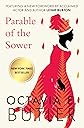
Parable of the Sower
Product ID: 317506258
From a celebrated, award-winning author, a modern classic about a young girl fighting for survival in a post-apocalyptic world, perfect for fans of N.K. Jemisin and Margaret Atwood. Fifteen-year-old Lauren Olamina lives inside a gated community with her preacher father, family, and neighbors, sheltered from the surrounding social chaos and anarchy caused by climate change and economic crisis. In a society where any vulnerability is a risk, she suffers from hyperempathy--a debilitating sensitivity to others' emotions. Precocious and clear-eyed, Lauren must make her voice heard in order to protect her loved ones from the imminent disasters her small community stubbornly ignores. But what begins as a fight for survival soon leads to something much more: the birth of a new faith . . . and a startling vision of human destiny. Includes a foreword by LeVar Burton and an afterword by N. K. Jemisin Lauren's story continues in The Parable of the Talents. "In the ongoing contest over which dystopian classic is most applicable to our time, Octavia Butler's 'Parable' books may be unmatched."-- The New Yorker Review: Read it or become it - exceptional book, written as fiction but coming true Review: Absorbing and highly recommended - I was surprised at how quickly Lauren's story gripped me and I was right there with her...until the last couple of chapters. The end felt rushed and a bit trite compared with the rest of the story. But it was still an absorbing and enjoyable read, and one I'd recommend. 4 stars.
| Best Sellers Rank | 2,437,478 in Books ( See Top 100 in Books ) 101 in Dystopian 148 in Post-Apocalyptic 1,539 in Literary Fiction (Books) |
| Customer Reviews | 4.4 out of 5 stars 22,793 Reviews |
C**N
Read it or become it
exceptional book, written as fiction but coming true
K**R
Absorbing and highly recommended
I was surprised at how quickly Lauren's story gripped me and I was right there with her...until the last couple of chapters. The end felt rushed and a bit trite compared with the rest of the story. But it was still an absorbing and enjoyable read, and one I'd recommend. 4 stars.
C**E
Bleak , thought provoking and real
I am lost for words about this book. The fact it was written in the 90s , set here and now in 2024 to 2027 - the foresight is astounding. Take everything that's wrong in the world and times it by 10 and this is what you have. Although there are many real world issues if you examine it deeply enough . Such as drug addiction, homelessness, modern day slavery, having to pay for basic resources, economic and climate collapse, child abuse ,,food shortage. The list goes on. It is an extremely bleak, hard hitting story . Lauren is the 18 year old narrator, who is wise beyond her years. She is a balance between cold, harsh, doing what needs to be done and kind, compassionate when needed and has a vision for a better world. Her hyperempathy is such an unusual condition and it makes it seem empathy is a negative in this situation. There is a huge age gap romance , that made me super uncomfortable and gave me the ick. Badly. It has left me extremely thoughtful about whether or not we are already living this type of dystopian existence ? Please check triggers as mentioned above. Also R@pe ( graphic) , Canaballism , child abuse/ neglect and lots of graphic gore .
O**N
Intriguing precursor to "The Road" but no match for McCarthy's vision
Post-apocalyptic literary scenarios have been a dime a dozen since well before Mad Max Beyond Thunderdome , and these days it takes something quite remarkable - like Cormack McCarthy's sublime The Road - to raise even a flicker of interest in this genre from all but the dullest sci-fi fanboy. Octavia Butler's essay on the same theme is now getting on for 20 years old, and stands up well - indeed, it so closely anticipates McCarthy's novel that you have to wonder whether he was aware of it. That is not to suggest plagiarism, however, for the similarities are general indeed: an un-described catastrophe has caused the total breakdown of society and forced a family unit on the road, where they fend for themselves against allcomers in vain hope of a promised land. While Butler employs a couple of nice devices - the P.K.Dick -eque hyperempathy condition is a neat literary device - much better in fact than the hokey "Earthseed" concept which gets unwarranted prominence in the story - but Butler doesn't do nearly enough with it to make it worthwhile. In other aspects, the novel is a little flat. There's not a much in the way of a plot arc - it's more linear: things sort of episodically muddle along to a fairly uninvolving conclusion - and nor do the characters get well fleshed out or developed. Like her protagonist Lauren, Butler throws quite a lot of "seed" about which then appears to fall on stony ground: Lauren's father disappears, presumed dead but unresolved - to no effect. Likewise, Lauren's original sweetheart is introduced, developed, and disposed with for no discernible plot-functional reason. My hunch is that Butler was more interested in developing a quasi-religion than writing a science fiction novel, yet 20 years later, the post-apocalyptic road story is the only part that really holds up. But, all the same, it pales in comparison with Cormack McCarthy's bleaker, more eloquent visualisation, and ultimately I couldn't recommend this novel over, or even really as a complement to, The Road. Olly Buxton
C**P
An extrordinary book
this book was written in the early 80's in the form of a diary. it is a very easy read, but of a harrowing vision of the future where clean drinking water has a value that can lead to murder in order to get it. It is a view of a future that has climate change at its centre and corruption at its core. it is a struggle for survival within a world that has become savage, a world where survival means having a gun and those without are powerless to those who have power. it is a corrupt world that is described. the second book in this series (written in the early 90's) has a US politician who seeks election to 'Make America Great Again'...
L**N
Another good read
I came to this having read Kindred by the same author. That was a book grounded in slavery but with a time travel story, which I found a bit bolted on. Having said that, I did really enjoy it, which led me picking this up. Like Kindred this has a main story type, that of being a dystopia of sorts. Again, Butler uses a separate device to attempt to give the book some form of originality or greater substance; namely a religion called earthsea. Again, I found this plot device bolted on, and for me didn't really offer anything to the book, making this not particularly different to other books in the genre. However, I found this a really good read despite these issues. It has great characters, cracks along at a great pace and is told in a way that really resonates with me and the ideas in the story and the peril it exudes really hit home. Overall, this was another book by the author and I will be reading more, especially the next book in the series.
J**E
Disturbingly Prophetic
Written back in the 90’s but set in the time we are living in now; this book is a sad and thought-provoking dystopian portrait of environmental and societal breakdown where many people today already are and where many more are headed. It is a beautifully written book. Totally absorbing. A little quirky in terms of some of Lauren’s ideas and philosophies but nevertheless a haunting and powerful read.
D**L
A compelling take on a disintegrating America
It's 2024. California, and much of the rest of the world, is drifting towards total chaos, with communities reduced to walled enclaves, government services gutted, and unrest fuelled by a pyromaniac drug-craze. Lauren lives with her preacher father, step-mother and brothers in one of these enclaves, struggling to keep it together and constantly on the watch for invaders and thieves. When, finally, their enclave falls, Lauren loses what remains of her family and is forced onto the road with just two fellow survivors, where they head north on the slimmest of prospects of jobs and safety. Despite all this, Lauren draws hope from her self-written creed, Earthseed, a philosophy founded on self-reliance and the mantra that God is Change, and - cautiously at first - she teaches this to inspire others. However, due to an accident of her birth, Lauren is also burdened by hyper-empathy, a sharing of the feeling of others that can strengthen her but can also weaken her when pain surrounds. And balancing these on the journey north will test Lauren to the limit. Because of its reputation, I've meant to read this for years, but never got around to it till now - and then only really because it tipped me over the free P&P limit! However, it's easy to see why it has this reputation with a well-realised edge-of-catastrophe world and a constant feeling of desperation. While this makes it a challenge to read, Lauren's humane outlook centres the novel, helped by her calm planning and all-too-credible weighing of risks. This contrasts with Cormac McCarthy’s similar (but later) novel, The Road, where desperation has already won-out and survival is all that there is. Butler’s novel instead wants to show how, against terrible odds, something can still be pulled from the wreckage. While the novel's Earthseed is a nice aspect that feeds into the narrative, I was less convinced by the hyper-empathy. At first, it seems like it's going to be very important, but then it largely gets lost, only becoming intermittently relevant, and then only to hamper Lauren in very practical ways. I don't think Butler maybe got what she wanted from this. In any case, while an oppressive read, an enjoyable one. And, with its extrapolation of negative societal trends, it's quite the thing to read at the start of 2024.
C**N
Amazon: péssimo serviço
A Amazon me entregou o livro em péssima condição, com as páginas completamente deterioradas nos lados. Pedi substituição e me entregaram a mesma coisa! O defeito já é bastante evidente, me entregarem assim uma vez já achei bem ruim, duas vezes achei clara má-fé.
W**I
The book is like a prophecy of what we are experiencing now.
A tale about dystopian future very riveting and gripping tale by Octavia E butler.
C**N
Of public interest
This is a tough SciFi - the events describe are not so far-stretched, and it definitely hits home. I loved the jornal narrative and Lauren's reflections on religion & community. Highly recommend, but be mindful that we are in a apocalyptic scenario.
T**A
Thought provoking
For a good society and better world, the entire community (ies) must prosper, and we must take one another along. This is so relevant today and will always be...
B**N
The Parable of the Sower is a wonderfully constructed vision of the world following a climate related ...
The Parable of the Sower is a wonderfully constructed vision of the world following a climate related collapse of western society. I mean wonderful in the sense that this world that Octavia Butler has brought to life inspired in me a genuine sense of wonder. Sci-fi books are supposed to create in the reader a sense of disbelief, a longing for the future and what could come with it, and this book did exactly that, while at the same time attacking and conquering huge themes like religion and racism. Racism in particular is a theme that I would like to spend quite a bit of time addressing, but religion is also something that I will touch on in some detail. There are a variety of other details and issues that could be addressed, but these are the two that stuck out to me like a sore thumb, and also the two that I was most interested in writing about. This book was excellent, compelling, and definitely worth more than one read. The story that Octavia Butler tells is a compelling story of survival and community. The opening of the book starts en medias res, exactly as a good futuristic novel can. I personally feel that telling too much of a back-story can destroy the reader’s ability to concoct one itself, it also takes away from the author’s ability to create suspense and mystery in the novel itself. Butler does a very good job of giving us a gripping story without boring us with the details of the failing of the society that once existed. It is very easy to take on the mindset of a young girl while reading, and that makes digesting all of the new and sometimes confusing information much more easily. The novel then goes on to talk about the sense of community that is felt in the walled “neighborhood” that Lauren, the main character and narrator, lives in. This neighborhood seems to be a well-oiled machine, despite the immediately apparent racial tensions to be found inside of the community. There is a division among the white members of the community and the other racial groups. This makes a lot of sense considering the racial tensions that exist even in the world today, but it was interesting to see that Butler does not envision a post-racial world for our future. One of the bigger themes of this book is “new slavery”; I put this in quotes only because I believe it to be a coined term and not merely an expression that I have made up. “New slavery” was introduced around the same time, as prisons became an industry rather than a place of reform. Butler speaks of this issue in a speech she gave which is the secondary reading for this week, “Every now and then you hear– and I’m not talking about ante-bellum slavery but modern-day slavery–every now and then you hear about some group of homeless people or illegal aliens or other people who have been held in slavery and I sort of combined slavery and throw-away workers and prison problems because in Parable of the Sower there is slavery and it is entirely legal because it isn’t called “slavery.” This quote speaks to her inclusion of the “new slavery” in her novel. This kind of slavery is found encapsulated in the city of Olivar, the fictional city being built where “skilled” workers are needed. The characters in the novel fear that this city is merely an excuse to capture people and indenture them to the larger corporate structure. This is a frightening reality because it is not unrealistic. There are certainly places in this dystopian America where slaves are found. They are people who do not have money and then work for company credit, but they never make quite enough money to afford their living expenses, so they become indebted to the company they work for, and end up owing the company massive amounts of money, and passing that on to their children when they die, creating a system of debt slavery that persists indefinitely. Butler definitely set out to make this a main feature in her book, but what is interesting is that the people of color in the novel feel that the city of Olivar would only want white workers. This is interesting because for as taught as the racial tensions are in the future, there does not seem to be hope for anyone who did not already have money when the country collapsed. Some people are simply “slightly better off”. The effects of this “new slavery” can be found in the people that the characters meet later on in the story; some of the people who they run into like Emery and Tori. They are both escaped slaves who are now dealing with the consequences of living a slave’s existence. They are also both hyper-empathetic, just like our narrator. This means that not only can they see someone in pain and relate, but also they actually feel it, and it is considered to be debilitating. Our narrator does not like to share with people that she has this condition, but she notices that the newer members of the group share her condition and immediately bonds with them over it. This hyper-empathy is a big reason why Lauren makes such an interesting character, because it shows how painful killing is for her, and how everything she does has a reason, and also is in part why she founds her religion, Earthseed. Religion is an interesting topic in any book, especially so in this one, as our character has spread the seeds for her own religion to take root, Earthseed. Earthseed is a new religion that has some elements of a bunch of already existing belief systems worked into it. The basic idea of Earthseed is that “the destiny of mankind is to take root amongst the stars,” this is interesting because it is both a spiritual philosophy, and a very real belief of the narrator. Lauren believes that the discontinuation of the space program is foolish, and that they should abandon the Earth and that they should try again somewhere else. Earthseed fascinates me, and I think I know where it stems from. Lauren lives in a firmly Baptist community, but does not have the faith of her father. Earthseed is a comfort to Lauren, and it is that simple. It is a basic philosophy that has sprung out of her discomfort with the world around her. She is living in a virtual hell, and has had to come up with some way to make her own truth. The truth she chooses to believe rather than a truth that is told to her. This is exactly where all religion stems from. People as a whole would not believe in something and it was not comforting to them. This is why I think the theme of religion is so interesting a Cli-fi book. With or without realizing it, Octavia Butler has created a wonderful comparison between a religion founded by an 18 year old, and hundreds of thousands of scientists’ conclusive evidence that climate change is very, very real. In the secondary reading Butler quotes a cartoon, the interesting part was this, “Make up your own truth and stick to it, no matter how little sense it makes. And sooner or later, you’ll have converts. Trust me.” This rings the truth to me about the world in general. People are so much more likely to believe in and idealize something that comforts them, rather than something that tells them they need to change. This is the whole fundamental issue we have had with the class. Our big question, “what can we do?” is answered by this simple quote. We need to make up a truth that people want to believe in, we cannot keep throwing the discomforting truth in their faces or they will continue to believe their own truths, namely “there is nothing that I can do.” Octavia Butler draws a comparison between a people who are still in disbelief about how broken their world is, and their deep belief that things will return to what they once were. This is a constant theme throughout the beginning of the book. Instead, a new religion is formed, which has the potential to have hundreds of followers, all because it is comforting and simple. This struck me as genius, and I may be reading a little too deeply, but I gleamed from Butler’s speech that this may have been on purpose. I liked that in particular about this book. The Parable of the Sower has struck me in a way that a lot of books have not. I do not however think that this book will make waves in the ocean of denial surrounding climate change. I don’t think that the book deals closely enough with what we, as a species, have done to destroy the planet, and therefore keeps us from feeling particularly guilty. This book is rather a story about survival, friendship, and faith. I liked it immensely and would even consider adding it to my course syllabus when I am finally a teacher rather than a student.
Trustpilot
2 weeks ago
2 weeks ago