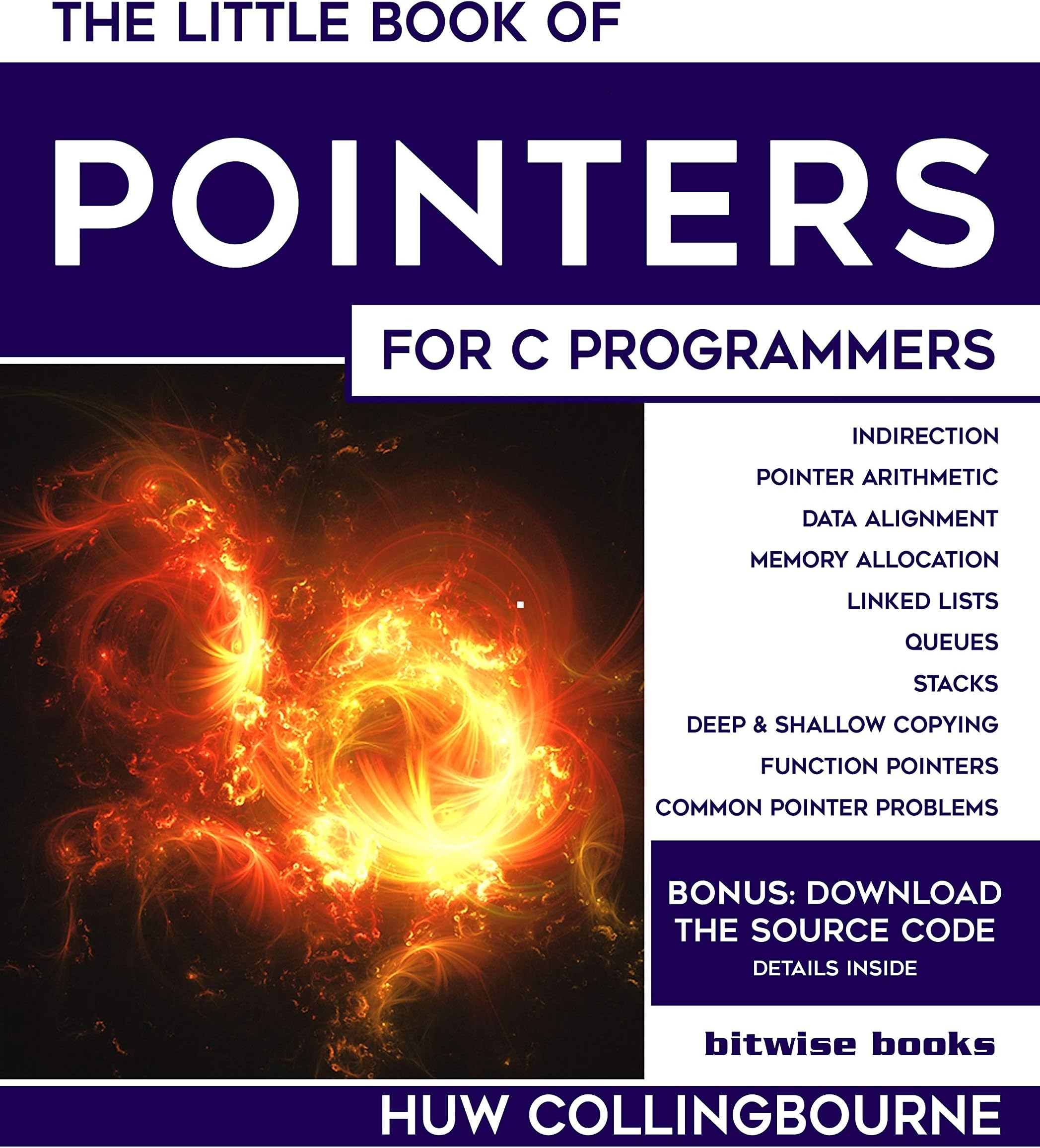
The Little Book Of Pointers: For C Programmers (Little Programming Books)
Product ID: 148420948
The fastest, easiest way to master pointers in C . Pointers are essential in C – but learning how to use them correctly can be hard work. The Little Book Of Pointers comes to the rescue. This book explains... Pointer variables Dereferencing pointers Multiple Indirection Arrays, strings and addresses Pointer Arithmetic Generic pointers Pointers to structs Data Alignment Memory Allocation Linked Lists Stacks Queues Function Pointers Deep & Shallow Copies Common Pointer Problems The Little Book Of Pointers guides you step-by-step towards a deep understanding of pointer variables and common data structures. It is illustrated throughout. By the time you finish this book, you will know pointers inside out. This is a book for intermediate to advanced-level C programmers. It explains pointers from the ground up. What exactly is a pointer variable and how does it work with addresses in memory? What is indirection? How can you use multiple indirection? What is an array identifier - a pointer or an address? How can you avoid common pointer problems such as memory leaks and program crashes? What is the correct and safe way to allocate memory? What is data type alignment and why does the field order of a struct change the amount of memory it requires? How do you do pointer arithmetic? How can you create singly and doubly linked lists? What is the difference between a stack and a queue and how can you manipulate them using pointers? How can you create function pointers - or even arrays of function pointers? Each topic is explained with code examples. All the source code is provided as a free download from the publisher's web site. Huw Collingbourne has been a programmer for more than 30 years. He is an online programming instructor who has taught tens of thousands of students to code in languages such as C, C#, Java, Object Pascal and Ruby. He had written programming columns for numerous computer magazines such as PC Plus and Computer Shopper . He is Technical Director of the independent development company, SapphireSteel Software. He is the author of a number of programming books including The Book Of Ruby , The Little Book Of C and The Little Book of Recursion . The Little Book Of Pointers gives you just the stuff you really need to get straight to the heart of C pointers without all the fluff and padding. Review: This is a beginner's text. Highly recommended in that context. - I've been "learning C" for nearly 30 years. I've never had the need to use it commercially, nor in anger for personal projects. I've started reading K&R on many occasions but always hit an interrupt, usually as other people's real-world code seemed impenetrable as a learning resource and other texts hadn't prepared me for it. This book has changed that for me. I highly recommend it if you are just starting out on or indeed, restarting, your C journey. "This is a book for intermediate to advanced-level C programmers" says the author. No, I can't agree. If you've already achieved that level of proficiency, a) you really should already know what is presented here, they are simple but foundational concepts and b) I think you'll resent being spoken to as if this is the first time you've heard of the concept of a variable. Neither is this a day 1 text for absolute beginners, you will need to understand basic syntax, program structure and how to compile and run code already in order to be able to take any learning from it. However, if you're a novice with ambitions to master C eventually, I think this is an excellent resource and very good value at the price (I purchased the paperback edition, which is of good quality and laid out well). It's a small book and covers just a handful of pointer-based topics. In some ways it reads as a 'missing chapter' from a larger tome on the language. However, the author's treatment of them and use of small, easily digestible code examples which he walks through in great detail works to give RETAINED learning of a foundational topic. I found re-writing the code myself from memory at the end of each chapter based on it's learning objectives really helped to cement the knowledge gained. The author's clear and well presented description of the problem and solution objectives in each case facilitates that, as does his choice of examples. Most importantly of all, I'm now capable of examining real-world code in github et al, without being thrown by ''weird pointer syntax / declarations" on every other line. If you're new to C, you will need to master pointers and their use and I found this book to be an excellent first step along that path. Review: This book is very good for pointers - I will recommend this book for c pointers.




| Best Sellers Rank | #662,217 in Kindle Store ( See Top 100 in Kindle Store ) #33 in C Programming Language #47 in C Programming #99 in Algorithm Programming |
A**R
This is a beginner's text. Highly recommended in that context.
I've been "learning C" for nearly 30 years. I've never had the need to use it commercially, nor in anger for personal projects. I've started reading K&R on many occasions but always hit an interrupt, usually as other people's real-world code seemed impenetrable as a learning resource and other texts hadn't prepared me for it. This book has changed that for me. I highly recommend it if you are just starting out on or indeed, restarting, your C journey. "This is a book for intermediate to advanced-level C programmers" says the author. No, I can't agree. If you've already achieved that level of proficiency, a) you really should already know what is presented here, they are simple but foundational concepts and b) I think you'll resent being spoken to as if this is the first time you've heard of the concept of a variable. Neither is this a day 1 text for absolute beginners, you will need to understand basic syntax, program structure and how to compile and run code already in order to be able to take any learning from it. However, if you're a novice with ambitions to master C eventually, I think this is an excellent resource and very good value at the price (I purchased the paperback edition, which is of good quality and laid out well). It's a small book and covers just a handful of pointer-based topics. In some ways it reads as a 'missing chapter' from a larger tome on the language. However, the author's treatment of them and use of small, easily digestible code examples which he walks through in great detail works to give RETAINED learning of a foundational topic. I found re-writing the code myself from memory at the end of each chapter based on it's learning objectives really helped to cement the knowledge gained. The author's clear and well presented description of the problem and solution objectives in each case facilitates that, as does his choice of examples. Most importantly of all, I'm now capable of examining real-world code in github et al, without being thrown by ''weird pointer syntax / declarations" on every other line. If you're new to C, you will need to master pointers and their use and I found this book to be an excellent first step along that path.
M**I
This book is very good for pointers
I will recommend this book for c pointers.
Trustpilot
1 month ago
1 week ago