
Buy anything from 5,000+ international stores. One checkout price. No surprise fees. Join 2M+ shoppers on Desertcart.
Desertcart purchases this item on your behalf and handles shipping, customs, and support to Kenya.
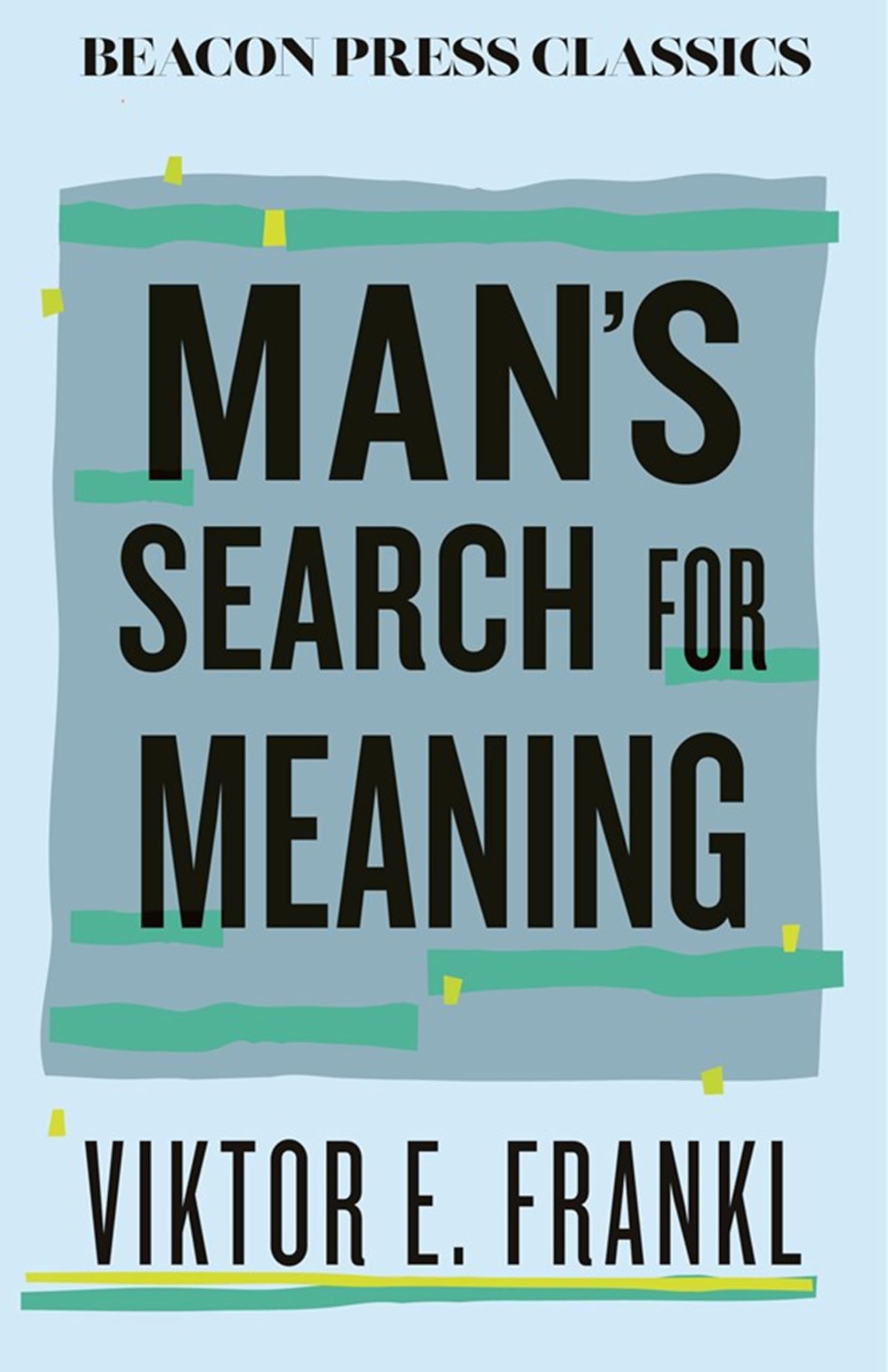
We needed to stop asking about the meaning of life, and instead to think of ourselves as those who were being questioned by life-daily and hourly. Our answer must consist not in talk and meditation, but in right action and in right conduct. Life ultimately means taking the responsibility to find the right answer to its problems and to fulfill the tasks which it constantly sets for each individual. When Man's Search for Meaning was first published in 1959, it was hailed by Carl Rogers as "one of the outstanding contributions to psychological thought in the last fifty years." Now, more than forty years and 4 million copies later, this tribute to hope in the face of unimaginable loss has emerged as a true classic. Man's Search for Meaning --at once a memoir, a self-help book, and a psychology manual-is the story of psychiatrist Viktor Frankl's struggle for survival during his three years in Auschwitz and other Nazi concentration camps. Yet rather than "a tale concerned with the great horrors," Frankl focuses in on the "hard fight for existence" waged by "the great army of unknown and unrecorded." Viktor Frankl's training as a psychiatrist allowed him a remarkable perspective on the psychology of survival. In these inspired pages, he asserts that the "the will to meaning" is the basic motivation for human life. This simple and yet profound statement became the basis of his psychological theory, logotherapy, and forever changed the way we understand our humanity in the face of suffering. As Nietzsche put it, "He who has a why to live for can bear almost any how." Frankl's seminal work offers us all an avenue to greater meaning and purpose in our own lives-a way to transcend suffering and find significance in the act of living. Review: Must Read - Everyone should read this. It is excellent. Review: Remaining fully alive to incredibly triumph over devastating evil! - How can one triumph over tremendous and bitter evils? How can someone even survive the ongoing evil faced head-on in a Nazi concentration camp--in facing the violence, the inhumanity and the injustice, where to all appearances, sin seems to have taken the upper hand? How does one even find hope when caught up in the clutch of such crushing evil that can so easily cause others to throw up their hands in helpless defeat? Victor Frankl not only tells us, but shows us how it's done from first-had experience--from finding meaning in one's existence and those around you--from finding dignity in your life regardless of circumstances--from exercising that which stands seemingly above all human characteristics: human freedom, which gives us the ability to continue to steer our choices and direct our lives. Yes, he writes, wrote: "We who have lived in concentration camps can remember those who walked through the huts comforting others, giving away their last piece of bread. They may have been few in number, but they offer sufficient proof that everything can be taken from man but one thing, the last of the human freedoms--to choose one's own way." Deprived of his own freedom, paradoxically, he kept his freedom. He continued his decision making. Revealing a profound insight into the reality of our existence, Frankl said, "Man does not simply exist but always decides what his existence will be, what he will become in the next moment." He nonetheless exercised this unassailable supreme human ability while imprisoned under the most horrendous conditions. Accordingly, he maintained to always have the benefit of "the last of the human freedoms: to choose one's attitude in any given circumstance, to choose one's own way." He acknowledges the immeasurable greatness of the human spirit, unyielding under the grip of overwhelming evil--insistent on the import and value of right resolve, in spite of all odds--on being fully who we are, regardless of fully inhumane treatment--and remaining fully alive. The book is a study in psychology, all to itself!
| Best Sellers Rank | #108,216 in Books ( See Top 100 in Books ) #137 in Medical Psychotherapy TA & NLP #160 in Jewish Holocaust History #164 in Popular Psychology Psychotherapy |
| Customer Reviews | 4.8 out of 5 stars 355 Reviews |
L**J
Must Read
Everyone should read this. It is excellent.
B**N
Remaining fully alive to incredibly triumph over devastating evil!
How can one triumph over tremendous and bitter evils? How can someone even survive the ongoing evil faced head-on in a Nazi concentration camp--in facing the violence, the inhumanity and the injustice, where to all appearances, sin seems to have taken the upper hand? How does one even find hope when caught up in the clutch of such crushing evil that can so easily cause others to throw up their hands in helpless defeat? Victor Frankl not only tells us, but shows us how it's done from first-had experience--from finding meaning in one's existence and those around you--from finding dignity in your life regardless of circumstances--from exercising that which stands seemingly above all human characteristics: human freedom, which gives us the ability to continue to steer our choices and direct our lives. Yes, he writes, wrote: "We who have lived in concentration camps can remember those who walked through the huts comforting others, giving away their last piece of bread. They may have been few in number, but they offer sufficient proof that everything can be taken from man but one thing, the last of the human freedoms--to choose one's own way." Deprived of his own freedom, paradoxically, he kept his freedom. He continued his decision making. Revealing a profound insight into the reality of our existence, Frankl said, "Man does not simply exist but always decides what his existence will be, what he will become in the next moment." He nonetheless exercised this unassailable supreme human ability while imprisoned under the most horrendous conditions. Accordingly, he maintained to always have the benefit of "the last of the human freedoms: to choose one's attitude in any given circumstance, to choose one's own way." He acknowledges the immeasurable greatness of the human spirit, unyielding under the grip of overwhelming evil--insistent on the import and value of right resolve, in spite of all odds--on being fully who we are, regardless of fully inhumane treatment--and remaining fully alive. The book is a study in psychology, all to itself!
D**T
Bad for Business
Victor Frankl was an existentialist. The existentialists went out of fashion in psychiatry because they were equated with a `be glad you're neurotic" approach, and denial of the reality of mental illness. This was bad for the psychiatry business, although several existentialists made a living as psychiatrists. The book is in two halves; the first describes his concentration camp experiences, the second his method of psychotherapy (or rather his philosophy of life) which he called logotherapy. The first half is not irrelevant to the second half. Some psychologists, such as Abraham Maslow, with his hierarchy of needs, suggest that issues like search for meaning are just icing on the cake of life. They become irrelevant when the chips are down. A starving man does not worry about the state of world politics. Frankl's experiences taught him that the will to go on living comes from some kind of inner force that is not just an animal survival instinct. Is logotherapy really a treatment method, or should we consider this book as self-help? I think it is more useful as a book for patients than as a manual for therapists, although I hope it doesn't persuade them to throw away their Prozac. It is full of illuminating insights and I found myself underlining many passages. Some of the actual techniques described, such as negative practice for obsessive rituals are more akin to behavior therapy than insight-oriented psychotherapy. He describes several one-shot cures brought about by philosophical utterances which may have worked for him but are in the category of "don't try this at home" for less charismatic practitioners. His ideas about anhedonia and boredom are good.
E**H
An Indispensable Book of the Twentieth Century
During World War II, the experiences that Austrian psychiatrist Viktor Frankl went through in concentration camps convinced him that above all else man needs a sense of purpose and meaning. He watched as the responses that different people had to the same conditions led some to survive and others to die. In "Man's Search for Meaning," Frankl recalls his experiences in the camps and sets forth his theory of logotherapy, which states that what man most yearns for is not power or pleasure, but meaning. Frankl believed that a good percentage of those who live in modern, industrialized societies live in an "existential vacuum," and for people in that situation prescribes a goal-oriented outlook that asks not what we can get from life but what life expects from us. Frankl also discusses the meaning of suffering and asserts that what matters most is not what happens to us but our response to it. The book also has other great insights into the human condition and the meaning of suffering as well as tips to combat anxiety and find meaning in life. "Man's Search for Meaning" has long been considered a classic, and if you have heard of it and meant for a long time to read it you will certainly not regret finally doing so.
J**L
Find out what life wants from you!!!
Where did I come from? Why am I here? Where am I going? These are questions that confront humankind each day. Without the answers to these questions, a person may find their life void of purpose or joy. This book does not answer any of those questions, but reminds you of the importance of getting the answer to the second and third questions. Before reading the book I felt I had a pretty good grasp on my own answers for the three questions of life. However, Dr. Frankl made me specify my answers. I needed a mission, a creed by which I should live my life, a statment by which I could measure each decision in life. Dr. Frankl explains, through his own experience during the Holocaust, that each person has a reason to live. When that reason ceases to exist, that person must either find another reason or be dead emotionally. This story reminds me of the story of Anne Frank. She was doing quite well until she felt that her entire family was dead. She could no longer see a reason to continue fighting the opposition, so she gave up and died shortly after her sister. Had she known or thought her father was still alive, I believe she may have been able to escape sickness and survive her imprisonment. Dr. Frankl encourages you, without preaching, to find THAT reason for you life. What purpose does your life hold? Don't ask what you want out of life, but ask, "What does life want from me?" The key is to find what life wants from you. The holocaust stories will help you see the necessity of answering these questions. Whether you find your life with or without purpose, read this book. It could change your life for the better.
G**S
A Psychologist Experiences the Concentration Camp
Victor Frankl's "Man's Search for Meaning" is a powerful reflection on his experiences in Nazi death camps where he observes Man in his best and worst capacities. In fact, it was first published in 1946 as "A Psychologist Experiences the Concentration Camp", a much more descriptive title. While it may seem Frank's manifesto was born of his imprisonment during middle age, by his late teens he had already begun formulating a thesis that the quest for meaning is the key to mental health. Ironically, his horrific experience in the camps offered him the opportunity to test his hypothesis. The book was disappointing in its presentation. The text was relatively short at 165 pages, but it was not an easy read. The first part, which focused on Frankl's experience in concentration camps, was approximately 100 pages with no chapters or headers or organization in the narrative itself. The second part was Frankl's introduction to his "logotherapy" derivative of psychotherapy, and it is very academic in nature. A postscript and afterward follow. There was some notable redundancy throughout, and one might imagine the four sections were pulled from four separate sources. But the unique observations expressed here belie the presentation. In a sad, evil place where "reality dimmed and all efforts and emotions were centered on one task: preserving one's own life" and the best inhabitants could hope for was "negative happiness-freedom from suffering", Frankl models the behavior of himself, his peers, and his captors. Amid the pain, squalor, and certainty of death (Frankl stated his chances of survival at 1 in 28) in the prisons, Frankl adopted and articulated a stoic pride and respect for his predicament. For "without suffering and death, human life cannot be complete". He states that man must come to understand that "no one can relieve him of suffering or suffer in his place. His unique opportunity lies in the way he bears his burden". He wrote "Suffering became a task on which we did not want to turn our backs. We realized its hidden opportunities for achievement". For "everything can be taken from a man but one thing: the last of human freedoms-to choose one's attitude in any given set of circumstances, to choose one's own way". For Frankl and his companions in the throes of despair, the search for the meaning of life became singular. Frankl's answer, poignant if not hopeful: "We needed to stop asking ourselves the meaning of life, and instead to think of ourselves as those who were being questioned by life - daily and hourly. Our answer must consist, not in talk and meditation, but in right action and right conduct". Happiness cannot be achieved, it can only ensue. "One must have a reason to `be happy'", and then they can achieve optimism despite the "Tragic Triad" of suffering, guilt, and death. Frankl frequently refers to Nietzsche's philosophy of "He who has a Why to live for can bear almost any How". In "Meaning", readers will find some unique aphorisms and behavioral theories validated by the most rigorous testing imaginable. "In the concentration camps...in this living laboratory and testing ground, we watched and witnessed some of our comrades behave like swine while others behaved like saints. Man has both potentialities within himself; which one is actualized depends on decisions but not on conditions".
E**E
Well written
Read it! As a granddaughter of a Holocaust survivor, this hits home. Seen through the eyes of Dr. Frankl it's moving and unbelievable to younger generations because life is much easier and we can't image such challenges. It's so heartbreaking that such hate exists and people could treat others as less than an animal.
L**N
This account is moving
I read this book every five years to remind me of what has happened in the past to inform the present and cause us to move toward our professed beliefs in the future.
G**Y
Survival of Mind, Body and Spirit
It seems strange to call the memoir of someone in a concentration camp beautiful. Yet that is what this book is. It's one I come back to many times. It's ninety odd pages can be read in a single sitting. In it, Victor Frankl chronicles his experience of life in a concentration camp. He observes the effect this horrific environment had on him and his fellow inmates. How some would put their faith in false hopes and die, while others held to something that enabled them to survive. In Frankl's case, he suggests it was the love of his wife and his work. He looks at the behaviour of the guards, pointing out that not all were complete villains: some also showed kindness, though there were others who were cruel. There also moments where Frankl describes how he, and fellow inmates, would stop to take in beauty such as for a sunset, despite all the ugliness around. And he looks at the effects the ugliness had on those who survived, and argues that this experience taught him that one freedom that nobody can take from another is the freedom to decide ones own reaction to what is happening. It's to my mind a powerful lesson, and from someone who has experienced that under extreme circumstances, and thus has authority. The other two chapters covering a further forty odd pages give an overview of Frankl's psychotherapeutic technique Logotherapy and his philosophy of life. In some ways this is a repeat of what has gone before, and is less elegant reading. It is of interest, but the real power lies in the memoir, that remains to me an inspiration
M**Z
Pone el bello de punta.
Excelente libro que pone la piel de gallina con las experiencias personales del autor. No obstante huye del morbo fácil de la explicación de la barbarie acontecida en aquella época, y lo enfoca desde un punto de vista positivista y práctico. Creo que es muy útil leer este libro, ya que da un enfoque al psicoanálisis muy interesante, centrándose más en el como puedo conseguir mis objetivos, que no en buscar las razones de por qué somos como somos. Para mi brillante escrito tanto de experiencia personal traumática como de descripción de técnicas para intentar tomar una actitud positiva ante la vida.
V**N
Five Stars
Excellent Sound and pleasure a pleasure do do business with you..A+1111111
Trustpilot
2 weeks ago
2 weeks ago