📷 Pocket-Sized Powerhouse: DSLR Quality, Zero Bulk!
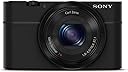
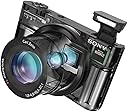
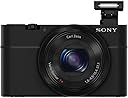
The Sony RX100 is a premium compact digital camera featuring a large 1-inch 20.2MP Exmor CMOS sensor paired with a bright ZEISS 28-100mm F1.8-4.9 lens. It offers DSLR-comparable image quality in a sleek, ultra-portable aluminum body weighing just 213g. With advanced manual controls, RAW shooting, and Full HD 1080p/60fps video with SteadyShot stabilization, it’s designed for professionals and enthusiasts seeking high performance without the bulk. While it lacks GPS, WiFi, and an optical viewfinder, its sensor and lens combination deliver exceptional low-light performance and creative flexibility, making it a top-tier choice for on-the-go photography.
| ASIN | B00889ST2G |
| Age Range Description | Adult |
| Aperture modes | F1.8 |
| Are Batteries Included | Yes |
| Aspect Ratio | 16:9, 1:1, 3:2, 4:3 |
| Auto Focus Technology | Center, Continuous, Contrast Detection, Face Detection, Multi-area, Selective single-point, Single, Tracking |
| Autofocus | Yes |
| Autofocus Points | 25 |
| Best Sellers Rank | #27,617 in Electronics ( See Top 100 in Electronics ) #254 in Digital Point & Shoot Cameras |
| Bit Depth | 12 Bit |
| Brand | Sony |
| Built-In Media | AC Adapter AC-UD11, Battery NP-BX1, Camera, Instruction Manual, Micro USB cable, Shoulder Strap Adapter, Wrist Strap |
| Camera Flash | Built-In |
| Camera Lens | Bright Carl Zeiss Vario-Sonnar T lens with 28-100mm zoom range and 36x equivalent zoom |
| Color | Black |
| Compatible Devices | [Sony brand devices, devices with USB or HDMI ports, smartphones with Wi-Fi or NFC connectivity] |
| Compatible Flash Memory Type | SD |
| Compatible Mountings | Zeiss |
| Connectivity Technology | HDMI, USB |
| Continuous Shooting | 10 |
| Crop Mode | 1:1, 3:2, 4:3, or 16:9 |
| Customer Reviews | 4.0 out of 5 stars 944 Reviews |
| Digital Scene Transition | zoom |
| Digital Zoom | 14 |
| Digital-Still | Yes |
| Display Fixture Type | Fixed |
| Display Maximum Resolution | 4096 x 2304 |
| Display Resolution Maximum | 1228800 |
| Display Type | LCD |
| Dots Per Screen | 12 Mb |
| Effective Still Resolution | 20.2 |
| Expanded ISO Minimum | 100 |
| Exposure Control | Aperture priority, Manual, Memory Recall, Scene selection |
| File Format | RAW (ARW2.3 Format), RAW+JPEG, JPEG |
| Flash Memory Speed Class | Class 2 or higher |
| Flash Memory Supported Size Maximum | 128 MB |
| Flash Memory Type | SD/SDHC/SDXC, Memory Stick Duo/Pro Duo/Pro-HG Duo |
| Flash Memory UHS Speed Class | Class 10 (U1) or higher |
| Flash Memory Video Speed Class | Class 10 |
| Flash Modes | Off, Slow sync |
| Flash Sync Speed | 1/200 or 1/250 |
| Focal Length Description | 28-100mm (35mm Equivalent) |
| Focus Features | Contrast Detection |
| Focus Mode | Manual Focus (MF) |
| Focus Type | Manual Focus |
| Form Factor | Large sensor compact |
| Generation | 2 |
| HDMI Type | Type D Micro HDMI |
| Hardware Interface | AV Port |
| Has Color Screen | Yes |
| Image Capture Type | Stills |
| Image Stabilization | Optical |
| Image stabilization | Optical |
| Item Weight | 8.48 ounces |
| JPEG Quality Level | Basic, Fine, Normal |
| Lens Construction | 10 Elements in 9 Groups |
| Lens Type | Zoom |
| Manufacturer | Sony |
| Manufacturer Part Number | DSCRX100/B |
| Maximum Aperture | 4.9 Millimeters |
| Maximum Focal Length | 100 Millimeters |
| Maximum Image Size | 3 Inches |
| Maximum Shutter Speed | 1/2000 Seconds |
| Memory Slots Available | 1 |
| Memory Storage Capacity | 128 MB |
| Metering Methods | Multi, Center-weighted, Spot |
| Minimum Focal Length | 28 Millimeters |
| Minimum Shutter Speed | 30 seconds |
| Model Name | Sony DSC-RX100/B |
| Model Number | DSCRX100/B |
| Model Series | RX100 |
| Movie Mode | Yes |
| Night vision | No |
| Number of Diaphragm Blades | 7 |
| Optical Zoom | 3.6 x |
| Photo Sensor Resolution | 20.2 MP |
| Photo Sensor Size | 1-inch |
| Photo Sensor Technology | CMOS |
| Real Angle Of View | 11.31 Degrees |
| Remote Included | No |
| Screen Size | 3 Inches |
| Self Timer | 10 Seconds, 2 Seconds, 5 Seconds |
| Sensor Type | CMOS |
| Series Number | 100 |
| Shooting Modes | Portrait, antimotion blur, sports action, pet, gourmet, macro, landscape, sunset, night scene, handheld twilight, night portrait, fireworks and more |
| Skill Level | Professional |
| Special Feature | Face Detection |
| Specific Uses For Product | Photography, Videography |
| Supported File Format | RAW (ARW2.3 Format), RAW+JPEG, JPEG |
| Supported Image Format | AVCHD, JPEG, RAW, Other |
| Total Still Resolution | 20.2 MP |
| Total USB 2.0 Ports | 1 |
| Total USB Ports | 1 |
| Total Video Out Ports | 1 |
| Touch Screen Type | Capacitive |
| UPC | 027242856110 |
| Unit Count | 1.0 Count |
| Video Capture Format | MPEG-4, AVCHD |
| Video Output | HDMI |
| Video Resolution | FHD 1080p |
| Viewfinder | Electronic |
| Warranty Description | 1 year coverage for labor, 1 year coverage for parts |
| White Balance Settings | Auto |
| Wireless Technology | yes |
| Write Speed | Up to 60 MB/s |
| Zoom | optical |
D**F
Amazing little camera w/ some minor quirks & flimsy documentation
This camera takes amazing pictures. I've been waiting for years for a small pocket-sized camera that could take SLR quality pictures. This is it. The low light pictures are phenomenal. I think it sees better than I do. I have yet to take a flash picture, because the results using a high ISO are so good. On top of that, the 1080 HD video is superb. This is the perfect travel camera. Well, not quite perfect. It has some minor irritations: The first is the documentation. Many features are barely explained. For example, want to know how close the Macro can focus? You won't find it in the manual (about 2 inches). Want to know why the zoom vibrates about 3 times a second when it is in continuous focus mode? No explanation. Because there was no explanation, I thought it might be defective, so I got on Sony's chat on-line with a Rep who said that it is supposed to behave that way because continuously varying the zoom is used to determine the proper focus. I still find it hard to believe. Sony could have explained quite a bit more with their in-camera documentation. The context sensitive help often has obvious un-helpful explanations (kinda reminds me of Microsoft) like the explanation for Manual Focus: "Focuses manually". Duh! The second is the confusing layout for all the options. The menus are overwhelming. All the features that can go in the function button are also in the menus. Four of them are pre-assigned to navigation wheel (display, exposure adjustment, flash and drive mode), and 7 can go in the function list. Those Eleven settings can be remapped by the user. With all this variation, I found that I could could not get the one function I wanted under a button -- setting a custom white balance. I can map all the white balance settings to a button, but I still have to navigate a menu to get to the custom white balance adjustment. If you put the white balance on the function list, you cannot set the custom white balance from that location! Oh well. Second is the control ring. It could have been better. It is hard to use it to zoom because it takes too much of a turn to go from wide angle to full telephoto. If you go to slow it gets jerky. When it transitions (in video) into digital zoom the zoom speed changes. It really should feel like a mechanical zoom, but it doesn't. Same too with focus. There is no feedback that lets you know where the focus is when you are starting. Nothing that helps you figure out which way to turn the ring when everything is out of focus. Is it focusing on infinity or 5 inches? No way to know if everything is blurry. Fortunately, there is DMF (no explanation in the documentation for what the "D" means) that focuses automatically, and then you can adjust the focus with the ring. That, along with the "peaking color" which shows you what in the picture is in focus, makes the manual focus usable. I'd prefer a focus indicator that doesn't distort the picture you are trying to compose. The focus ring changes function in different modes, and you can alter some of them. What it changes to, and in which mode, and which modes can be altered can be confusing and awkward. If you set it to zoom, you might be frustrated when it no longer adjusts the f-stop in manual mode. Third is the playback button. Pushed once when the camera is off and it will turn on. A second push will activate the camera lens, and this seems like it could be dangerous to the mechanism if it gets jostled in a camera bag. I will probably remove the battery if I think it might get bumped to much. Fourth is the lack of accessories. You'd think for this price that you'd get an HDMI cable (it has a micro jack) or make a power supply that also charges a spare battery. Heck, for the price you'd think they could put in a spare battery! Adding the possibility for Audio-in would be nice for video recording. Fifth is the price. It is pricey. But it really has no competition even with its quirks. It is an amazing achievement, and I expect to see competition from all the other major camera makers in the next year or so, which should bring down the price. A suggestion if you purchase this camera. I found little difference in performance with a SanDisk extreme or a Transcend Class 10 SD card. The San Disk is 3 times faster, but the camera's top writing speed seems to be close to the speed of the Transcend card -- about 15 MB/sec. In burst mode (JPGs), the San Disk was slightly faster. I clocked it at 2.3 pictures per second, compared to the Transcend which went at 2.0 pictures per second. The video works with a class 4 card according to Sony, so the only difference is burst mode. ----------------Update 1/15/2013-------------- For those of you interested in burst shooting in Raw Mode, the speed of your card WILL make a difference, and I'd recommend the SanDisk extreme. I find that the automatic settings that SONY uses to make a JPEG are as good or better than what I can do manually using their software. I don't have much experience with RAW, but the JPEGs are so good, I don't see much point to learn. However, if burst shooting of RAW photos is important to you, get a very fast card. Also, the speed of the camera will slow down significantly as your memory card fills up. An empty Class 6 transcend card will be faster than my nearly full SanDisk extreem.
E**R
Very disappointed with this camera.
This is the first time (and last time) I relied solely upon reviews in Amazon to make a decision to buy a camera. I was in a hurry with a vacation coming up and saw all of the rave reviews, making claims such as how the camera took better photos than their Nikon D7000. I decided to buy it. My first comment is that I took it on a trip and kept it in my jeans pocket just like I have always done with pocket cameras. In the past pocket cameras have spent countless hours in my jeans pocket with no adverse consequence. Within 4 days with the RX100 I looked at the viewing screen on the camera and there was a scratch across the screen. My next complaint is the video. I have for comparison a much less expensive Nikon pocket camera that I bought about 3 years ago. From experience taking videos I know that you have to pan slowly if you want the audience to comfortably view a video. I found that with the RX100 if you panned, even at a slow pace, horizontal streaks would appear in the recorded video upon playback, which greatly detracted from the video. I also noticed that the camera was slow processing shots and would take much longer than my older Nikon pocket camera, causing me to miss shots. As far as the size of the camera, I think Sony overdid it making it too small. It felt uncomfortably small in my hands, and I just didn't like the feel of the camera. The camera has a feature which somehow transforms a shot that you intended to be in landscape mode into a portrait shot of one person in the photo. It would then produce for the final photo not the shot that you intended but instead a portrait shot of the one person. I even put it on Landscape mode to force the camera to take landscape photos and it still extracted portrait shots of the person in the photo, leaving out the rest of the shot. Another thing was that it was promoted how the screen had some special qualities which made it easy to view what you are photographing when out in sunlight. That proved not to be the case. I found it nearly impossible to see anything on the screen when I was outside in bright sunlight. Lastly, regarding the quality of the photos, it does not even approach the quality of a Nikon D7000, which I happen to own. From what I could see it was no better than the aforementioned Nikon pocket camera that cost half as much years ago. I tried to return the camera and first, since it was fulfilled through Amazon but used a third party seller, I was informed that there was a 15% restocking fee and that is payable even if the camera and all paperwork and packing materials are in perfect condition. Since my screen had a scratch I was told that there would be a 30% restocking fee. Then another person in customer service told me that it was damaged, all the way through to the LCD, and that they couldn't take it back. I looked this up and found that the seller was exaggerating the situation in that the actual LCD screen is protected by a plastic cover that can be replaced if you buy a new back for the camera. Also, some brief searching online revealed that the plastic cover for the screen for the RX100 is extremely easy to scratch, and that you should buy a protective film at the same time you buy the camera. At any rate, I ended up giving the camera to my daughter because I couldn't return it. It would be an understatement to say that I was very disappointed with this camera. To sum up, I received poor value for my money. Sony should cease production of this camera because it will hurt their reputation.
A**N
Point and shoot to the next level
I've been using this camera for about 6 weeks now. Briefly, it blows me away. Before I get into details of the camera, my own background in perspective. I'm a total amateur, who has gone in and out love with photography as a hobby. I had a SLR back in the film days, but really a mid level camera with a couple different lenses. Around 2006, I purchased a dSLR -- The Sony Alpha A100. I chose that model, simply because it was compatible with the lenses I already owned. I built up my gear, around that camera. Added a tripod, added a (old used) fast prime lens. In 2011, I took my family to Disney World, and was constantly making use of the whole camera setup. That was the high point of my dSLR use. Then slowly, gradually, I felt like I was being weighted down by the camera. Too cumbersome to carry all the time. Even when it was strapped to my back, too much of a chore to change the lenses. So when planning another trip to Disney World in 2012, the Sony RX100 caught my attention. dSLR quality, in my pocket. Could it really be that good? I'm sure that the Sony RX100 will not measure up to a top-of-the-line 2012 model dSLR. But I am very confident that it will generally match up well against a current model entry level dSLR. And it gets significantly BETTER results than my old 2006 dSLR. So when looking at the pros and cons, how does it differ from my 2006 dSLR? Probably the 2 most important elements in any camera, are the lens and the sensor. dSLRs have significantly bigger sensors than point & shoot cameras. A bigger sensor can capture more light faster, and typically therefore can produce far better results. The Sony RX100 sensor is still smaller than dSLRs, but it is significantly larger than almost any other true compact camera on the market. While still smaller than my 6-year-old dSLR, I'm guessing advances in sensor technology over the 6 years, makes up for some of the size difference. Turning to the lens -- a dSLR camera can change lenses. the RX100 only has 1 lens, but WOW -- It is an amazing lens, made by a well respected brand in lenses. The lens stops down to a 1.8 aperture at the widest angle. For those who don't know aperture, it means that the lens opens very wide, allowing more light to reach the sensor, more quickly. On the "included" lens that comes with most dSLR cameras, then aperture is not nearly as wide. So combine the above-average-sized sensor for a point and shoot, with a top of the line lens -- And you get results consistently better than my 6-year-old dSLR, with mediocre lenses. This sensor/lens combination gives you a lot of advantages, comparable or even superior to some dSLR/lens combinations. It shoots VERY well in low light. Sensor "sensitivity" to light is measured in ISO. My old camera maxed out at 1600 ISO. So even with a very wide aperture, I wasn't able to take pictures on dark rides at Disney. The RX100 maxes out in manual mode at 6400. (there are some auto tricks that raise it even higher). With ISO 6400 and the wide aperture, I was capturing usable images of rides in the dark at Disney. Another great advantage of the wide aperture is bokeh -- The ability to take a picture with a blurred background. It's fairly easy to achieve with a dSLR AND an extra lens. The lens included with most entry level dSLRs, won't have a wide enough aperture to achieve this effect. The RX100 achieves it with fair success. My SLR, with an extra lens, can still do it a bit better. But the RX100 probably does it better than any other compact camera. Finally, the whole system focuses very quickly and accurately. Typically, SLRs focus much faster than compact cameras. The RX100 focuses MUCH faster than my 6-year-old dSLR. The focus speed feels comparable to most entry level DSLRs. For someone with a real or developing knowledge of photography, this camera has the advantage of very full manual control. You can take control over just about any of the settings, and can customize various menus and settings to your liking. While common in dSLRs, this is not found across compact cameras. The camera has the pro of it's 20 megapixel sensor combined with the ability to shoot in "RAW" mode. This allows you to capture huge amounts of data in every photograph, which opens a lot of possibilities in post processing. The camera has a whole array of special modes, that are becoming increasingly common across cameras. The best ones that are included: In camera HDR -- Automatically quickly snaps 3 images and combines them. In the past, I could only do HDR with post processing, and generally had to take the pictures with a tripod. Now I can do it, in camera, hand held. Panorama -- Works the same as the new iphone. Handheld low light and similar modes -- Much like HDR, it combines multiple images. In this case, it combines the image results to correct for low light, or correct for camera shake. There are multiple other modes. For example, I've had fun with the watercolor mode, which turns the photograph into a watercolor painting. Also selective color capture -- A black and white photograph, but with just 1 color showing through. These little things are a bit gimmicky and can be applied in post- processing. But if you want to avoid post-processing, then this can give you fun results right out of the camera. Whether used in automatic or manual modes, I am regularly blown away by the image quality of this camera. And that's what really matters. Now, the camera isn't perfect. There are some places where Sony made sensible compromises, and some other places where they just made mistakes. Sensible compromises: -The lens does not have a huge zoom. There are compact travel zoom cameras with 20X zoom. The RX100 is limited to about 4X optical zoom. (You can zoom further digitally). For most photographs, in most situations, this zoom is good enough. Further, with 20 megapixels to work with, you can easily crop to get a more zoomed-in result. But you're not going to be photographing a lady bug from 50 feet away. I listed this as a sensible compromise, because to build a lens with the quality of the RX100 AND with a massive zoom, the lens alone could cost $1,000+. The mega zoom lenses found on compact cameras typically have a mediocre quality. They don't have the aperture ability of build quality of the RX100. -No GPS or WiFi. These are becoming more common in cameras. I like GPS data built into the picture personally. But these things are easy to live without. They don't affect picture quality. And leaving these items out, helped keep the price from becoming ridiculous. - No touch screen. I don't even love touch screens. Probably left out, to help keep the price down. - No optical viewfinder. No hot shot, to allow addition of a viewfinder or external flash. I suspect this was primarily done to help keep the size of the camera down. A compromise I'm willing to accept, to keep this camera truly a "compact." Mistakes -- Not many. - No external charger. 3rd parties already are coming out with chargers, but 1 should have come with the camera. As sold, the battery can only be charged in the camera. - Flimsy door for charging/USB. Speaking of the in-camera charging, the door to the port feels flimsy and feels like it is going to fall off every time I open it. Some final thoughts. Comparing this camera to a true dSLR, the pros and cons are obvious. A dSLR, with a larger sensor and the ability to change lenses, gives you a much broader range of possibilities, with higher potential quality. But it's big, cumbersome. And to get all those lenses, you need to invest more and more money. In contrast, the RX100 fits in your pocket, and in MOST situations, can give you pictures quite comparable to a dSLR. In that context, the price of the RX100 is a bargain. It's about the same price as the entry level dSLR, but you don't need to invest more in lenses. Where you enter a grayer area, is the wide assortment of bridge cameras/mirrorless cameras. There are an increasing number of cameras that are smaller than dSLRs, but still slightly larger than a true compact. Some of these cameras have interchangeable lenses, some have fixed lenses. They may also have sensors somewhere between compacts and SLRs. Within this category, you may find cameras of similar quality to the RX100, at a similar price. They will be larger than the RX100, but not as large as a dSLR. So for many people, this whole group of cameras may be a consideration as well. Anyone who loves photography, will enjoy the RX100. It won't replace a dSLR for all people in all situations. But it can accomplish remarkable results for a tiny camera.
M**O
Best compact camera ever, but...
I sold my NEX-5N 3 month ago after hearing rumors and seeing per-production photos of NEX6. I loved the NEX5N output but hated the menu system and lack of physical controls, the 6 appeared to be my holy grail. Anyhow, in the meantime I wanted a compact none interchangeable lens camera to fill my camera needs. I gave the RX100 a shot after all the rave reviews. After using it for 2 month here is my opinion: 1. Image quality is the best out of all compact cameras I've used in recent years. Recent compacts I've used: Panasonic LX5, Olympus XZ1, Canon S100, Sony HX9V. 2. Image quality is almost on par with micro43 + kit lens and very close to the NEX5N jpg output. Recent m43 I've used: OMD e-M5, EP3 and GX1. 3. Focus speed - almost no shutter lag or focus hunting unlike compact P&S. The overall speed is on par with mirrorless cameras. So what didn't I like? 1. Image stabilization doesn't work well under indoor light which result in slightly blurred photos. The flash also takes roughly 3-4 seconds to recharge which is a bit frustration for me when taking bounced flash indoor photos of a people in slight motion. Without flash any slight moving of the model or your hands will cause blurry photo. I felt compact camera were a lot more responsive taking indoor flash photos than the RX100. 2. The size - it is really compact considering the image quality it packs, but it is a tad too big to fit in a jean pocket comfortably. It does fit, but extremely snug and will require some effort to dig out. I'm always afraid of accidentally hitting the power button causing the lens to extend and break in my pocket. So the camera is pocket-able but I wouldn't recommend putting it in your pants pocket (i put it in my pants because I don't carry any bags/man-purse when I go out). You can also put it in your jacket, but it's weight will make your jacket slant to one side. To safely carry this camera you will probably put it on a neck strap or put it in a bag of some sort, so technically portability is no longer in it favor when compared to other mirrorless solutions in this price range that provide better image quality that are only slight bigger in size/weight. 3. Form factor - the camera is built like a compact point and shoot, and I feel like I'm shooting with one. I don't know how to explain it but psychologically i put a lot more thoughts in composing my shots using a mirrorless IL form factor compared to point and shoot. I find the photo I took with RX100 to be more casual and less interesting than the ones I took with a mirrorless. I guess I was more careless and didn't enjoy shooting with RX100 as much as a mirrorless. So, all in all, once you used this camera you will never be able to accept the photos quality and speed of a compact point and shoot again. It is a great step up from a P&S if you have the $ to spare. As a secondary camera to your mirrorless or DSLR this is a great compact choice. However, at this price range I would not recommend this as a primary camera as there are a lot of options that offer more flexibility and better image quality.
P**D
Clearly the Best Compact Camera Available at This Time
With the RX-100, Sony has raised the bar for compact cameras. This small camera provides most of the flexibility of a much larger, heavier, and more expensive digital SLR (dSLR) or digital Semi-Transparent Lens (dSLT) camera, or even of a somewhat larger, heavier, and more expensive Mirror-less Interchangeable Lens Camera (MILC) such as Sony's NEX line of cameras. The RX-100 allows the photographer to control the shutter speed, aperture, ISO, auto-focus area, etc., and creates RAW format images, in addition to the less useful JPEG images. Also, the RX-100 menu system is reasonably intuitive, and easier to manage than the menu system of Sony's NEX line of cameras, about which you can read numerous complaints. The RX-100's 1" sensor is roughly 3 times larger than the 1/2.3" sensor of the typical compact camera, and consequently provides much better image quality than any other compact camera, with the obvious exception of the Sony RX1 compact camera that has a full-frame sensor, and that is roughly 4 times more expensive. The RX-100 boasts a high-quality Zeiss 28-100mm lens, which at 28mm has a maximum aperture of f/1.8 that is very impressive for a compact camera. The RX-100 is a valuable addition to a serious photographer's toolkit, and is as well a viable entry point for the amateur photographer to learn and practice the basic principles of serious photography. However, you get what you pay for, and although the RX-100 sensor is superior to the sensor of any compact camera of similar size and somewhat similar price, its sensor is no match for the sensor of a full-frame compact camera, a full-frame digital SLR, a half-frame digital SLR, or a half-frame MILC camera. For example, the dxomark website provides the following ratings of the sensors for various Sony (and other) cameras, based on measurements of the Color Depth, Dynamic Range, and Low-Light ISO characteristics of those sensors: RX1 full-frame compact (93), A99 full-frame dSLT (89), A77 half-frame dSLT (78), A57 half-frame dSLT (75), NEX-7 MILC (81), and RX-100 compact (66). Viewed from the perspective of these DxO ratings, the RX-100 sensor is in a class with Sony's first dSLR camera, the A100 that DxO gives a rating of 61. So, on one hand, the RX-100 provides equivalent image quality to the A100 dSLR, but on the other hand, the RX-100 image quality falls far short of the quality of the A99 dSLT or RX1 compact. But even considering the superior image quality of a dSLT camera such as the A99, this large, heavy camera is of no use to you unless you are able to take it with you. And taking a large, heavy camera everywhere you go is impractical. So, finally, this issue shows the strength of the RX-100. It is small, light, and unobtrusive, so you can take it with you frequently, and you will have it available to take high-quality photographs, even if those photographs are not of the highest possible quality that you might obtain with a larger, heavier, and more expensive camera. If you insist on the highest-possible image quality in a compact camera, and you are willing to pay for that quality, consider the RX1 instead of the RX100. The dimensions of the RX1, in terms of height, width and depth, are 113mm by 65mm by 70mm, whereas for the RX-100 those dimensions are 102mm by 59mm by 36mm. The weight of the RX1 is 482 grams, whereas the weight of the RX-100 is 240 grams. So, the RX1 has twice the depth and weight of the RX-100, a fact that makes the RX-100 a less obtrusive compact camera. The RX1 has a 35mm f/2 lens, whereas the RX-100 has a 28-100mm f/1.8 zoom lens, but the aperture of the RX-100 lens is f/1.8 only at 28mm, and decreases steadily to f/4.9 as the focal length increases from 28mm to 90mm: f/1.8 at 28mm, f/2.8 at 35mm, f/3.2 at 50mm, f/4 at 70mm, and f/4.9 at 90mm. The RX1 costs $2,800, whereas the RX-100 costs $650. Sony provides a downloadable, 68-page English/Spanish "Digital Still Camera / Instruction Manual" in PDF format for the RX-100 that doesn't give enough detail to be fully useful However, if you perform a Google search, you will find a 227-page or a 261-page much more comprehensive "Cyber-shot User Guide / Sony RX-100 User Guide" in PDF format, that is similarly downloadable from a Sony web page, although Sony doesn't provide any apparent clue that this more comprehensive manual exists. And, if you need even better instructions on the use of the RX-100, you can perform a Google search for Friedman Archives and buy the 425-page "The Complete Guide to Sony's CyberShot RX-100", which, at a price of $21.45 in PDF format, would still be cheap at twice the price. One caveat that you can find on page 203 of the 227-page version of the comprehensive "Cyber-shot User Guide / Sony RX-100 User Guide", or on page 235 of the 261-page version of that guide, is the fact that connecting the RX-100 to a computer via the USB cable can be idiosyncratic. In particular, you may need to connect the USB cable directly to the computer, instead of to a USB hub. Also, you may need to disconnect from the computer any USB devices other than the RX-100, the computer keyboard and the computer mouse. Additionally, you may need to configure the RX-100 "USB Connection" to "Mass Storage" using the RX-100 menu system. This idiosyncratic behavior is the first such behavior that I have noticed in any Nikon, Minolta or Sony digital camera that I have owned, and I have owned more than a few. In conclusion, the RX-100 sets a new benchmark for compact cameras, and is well worth its price.
A**R
Do NOT trust this seller
This has been an extremely frustrating and disappointing experience. The camera was advertised as being in “excellent condition”, but what I received is a product that does not work properly at all. The camera turns on by itself, the buttons behave as if they are being pressed automatically, and even trying to view photos is impossible because it exits on its own. This makes the camera practically unusable. I genuinely do not understand how a product in this condition can be described as “excellent”. These are not small or cosmetic issues — this is a serious functional failure. To make matters worse, the seller refuses to provide a reasonable solution. The item was shipped internationally and I had to pay 18% in import taxes to receive it. Returning it would mean losing a significant amount of money for a product that never worked as promised. I have explained this multiple times and asked for a fair resolution, but the seller insists on a return and takes no responsibility for selling a defective product. I feel completely misled and extremely disappointed. I demand a fair solution for a product that was clearly not in the condition described. I strongly warn other buyers: do not trust the “excellent condition” label from this seller.
B**M
BEST COMPACT for Size and Ability, but.....
Compared to these I have borrowed from friends or owned or had on trial for a week or more: XZ1, P310, LX5, S95, several superzooms, NEX5N.... A./ Best combo of size and features of any compact out there....slightly smaller than an LX5, slightly bigger than a S95, because of its lens casing. This camera reminds me of an LX5, on a S95 body. B./ Will go in a pants pocket only if you are a man wearing "relaxed fit" jeans, or khaki casual maybe. C./ Absolute best ISO on a compact, pretty usable 1600. Drops quite badly at 3200 if not in well lit conditions. D./ Unimpressed with RX100's macro. I love macro, and wanted better. The Lumix LX7 is a great macro camera on a semi-pro body and at a very nice price compared to the RX-100. Ditto for Canon S110 if a small body is the single most important requirement. E,/ Reasonable WB in almost all scenes. The larger sensor may contribute: I dont know whether sensor physics or in-camera processing matters more for WB. F./ Digital extended zoom not as well done as Lumix or Canon. G../ Outdoor video great, but my FZ150 equal, and can do it with an amazing zoom. Indoor video very nice but, as with all compacts, not like outdoors. RX100 far exceeds XZ1, LX5, P310, S95 all of whom seem to put video in as an extra, which is fine , as long as you know that, and it is reflected in your purchase decision. Stills thru ISO800: RX1 rates A XZ1 B+/A- S95 B+/A- FZ150 B+ SX260 B/B+ LX5 B/B+ (WB issue) P310 B (noise) Zs15 B Video RX1 A FZ150 A- ZS15 B+/A- SX260 B+ LX5 B S95 B (720p) XZ1 B- (focusing) P310 C- (focusing) Conclusion: As a vacation camera, get the FZ150....great on an HDTV thru iso 400 or even 800, video equal to the RX100, and a clear image zoom out to about 32x !! For size, and for sharper ISO thru 1600, the RX100 if you have the bucks. For families, a much better all-around performer at even less money would be a NEX F3 or 5N, with a 18-55mm zoom. Much better ISO 1600 thru 6400, and therefore ability to use S mode and higher shutter speed to stop moving kids and pets. Again, for families, don't blow your budget on added lenses fot the NEX - the kit zoom is fine. Does everything the RX100 does and better, just physically larger to carry, but certainly ok in a purse, pouch, or on a neckstrap. For the pro who is constantly changing ISO/Aperture/Shutter/ev/WB....the RX100 is worth the money. It really is a tiny DSLR up to iso 1600... XZ1 could do in a pinch, as it is very controllable and just a step behind in ISO, very good 400 and better than most other compacts at 800... I now own a Sony NEX-5N : fantastic, has usable ISO6400 even indoors, but cumbersome interface. I also own a Canon SX260, mainly for its great zoom, price, and it can go in almost any pocket w/o worrying that you are going to break a $600 investment. After many, many trials, my opinion is: It is very difficult to beat the FZ-150 and SX260 superzooms: very good macro and great zoom at the same time, plus very acceptable Auto Mode, then throw in full manual adjustments and very good video. Forgetting price, for overall quality of both stills and video, buy the NEX 5N. For size, speedy interface, plus clear indoor iso800 and maybe iso1600 ability, the RX100 is really all there is as a non-interchangeable lens camera right now. Two money-saving nearly as good choices are the Lumix LX7 (small, half the money) and the Nikon P7700 (large, but many easily accessed controls, great WB, amazing thru ISO800...and a great price.)
T**S
At last a P&S that is good enough to own.
My comments are from someone who owns 2 SONY SLT cameras, an A55 and 65, along with an assortment of lenses and accessories. I really dislike small sensor P&S cameras because of their IMO horrible IQ above base iso and slow focusing speed, especially in low light. My rating is based on comparisons to other P&S cameras of this size, not to the much larger cameras I'm used to. I have not used any of the various tricks the camera can do except sweep panorama which works very well. Some people say their camera came without a manual. Maybe earlier samples didn't but mine did. Since I am used to the Sony menu system I did not need to read it. After a quick look through it seems adequate to get you started. There have been complaints about the ring around the lens lacking click points. That doesn't bother me in the least. I actually prefer it that way because if you are using it for precise manual focus the the click points make that more difficult. In my opinion the jpgs from this camera are much better than any P&S even at base iso and the difference becomes more pronounced as iso goes up. The photos are good to iso 1600 but by iso3200 things get a bit iffy depending on conditions. If you are using iso3200 in decent light to keep the shutter speed up the results are pretty good but if you are using it indoors in poor light the results are not as good but acceptable for maybe an 8x10 print. Auto Focus speed and accuracy. Generally P&S cameras focus poorly in anything but daylight. I am happy to report that the RX100 focuses like a DSLR indoors in poor light for stationary subjects. For tracking moving subjects in AF-C the camera doesn't do a good job. Another thing nobody seems to mention is the flash can be bounced off the ceiling to eliminate the harsh direct lighting you get from direct flash. Auto iso is fully programmable for low and high. Default maximum is iso3200 which I changed to 1600. Maximum is allowable 6400. All or most of the buttons are programmable for different functions and you can memorize up to, I believe, 5 different combinations depending on need. This camera is clearly aimed at someone who wants as close to DSLR functionality and IQ as possible in as small a package as possible. Lets be clear. It is not a camera that can replace a DSLR unless small size is more important but is comes close. If you are someone like myself who is unwilling to make the sacrifices in IQ and focus speed that small cameras have previously required but really like the idea of a small carry everywhere pocketable camera then this is the only game in town. No other camera of this size is even in the same ball park. If you are looking for a do everything camera with a lens that goes from 1:1 macro to super zoom this is not the camera for you. Be aware that such cameras make significant sacrifices in IQ. If you want the best IQ that is currently possible in a small size this is it. I bought this camera as a companion to my A55 and A65. I have been carrying my A55 with 18-200 and A65 with Tamron 70-300 USD which is a bit cumbersome. The RX100 replaces the A55 and it's small size makes carrying 2 cameras far easier and more convenient. It allows me to always have a camera with me who's IQ satisfies me which no small sensor P&S or Smart phone can do. I have never seen a P&S previously with IQ good enough and cell phones are even worse. Thank you Sony for producing the RX100. At $650 it is worth every penny. Reliability update; I've been using this camera for 5 1/2 years and have never had a problem.
R**C
Pequeña, muy potente y con excelentes resultados
La cámara llegó en perfecto estado. En cuantoa la cámaraestoy muy satisfecho. Tiene pracyicamente todos los controles de una reflex en modo manual. En semiautomatico hace una exposición muy buena, para cuando uno necesita fotos rápidas o no quiere uno estar moviendo los controles. El flash es muy bueno y esta excelente que se pueda doblar para luz de rebote. La calidad de las fotos es excelente, el desenfoque que se logra gracias a su apertura 1.8 me fascinó para ina camara de este tipo. La uso con mi Samsung galaxy para transferirle las fotos via cable mini usb en el cel. y compartirlas en tiempo real (con o sin edicion). La verdad es que salen tan bien, que solo en ocasiones las mejoro, casi nunca para corregir exposición. Muy satisfecho por su tamaño portable. En definitiva una cámara muy potente y prácticapara llevar y hacer fotos y conpartirlas vía cel. Inmediatamente o para hacer trabajos mas serios de edición en la computadora.
C**N
Excelentes fotos de noche
A pesar de que los celulares tienen ya muy buena tecnología, esta belleza sigue sacando unas fotos de noche espectaculares.
J**O
Seems to be legit - best price I could find in Canada
Seems to be legit - best price I could find in Canada. I was debating going between this and the RX-100II but this model is a) cheaper b) less clunky (as the RX-100II has attachments and I don't plan on bringing anything else with me) c) Weighs less. You should note that the RX-100II DOES has a better sensor for low light conditions but this really is an amazing camera for it's size. The manual focus is pretty damn good and coming from a guy that loves his DSLR... This is now my new travel camera. If you're looking for a camera case that isn't 99.99 or wondering what will fit well the Case Logic DCB-302Black Compact Camera Case is a nice snug fit (plus you can store an SD card, wire and USB stick in there too).
B**A
LA CÁMARA ANUNCIADA NO CORRESPONDE CON LA QUE ENTREGAN
En su oferta comercial, la fotografía corresponde a una cámara Sony con 4K, y la cámara que entregan no es de estas especificación. La versión recibida es un producto de calidad, pero sí deben tener cuidado en lo que están comprando.
D**Y
fits in pocket
takes great pics
Trustpilot
2 weeks ago
3 weeks ago